
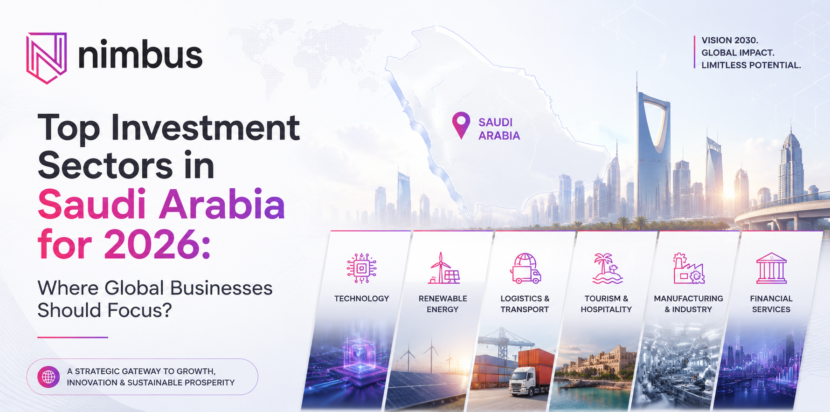
Saudi Arabia has rapidly transformed into one of the world’s most attractive investment destinations. What was once considered an oil-driven economy has evolved into a diversified business hub fueled by Vision 2030, regulatory reforms, and unprecedented public and private investment.
The Kingdom’s economic transformation is already underway. Nine years after the launch of Vision 2030, approximately 93% of the initiative’s key performance indicators have either been achieved or are progressing according to plan.
This remarkable progress has also created new opportunities for international investors across multiple sectors. More than 600 multinational companies have already established regional headquarters in the Kingdom, with government targets aiming to exceed 1,000 headquarters by 2030.
For investors considering business setup in Saudi Arabia, the market offers government-backed incentives and access to some of the world’s largest development projects. In this post, we look at the sectors expected to generate the highest returns in 2026 for global investors.
Why Foreign Direct Investment (FDI) in Saudi Arabia is Booming?
Saudi Arabia’s recent regulatory reforms have simplified company registration, introduced Special Economic Zones, and improved licensing procedures. Today, investors benefit from:
- 100% foreign ownership across many approved business activities
- Improved licensing and regulatory processes
- Access to government funding and incentive programs
- Significant infrastructure investment
- Strategic access to Middle East and Asian markets
For companies considering company formation in the KSA, these reforms significantly reduce market entry barriers while improving long-term investment certainty.
Top Business Opportunities in Saudi Arabia: Key Sectors
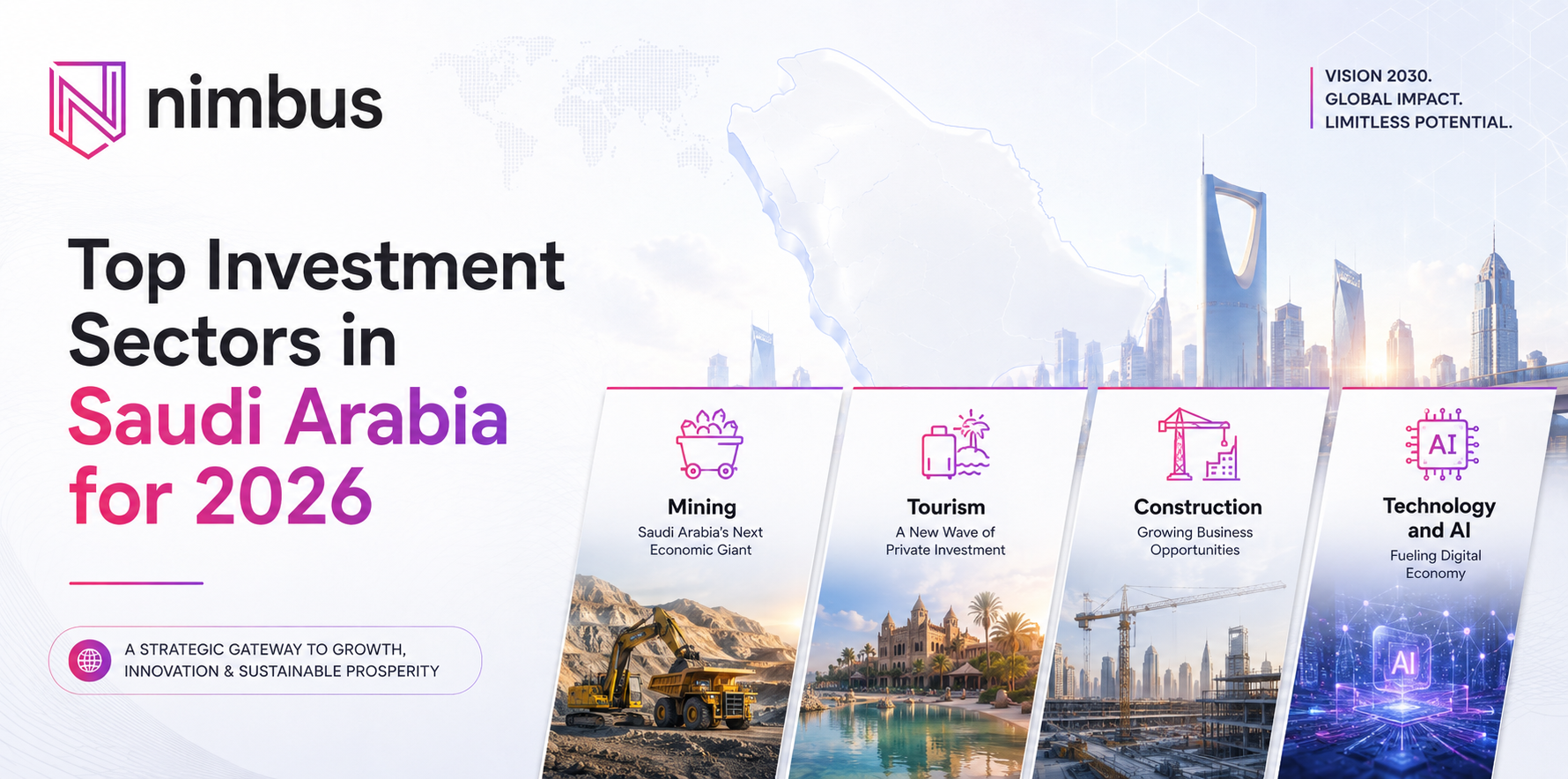
1. Mining – Saudi Arabia’s Next Economic Giant
Mining has emerged as one of the Kingdom’s highest-priority industries under Vision 2030. Saudi Arabia possesses an estimated $2.5 trillion in untapped mineral resources, including:
- Gold
- Copper
- Zinc
- Phosphate
- Rare earth minerals
- Silver
The government is investing heavily to develop the complete mining value chain, from exploration and extraction to mineral processing and manufacturing.
In 2025, Saudi Arabia awarded exploration licenses covering nearly 4,800 square kilometers across the Jabal Sayid and Al Hajjar mining regions. Major international companies, including Australia’s Hancock Prospecting, India’s Vedanta, and China’s Zijin Mining, committed close to $100 million toward exploration activities.
Exploration spending has also increased by approximately 32% annually, significantly outperforming global averages. By 2030, Saudi Arabia expects mining to:
- Contribute more than $75 billion to GDP
- Create approximately 250,000 new jobs
- Become one of the country’s largest non-oil industries
Foreign investors also benefit from financing support through the Saudi Industrial Development Fund, which can finance up to 75% of eligible mining projects.
For businesses specializing in geological services, mining technology, drilling equipment, engineering, environmental consulting, mineral processing, and industrial manufacturing, Saudi Arabia presents exceptional long-term growth opportunities.
2. Tourism – A New Wave of Private Investment
Tourism has become one of Saudi Arabia’s fastest-growing economic sectors. The Kingdom welcomed approximately 106 million domestic and international visitors during 2024, surpassing its original Vision 2030 tourism target years ahead of schedule.
The sector supported over 2.5 million jobs across hospitality, transportation, retail, and food services. Growth continued into 2025, where the summer tourism season alone attracted around 32 million visitors and generated more than SAR 53 billion in tourism spending. Several major factors continue to accelerate tourism demand:
- Expansion of international air routes
- Luxury tourism destinations
- Entertainment projects
- Religious tourism
- Mega events like Expo 2030 Riyadh
Hospitality demand is equally impressive. Saudi Arabia is expected to require approximately 362,000 hotel rooms by 2030, compared to roughly 167,500 currently available. This creates enormous opportunities for:
- International hotel operators
- Hospitality management firms
- Restaurant chains
- Travel technology providers
- Event organizers
- Luxury retail brands
- Facility management companies
Companies planning business incorporation in the KSA in this sector are entering a market experiencing massive consumer demand.
3. Construction – Growing Business Opportunities
Construction remains one of the strongest pillars supporting Saudi Arabia’s economic transformation. Demand continues to rise for international contractors, suppliers, and technology providers.
Saudi Arabia’s construction project pipeline now exceeds $1.7 trillion, making it one of the largest infrastructure development programs in the world. The Kingdom is simultaneously developing smart cities, commercial districts, airports, industrial districts, sports facilities, and more.
In 2025 alone, Saudi led the GCC in construction contract awards, with projects worth approximately $28.1 billion awarded during the third quarter.
The sector is also benefiting from major international events that require significant infrastructure investment, including Expo 2030 Riyadh and Qiddiya Entertainment City among others. High-demand business areas include:
- Engineering consultancy
- Architecture and urban planning
- Building materials and smart technologies
- Mechanical, electrical, and plumbing services
- Modular construction
- Renewable energy integration
International companies with experience in large-scale infrastructure projects are particularly well-positioned to benefit from this development pipeline.
4. Technology and AI – Fueling Digital Economy
Saudi Arabia has one of the Middle East’s most ambitious digital economies and now ranks among the global leaders in digital transformation, supported by government digitization initiatives.
AI has become one of the government’s highest investment priorities. According to government projections, AI could contribute approximately $135 billion to Saudi Arabia’s economy by 2030, representing around 12.5% of national GDP. Opportunities continue expanding across areas such as:
- AI and ML solutions
- Cloud computing
- Cybersecurity
- Software development
- Digital transformation consulting
- FinTech and HealthTech
Saudi Arabia is also encouraging the localization of advanced technologies through incentives that support research, development, and innovation. Special Economic Zones (SEZs) further strengthen Saudi Arabia’s appeal by offering competitive tax incentives, streamlined licensing, and simplified customs procedures.
Key Considerations Before Entering the Saudi Market
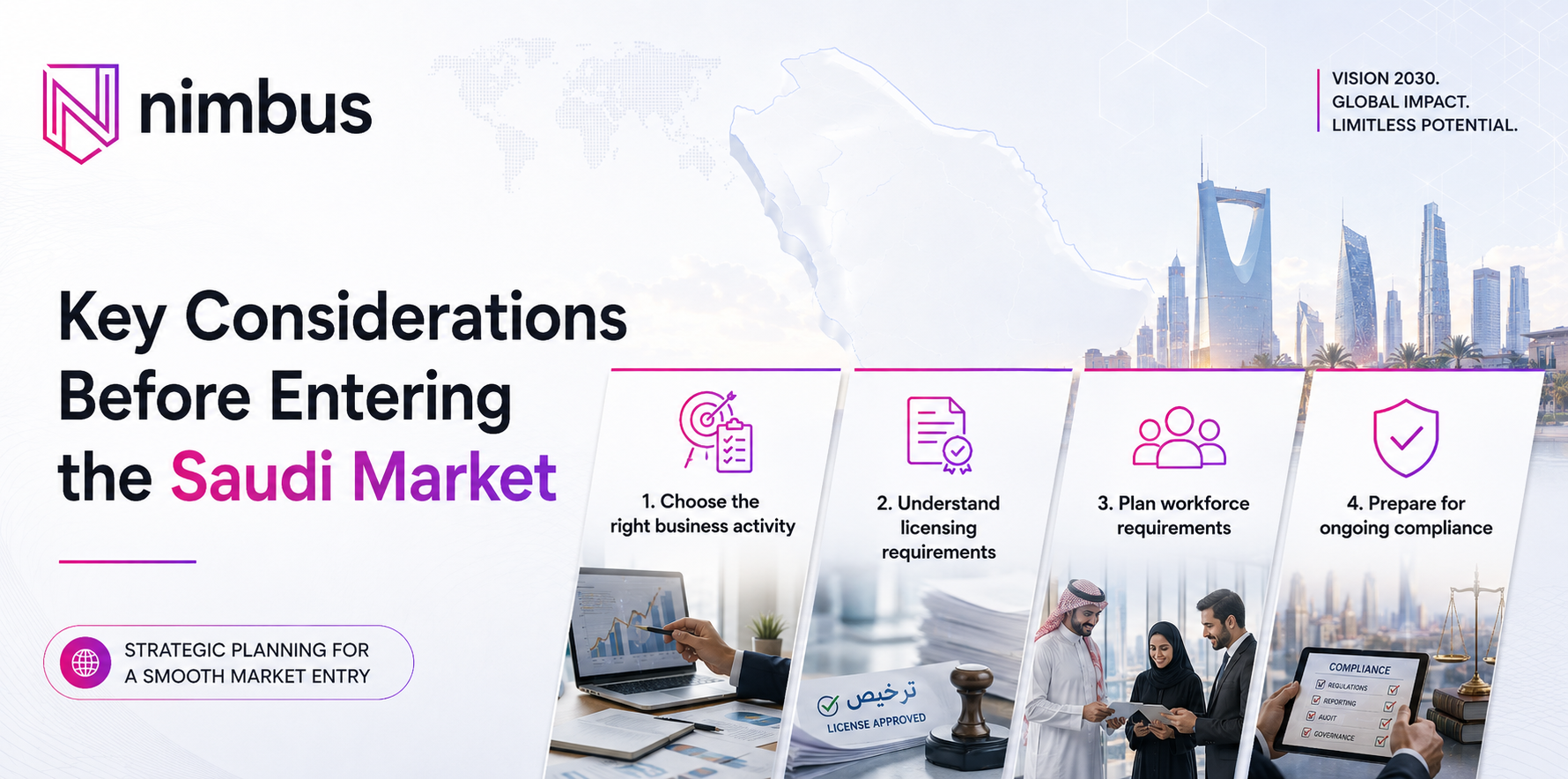
While Saudi Arabia offers exceptional opportunities, successful market entry requires careful planning. Before starting business incorporation in the KSA, investors should evaluate several factors:
- Choose the right business activity: Licensing requirements vary significantly depending on the sector. Selecting the right activity helps avoid regulatory delays.
- Understand licensing requirements: Certain industries, such as financial services, healthcare, and mining, require approvals from sector-specific regulators in addition to standard commercial registration.
- Plan workforce requirements: Businesses should understand Saudization requirements and employment regulations and obligations before business setup in Saudi Arabia.
- Prepare for ongoing compliance: Corporate governance, accounting, tax reporting, and regulatory filings remain important aspects of maintaining a compliant business in Saudi Arabia.
There’s no doubt in it that Saudi Arabia has entered a new phase of economic development that extends beyond oil. Driven by Vision 2030, the Kingdom has created one of the world’s most ambitious investment environments, supported by regulatory reforms, infrastructure spending, and a clear commitment to private sector growth.
Mining, tourism, construction, and technology continue to stand out as the sectors offering the strongest growth potential in 2026. Each benefits from substantial government investment and growing demand from the markets.
For businesses considering business setup in Saudi Arabia, companies that establish an early presence are better positioned to build relationships, secure contracts, and benefit from future economic expansion.
Comments are closed