

Whether you are considering business setup in the UAE for the first time or restructuring an existing corporate group, understanding when a holding company makes sense can help you build a stronger and more resilient business.
What is a Holding Company in the UAE?
A holding company is a legal entity created primarily to own and manage assets rather than conduct day-to-day commercial operations. Instead of selling products or providing services directly, a holding company typically owns:
- Shares in subsidiary companies
- Intellectual property
- Real estate
- Investment portfolios
- Trademarks and patents
- Equipment and other valuable business assets
The operating businesses remain separate legal entities that conduct commercial activities, while the holding company owns and controls them. This separation creates legal, financial, and operational advantages that many growing businesses find valuable.
Key Benefits of Setting Up a Holding Company in Dubai & the UAE
The UAE has positioned itself as one of the world’s leading international business hubs. Alongside straightforward UAE company formation processes, the country offers legal structures designed for sophisticated investors and corporate groups.
Several factors contribute to the popularity of UAE holding companies, including modern corporate legislation, an international tax treaty network, and efficient corporate administration.
Many free zones also offer specialized structures for holding companies and Special Purpose Vehicles (SPVs), making the UAE suitable for regional and international investment planning.
When to Start a UAE Holding Company or SPV for Asset Protection
A holding company is not necessary for every business. However, there are situations where it can significantly improve asset protection, operational efficiency, and long-term planning.
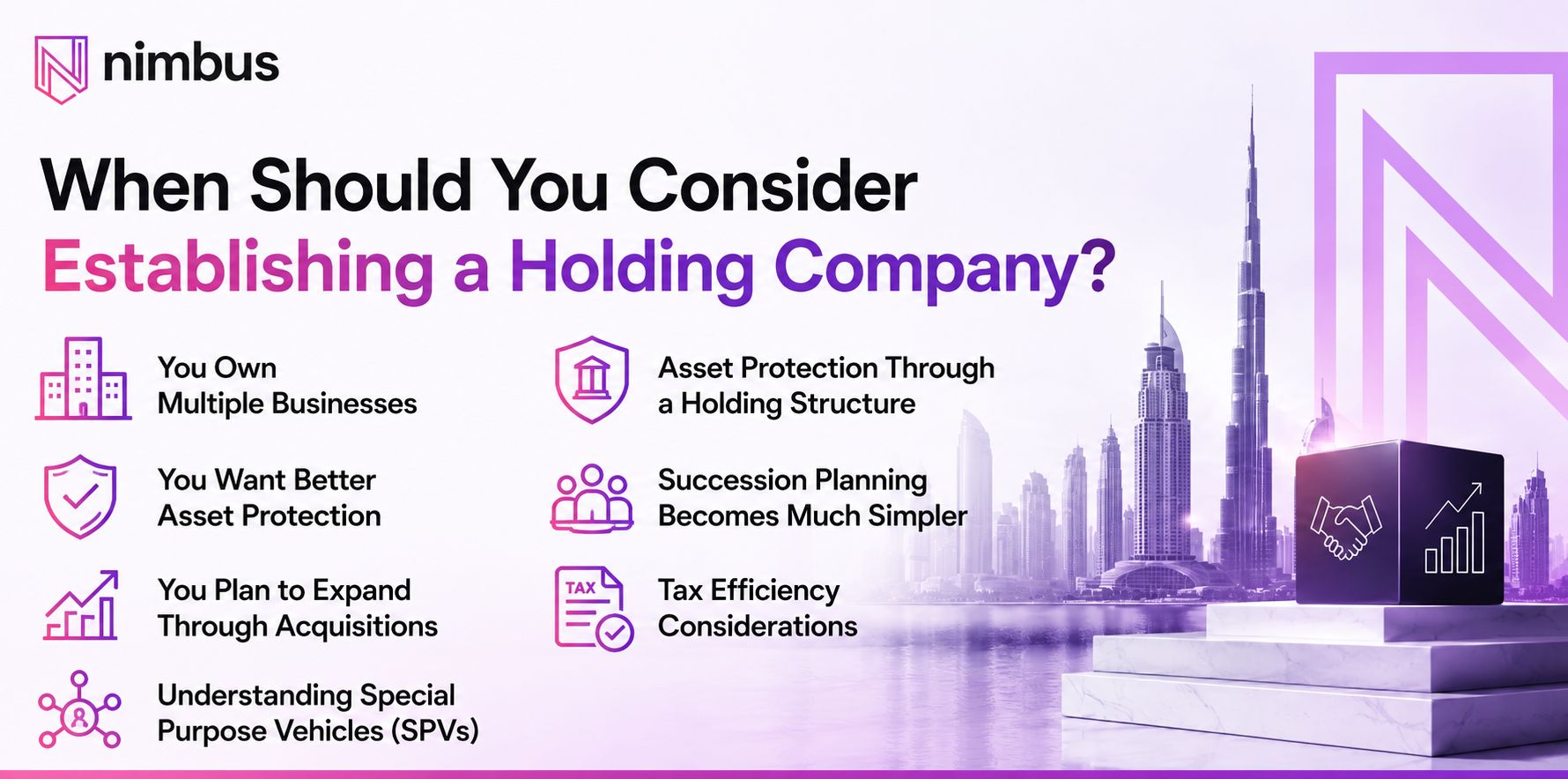
1. You Own Multiple Businesses
Entrepreneurs often launch several ventures over time. Rather than personally owning each business, a holding company can become the parent entity that owns all operating companies. For example:
- Technology startup
- Real estate investment company
- Consulting firm
Each business continues operating independently while remaining under one ownership structure. This arrangement simplifies management, future investment, and succession planning.
2. You Want Better Asset Protection
One of the biggest reasons investors establish holding companies is to separate valuable assets from commercial risk. For example, an operating company may face customer disputes, contractual claims, and financial liabilities.
If key assets such as commercial property or investment portfolios are owned by a separate holding company rather than the operating business, they are generally better insulated from operational risks, subject to applicable laws and proper corporate structuring. This approach helps reduce exposure while improving long-term asset security.
3. You Plan to Expand Through Acquisitions
Businesses that expect to acquire other companies often benefit from a holding structure. Instead of purchasing businesses personally, the holding company acquires ownership. Many private equity firms and investment groups use this model extensively. This creates:
- Centralized ownership
- Easier financial reporting
- Improved investment management
4. Understanding Special Purpose Vehicles (SPVs)
Special Purpose Vehicles, commonly known as SPVs, have become increasingly popular within the UAE. An SPV is a company established for a specific purpose, usually to hold assets or investments rather than conduct commercial trading. Typical uses include:
- Holding shares in companies
- Owning intellectual property
- Holding real estate
- Facilitating mergers and acquisitions
- Managing family investments
Unlike operating businesses, SPVs generally have limited commercial activity and are designed for ownership and investment purposes. Several UAE jurisdictions provide dedicated SPV frameworks suited to both local and international investors.
5. Asset Protection Through a Holding Structure
Separating ownership from operations is considered one of the most effective corporate risk management strategies. For example, imagine a manufacturing company owns its factory, machinery, trademarks, and inventory.
If litigation arises, all of these assets could potentially become exposed to business risks. Under a holding company structure:
- The holding company owns the factory.
- The holding company owns the trademarks.
- The operating company leases these assets.
- The operating company conducts daily business.
If operational issues arise, valuable long-term assets are generally better protected because they are not held directly by the trading entity. While no structure eliminates legal risk entirely, this approach is widely used to improve corporate resilience.
6. Succession Planning Becomes Much Simpler
Family businesses often face challenges when ownership passes to the next generation. Without proper planning, transferring multiple businesses individually can become legally complex and administratively burdensome.
A holding company simplifies succession. Instead of transferring ownership of several operating companies separately, ownership interests in the holding company can often be transferred according to succession plans, shareholder agreements, or family governance arrangements. This provides:
- Simpler ownership transitions
- Reduced administrative complexity
- Easier governance for future generations
Many family offices use holding companies as the foundation of long-term wealth preservation strategies.
7. Tax Efficiency Considerations
One reason holding companies attract international investors is their potential tax efficiency. However, tax outcomes always depend on the jurisdictions involved and applicable laws. Professional tax advice should always be obtained before implementing any structure.
Within the UAE, holding companies may offer advantages such as:
- Centralized dividend management
- Potential benefits under applicable tax treaties
- Improved group structuring
Note: Tax planning should always be undertaken with qualified legal and tax professionals.
Holding Company vs Operating Company: Which UAE Corporate Structure is Best?
Understanding the distinction between these structures is essential. Many successful corporate groups use both structures together to maximize efficiency and protection.
| Feature | Holding Company | Operating Company |
|---|---|---|
| Primary Function | Owns assets, holds shares, controls subsidiaries. | Offers services or sells products. |
| Commercial Activity | Usually has limited commercial activity. | Generates operating revenue through daily trade. |
| Staffing | Rarely employs a large workforce. | Employs staff to manage day-to-day operations. |
Common Mistakes During UAE Holding Company Setup
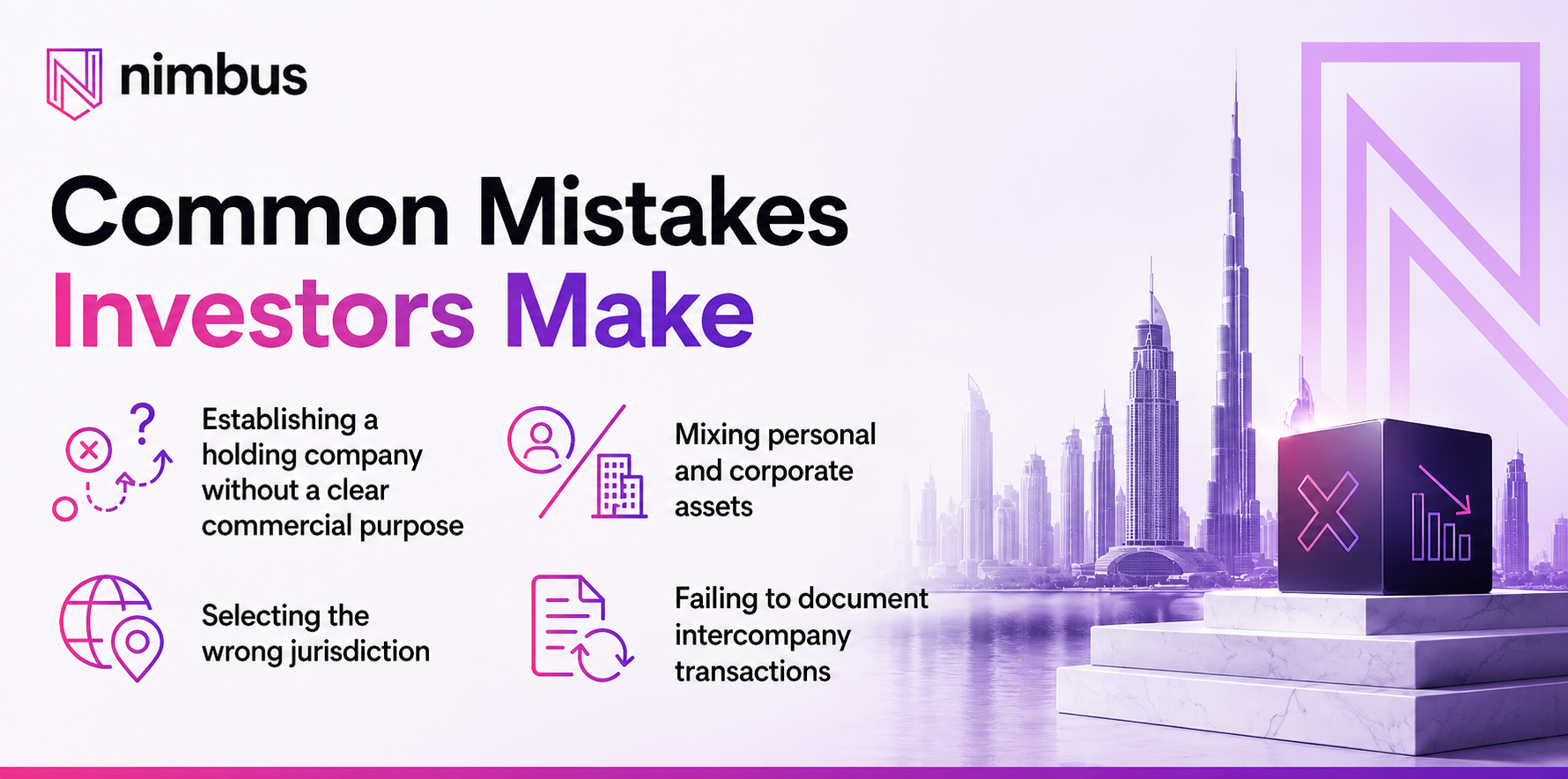
While holding companies offer significant advantages, poor planning can reduce their effectiveness. Common mistakes include:
- Establishing a holding company without a clear commercial purpose
- Mixing personal and corporate assets
- Selecting the wrong jurisdiction
- Failing to document intercompany transactions
Careful planning at the outset helps avoid unnecessary restructuring later.
Next Steps: Is a UAE Holding Company Right for Your Business?
A holding company is often worth considering if you:
- Own multiple businesses
- Invest in real estate or private companies
- Want stronger asset protection
- Need a succession strategy
- Operate across several jurisdictions
As the UAE continues strengthening its position as a global investment destination, more international investors are using holding companies to build scalable, resilient corporate structures.
Whether your goal is protecting valuable assets, simplifying ownership across multiple businesses, planning for future generations, or organizing international investments more efficiently, a well-designed holding company can provide significant long-term advantages.
The right structure depends on your commercial objectives, ownership model, and future growth plans. During business setup in the UAE, evaluating whether a holding company, an SPV, or a traditional operating company best fits your needs can help prevent costly restructuring later.
However, it is wise to work with experienced advisors and ensure that your corporate structure aligns with regulatory requirements.

Comments are closed