


The UAE has become a preferred destination for wealthy individuals looking for a better lifestyle. It is increasingly being used as a strategic base for family offices, investors, and international businesses that want to manage wealth, build companies and access markets across the MENA region.
That distinction matters. For high-net-worth individuals and families, relocating to the UAE can involve much more than moving a residence. It can mean restructuring a family business, establishing an investment vehicle, creating a succession plan, or setting up a family office.
The UAE’s appeal comes from the combination of these factors. It offers a sophisticated financial ecosystem, international connectivity, long-term residency options, specialised financial centres such as DIFC and ADGM, a broad range of company structures, and no personal income tax.
For families looking beyond short-term market conditions, that combination can make the UAE an attractive long-term base.
Why HNWIs are Moving to Dubai for Holistic Wealth Management
For wealthy families, choosing a jurisdiction is rarely based on one factor. A family with substantial operating businesses, investments, and property holdings may have to consider:
- Where family members will live
- Where businesses will be managed
- How assets will be held
- How succession will be organised
- Which legal framework will govern family structures
- How the next generation will participate in the family business
This is one reason the UAE has developed a strong proposition for global wealth. The country can support both the personal and commercial sides of a family’s relocation.
Navigating the UAE Tax Environment: Personal vs. Corporate Tax
The UAE does not levy personal income tax on individuals. That remains one of the country’s most visible attractions for investors and internationally mobile executives. But wealthy individuals should not confuse the absence of personal income tax with an absence of taxation altogether.
The UAE has a federal Corporate Tax regime, VAT, and other taxes that may apply depending on the nature of an individual’s or company’s activities. This distinction is particularly important for family offices and business owners.
A family may have operating companies, property holdings, and interests in several countries. The UAE structure needs to be assessed alongside the tax rules of the other jurisdictions involved. The objective should therefore be proper international tax planning rather than simply looking for a low-tax jurisdiction.
How the Dubai Golden Visa Supports Multi-Generational Wealth Planning
Wealth relocation becomes considerably easier when families can establish a stable long-term residence. The UAE’s Golden Visa programme provides renewable five- or ten-year residency options for eligible categories including investors and certain highly skilled individuals.
Golden Visa holders can also sponsor family members and have greater flexibility when spending periods outside the UAE. The UAE also offers a Green Visa for eligible investors, business partners, freelancers and skilled professionals.
For a wealthy family, this creates an important distinction between temporary residence and long-term planning. If family members are considering schools, property, businesses, investment portfolios, and succession arrangements, residence stability becomes part of the wider wealth strategy.
Dubai as a Global Wealth Hub: The Rise of DIFC and ADGM
Dubai’s position is particularly strong in the private wealth market. DIFC currently describes Dubai as having the highest concentration of private wealth in the Middle East and reports a substantial ecosystem of wealth and asset managers, family entities and family-related structures.
The attraction, however, is not simply the amount of wealth already in the city. It is the network around that wealth. A sophisticated family office may require tax advisers, investment managers, accountants, property advisers, and lawyers. As that ecosystem grows, it becomes more attractive to the next generation of investors and family businesses.
Structuring a Modern Family Office in Dubai, DIFC, or ADGM
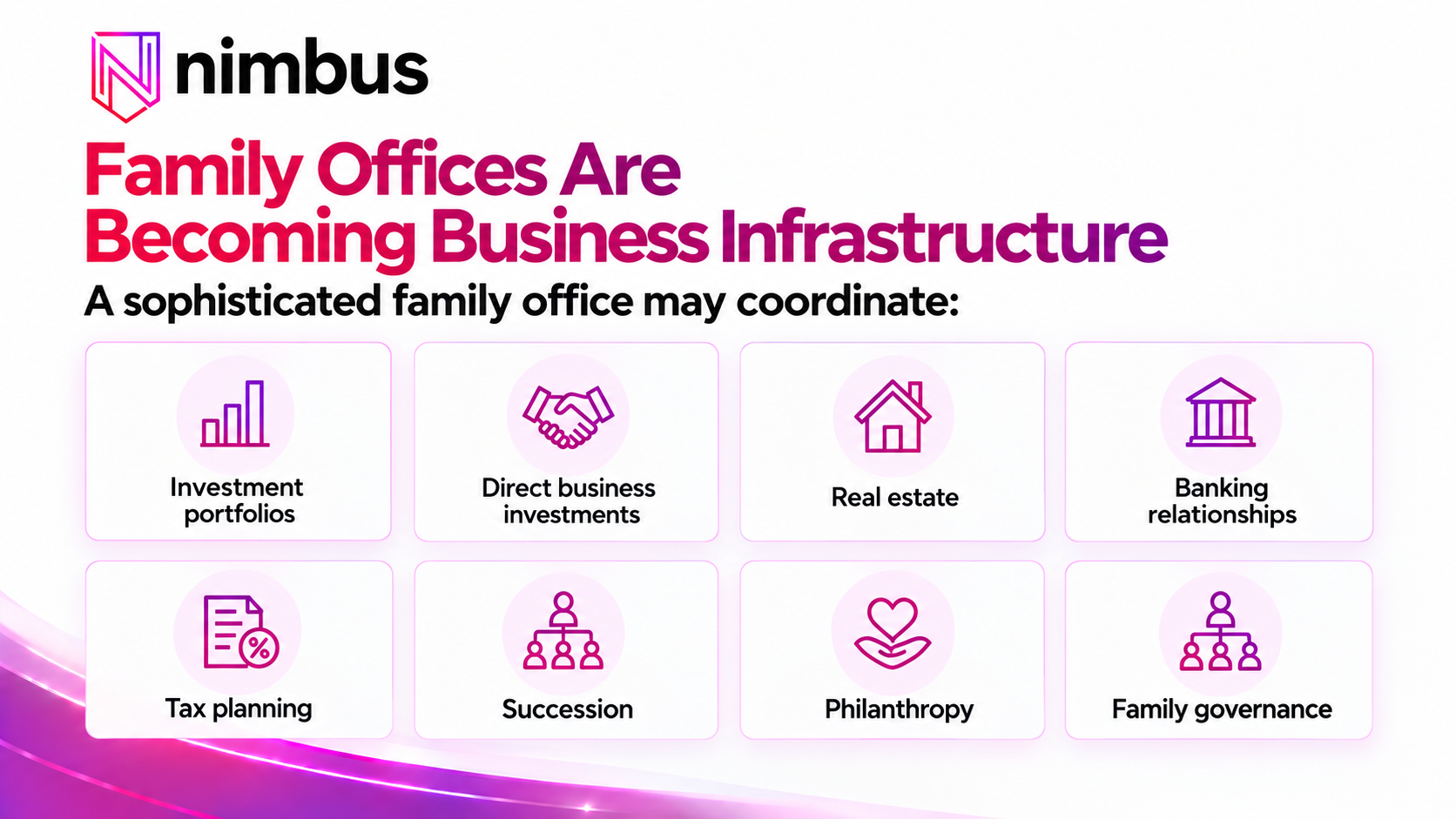
The modern family office is not simply an administrative department for wealthy families. It can become an important part of the family’s business infrastructure. A sophisticated family office may coordinate:
- Investment portfolios
- Direct business investments
- Real estate
- Banking relationships
- Tax planning
- Succession
- Philanthropy
- Family governance
ADGM describes family offices as structures that can integrate wealth management, investment, property management, succession planning, and other family services. This integrated approach is one reason the UAE is attracting families that want to consolidate decision-making in one location.
UAE Company Formation: Structuring Holding Companies for Foreign Investors
For entrepreneurs and business-owning families, personal relocation and corporate structuring often happen together. Someone moving to the UAE may also want to establish a new operating company, regional holding company, or investment vehicle.
This is where UAE company formation becomes relevant to wealth planning. The UAE allows foreign investors to establish companies with full ownership in many activities. However, the right entity depends on what the business actually intends to do.
DIFC and ADGM Foundations: Structuring Multi-Generational Wealth
The first generation often focuses on building wealth. The second generation focuses on managing it. The third generation is often concerned with preserving it. That makes succession planning increasingly important for family offices. A successful succession structure should answer questions such as:
- Who owns the family business?
- Who manages it?
- What happens if a family member dies?
- How are disputes resolved?
- What happens when ownership passes to several branches of the family?
DIFC and ADGM both offer structures that can be incorporated into broader succession strategies, including foundations, trusts, and holding structures. The right arrangement depends on the family’s circumstances and should be designed with appropriate legal and tax advice.
What HNWIs Should Consider Before Relocating
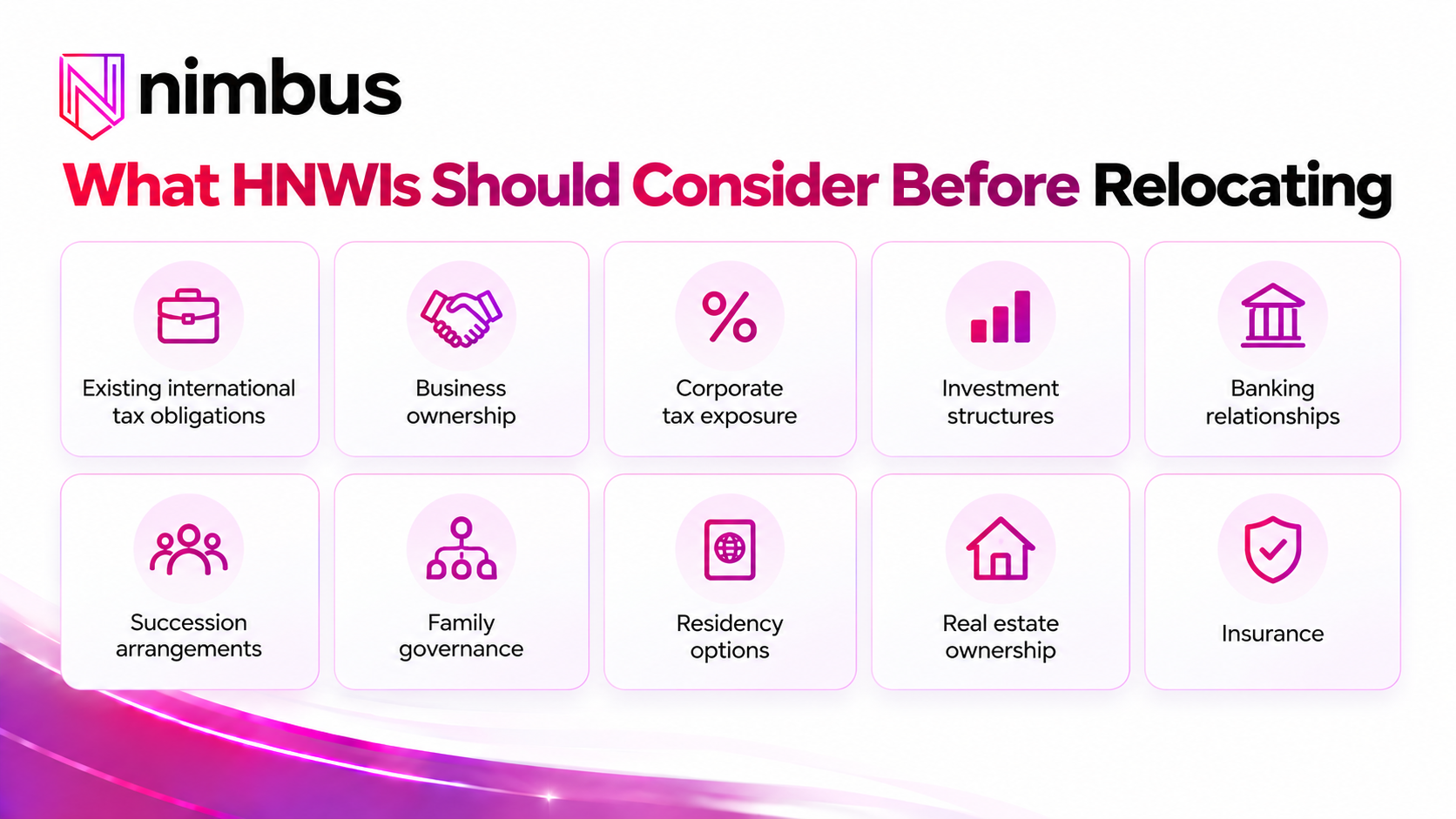
Relocating wealth should be treated as a structured project. Before moving, wealthy individuals and families should review:
- Existing international tax obligations
- Business ownership
- Corporate tax exposure
- Investment structures
- Banking relationships
- Succession arrangements
- Family governance
- Residency options
- Real estate ownership
- Insurance
Why the UAE is the Ultimate Destination for Family Offices and HNWIs
The UAE’s appeal to global wealth is not based on one visa programme or one property market. Its strength comes from the combination of factors.
The country offers a developed business environment, long-term residency options, no personal income tax, and specialised financial centres capable of supporting sophisticated wealth and succession structures.
For entrepreneurs, this ecosystem can make UAE company formation part of a much broader strategy. For international families, UAE freezone setup may be relevant to operating or holding structures, while DIFC or ADGM may be more appropriate for sophisticated wealth and succession arrangements.
That is ultimately why the UAE continues to attract global wealth: it offers an environment where living, investing, building businesses, and planning for the next generation can be brought together.
Comments are closed