

However, launching an AI business involves more than registering a company. Founders need to choose the right business activity, obtain an appropriate licence, understand data protection requirements, and consider whether their technology falls within a regulated sector.
For entrepreneurs planning AI business setup in Dubai, understanding these requirements at the outset can help avoid unnecessary costs and delays.
Why Start an AI Company in Dubai? Key Benefits & Ecosystem
Dubai’s appeal to technology entrepreneurs comes from a combination of commercial opportunity, infrastructure, and government support. The emirate has been promoting the adoption of AI across public services and private-sector industries.
Its strategy creates potential opportunities for companies offering automation, software development, data analytics, intelligent customer service, and other technology solutions.
The UAE’s National Strategy for Artificial Intelligence 2031 also identifies AI as a key component of the country’s long-term development. Priority areas include transport, healthcare, education, energy, technology, and other sectors where AI can help increase operational efficiency.
Top AI Business Models and Approved Licensing Activities in Dubai
Before applying for a Dubai AI company licence, founders should define the business model and the activities the company will carry out. AI is a broad field.
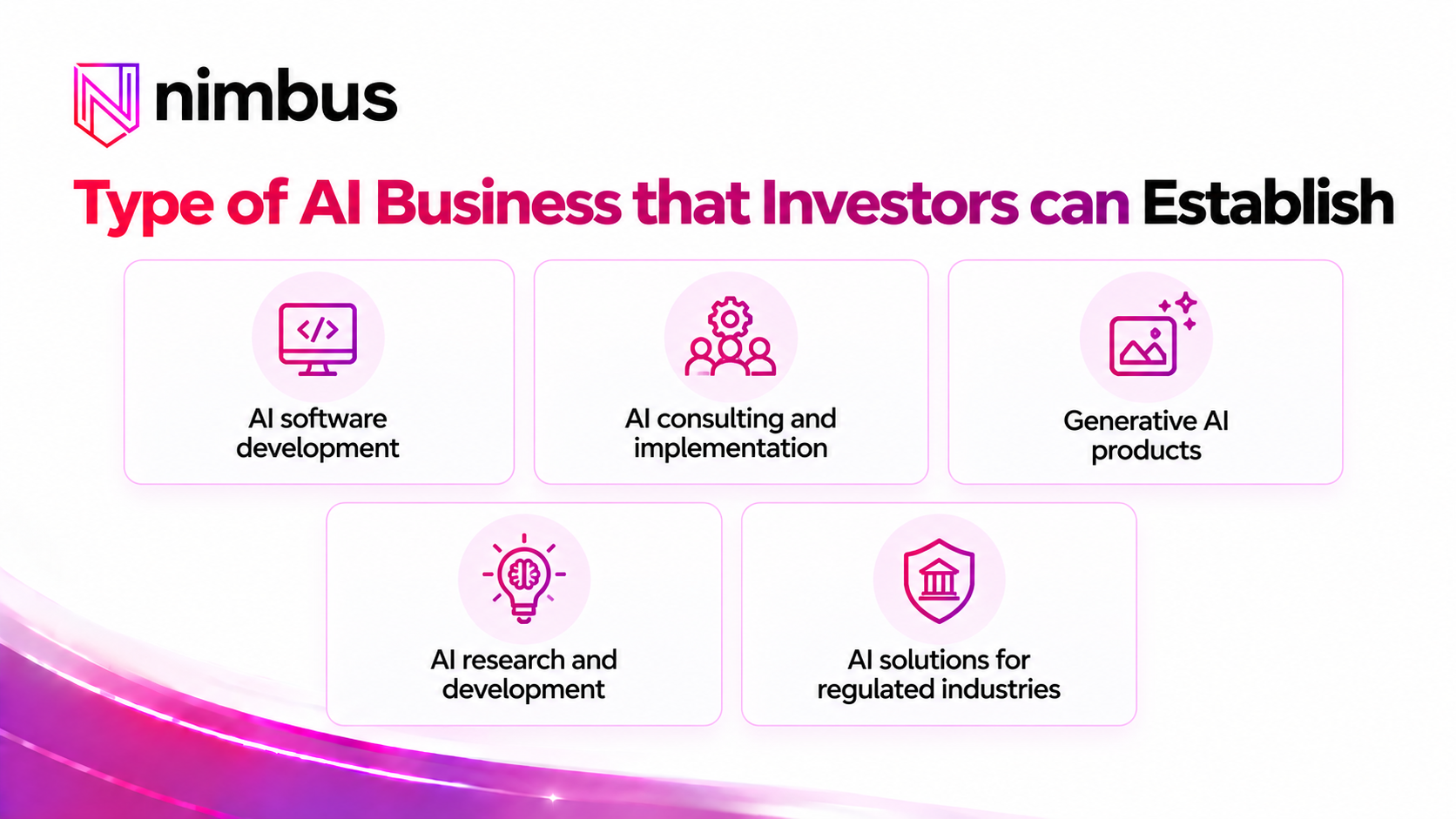
A company may develop its own models, provide AI consulting, or integrate automation into existing business systems. These activities may fall under different licensing categories. Common AI business models include the following.
- AI software development
- AI consulting and implementation
- Generative AI products
- AI research and development
- AI solutions for regulated industries
The DIFC AI Licence in Dubai: Cost, Eligibility, and Benefits
The Dubai International Financial Centre, or DIFC, has introduced an AI licence through its Innovation Hub. The programme is intended to support AI developers and entrepreneurs seeking to establish a presence in the region.
DIFC’s published offer describes the AI licence as a subsidised commercial licence, with an advertised annual licensing fee of USD 1,500 plus a one-time registration fee of USD 100. Flexible desk space and visa-related arrangements are listed separately.
The published fee schedule should be checked directly with DIFC before budgeting, as eligibility, package conditions, additional charges, and programme availability may change.
How to Start an AI Business in Dubai: Step-by-Step Setup Guide
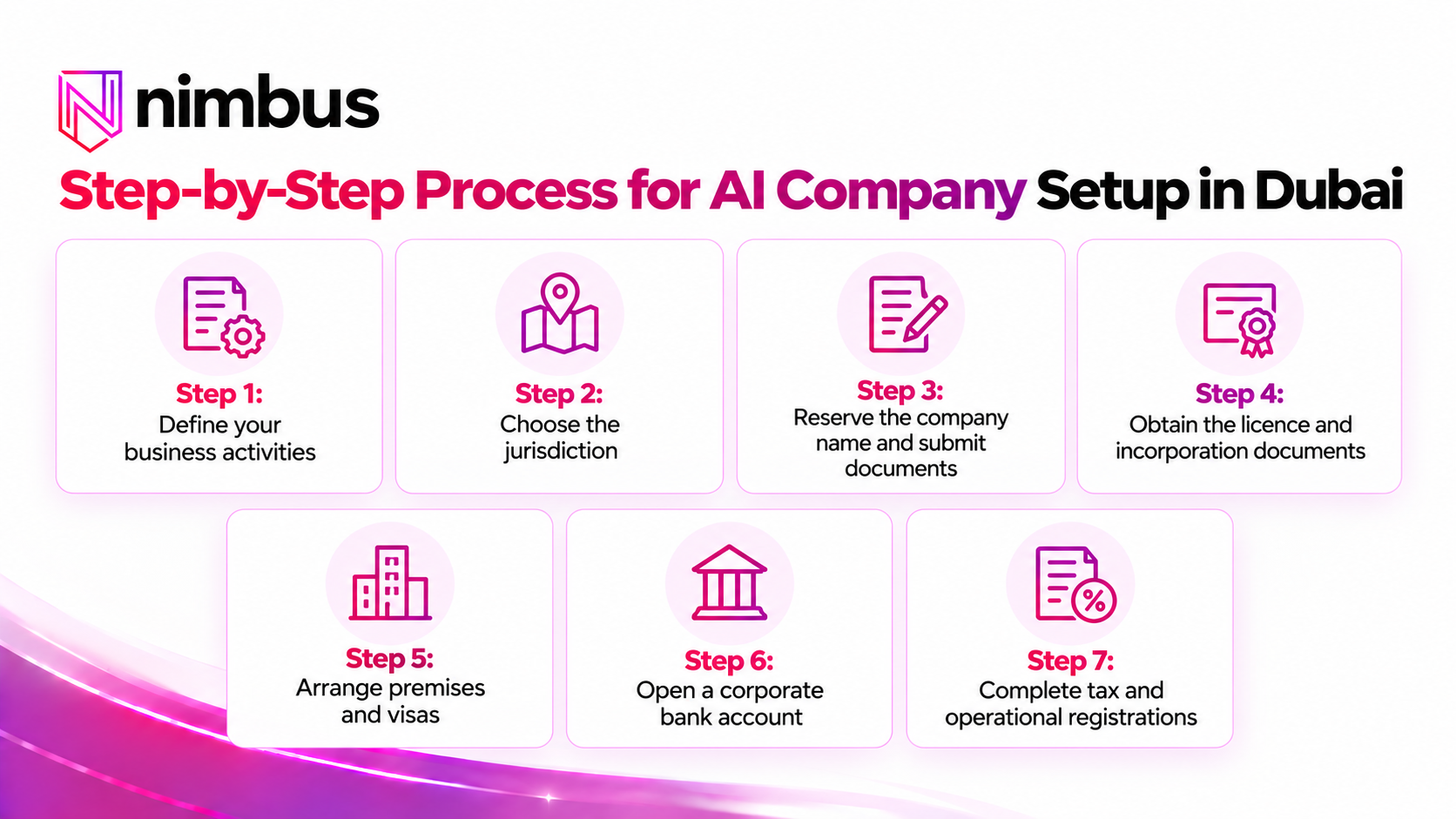
Although the exact procedure varies by licensing authority, the following steps provide a useful starting point.
Step 1: Define your business activities
Prepare a clear description of the services or products and identify whether the business will develop software, offer consulting, or provide AI-enabled services to a regulated industry. This will help determine which licence activities are appropriate.
Step 2: Choose the jurisdiction
Compare mainland and free-zone options based on:
- Permitted business activities
- Access to target customers
- Office and workspace requirements
- Visa eligibility
- Total setup and renewal costs
- Additional approvals
Step 3: Reserve the company name and submit documents
The licensing authority will specify the documentation required for the application. This may include passport copies, shareholder details, corporate shareholder documents, and other supporting information.
Step 4: Obtain the licence and incorporation documents
Once the application and required approvals are completed, the authority can issue the relevant incorporation and licensing documents.
Step 5: Arrange premises and visas
Depending on the selected package and authority, the company may need a physical office, flexible workspace or another approved premises arrangement. Visa eligibility and quotas can also vary.
Step 6: Open a corporate bank account
Banks conduct their own onboarding and compliance checks. They may request incorporation documents, customer information, and evidence of the company’s source of funds. Obtaining a trade licence does not guarantee that a bank will approve an account.
Step 7: Complete tax and operational registrations
The company should assess its obligations relating to UAE Corporate Tax, VAT where applicable, accounting records, and any other statutory requirements.
UAE AI Regulations, Data Privacy, and Compliance Requirements
The UAE has developed national AI strategies and policy guidance to encourage responsible development and use of AI. However, a single, universal AI licence, or one comprehensive AI law does not cover every business model.
The applicable rules depend on the sector in which it operates, the data it processes and the services it provides. Several legal areas deserve particular attention.
1. Personal data protection
The UAE’s Federal Decree-Law No. 45 of 2021 on the Protection of Personal Data establishes requirements for the processing of personal data within its scope. The law addresses matters including lawful processing, individual rights, data security and certain cross-border data transfers.
2. Responsible AI and governance
The UAE Charter for the Development and Use of Artificial Intelligence promotes responsible AI use, privacy protection, and ethical development. The government’s AI policy framework also emphasises safety, collaboration and responsible innovation.
3. Cybersecurity and confidential information
AI companies may handle customer databases, source code, proprietary models, commercial documents, and sensitive business information. They should implement suitable technical and organisational safeguards, including access controls and incident-response procedures.
4. Intellectual property
AI companies should establish who owns their software, model components, training materials, datasets and other intellectual property.
Where third-party models or open-source software are used, the company should review the relevant licence terms and restrictions.
5. Sector-specific regulation
Regulated sectors, including healthcare, financial services, telecommunications and other regulated activities can involve additional requirements. The regulatory analysis should be based on what the product actually does, not simply on how it is marketed.
Most Profitable AI Business Opportunities and Sectors in Dubai
AI opportunities are not limited to companies developing new foundational technologies. Many businesses can create value by applying existing AI tools to specific operational problems.
- Enterprise automation
- Logistics and supply chain
- Financial services
- Healthcare technology
- Retail and e-commerce
- Arabic-language AI
Dubai offers a range of opportunities for entrepreneurs building AI products, software platforms, and technology services. Its AI initiatives and specialist free zones provide several routes for companies seeking to establish a regional presence.
But successful AI company setup in Dubai requires more than finding an affordable licence. Founders need to match their business activities to the right licensing authority, assess whether sector-specific approvals apply, and comply with regulatory requirements.
For companies that do everything right, Dubai can provide a strong base from which to develop AI solutions and build a sustainable technology business.
Comments are closed