

The UAE is rapidly becoming one of the most commercially important AI markets in the Middle East. While many countries are still focused on AI experimentation and policy discussions, the UAE is moving toward large-scale deployment backed by infrastructure investment and long-term economic planning.
This shift is creating a thriving environment for technology firms, venture capital investors, cloud providers, and AI startups entering the region. The UAE is evolving into a coordinated AI ecosystem where regulation, infrastructure, government demand, and investment strategies are increasingly aligned.
For international businesses exploring business setup in the UAE, the opportunity is substantial, but market entry now requires a more strategic approach. Success now depends on demonstrating operational value, regulatory readiness, and sector alignment.
With AI projected to contribute approximately 13–14 percent of the UAE’s GDP by 2030, companies that position themselves correctly today may stand to have wider expansion opportunities across the Gulf and South Asia.
Why the UAE is Becoming the Premier Global AI Market Hub?
The UAE’s approach to artificial intelligence differs from many global markets because AI is being embedded directly into national economic systems rather than treated as a standalone technology sector. Instead of relying purely on private-sector demand, the country is integrating AI into:
- Public administration
- Healthcare systems
- Transport infrastructure
- Financial services
- Smart city initiatives
For businesses considering company formation in the UAE, this environment provides access to a market where AI adoption is increasingly tied to national infrastructure development and government-backed modernization programs.
The UAE’s Two-Phased AI Ecosystem
Phase #1: Innovation Sandboxes and Early Experimentation
Before 2021, the UAE’s AI ecosystem focused heavily on regulatory flexibility and innovation testing. Financial centres such as DIFC and ADGM introduced sandbox environments that allowed companies to pilot AI-driven technologies under lighter compliance conditions. This model attracted:
- Fintech startups
- Data-driven platforms
- AI software developers
The approach lowered market-entry barriers and encouraged rapid innovation. However, companies often struggled to scale across sectors due to fragmented regulation and limited nationwide governance structures.
Phase #2: Infrastructure and Regulatory Consolidation
From 2021 onward, the UAE began shifting toward a more structured AI market. Several major developments accelerated this transition:
- Introduction of the Federal Personal Data Protection Law (PDPL)
- AI ethics principles focused on accountability and transparency
- Sector-specific AI oversight in finance and cybersecurity
- National cloud and digital security initiatives
This new framework is changing how UAE company formation works for technology firms, especially ones operating in AI and cloud infrastructure. The market is becoming more commercially mature, with stronger expectations around:
- Data governance
- Compliance readiness
- Risk management
Why Investors Are Paying Attention to the UAE AI Market?
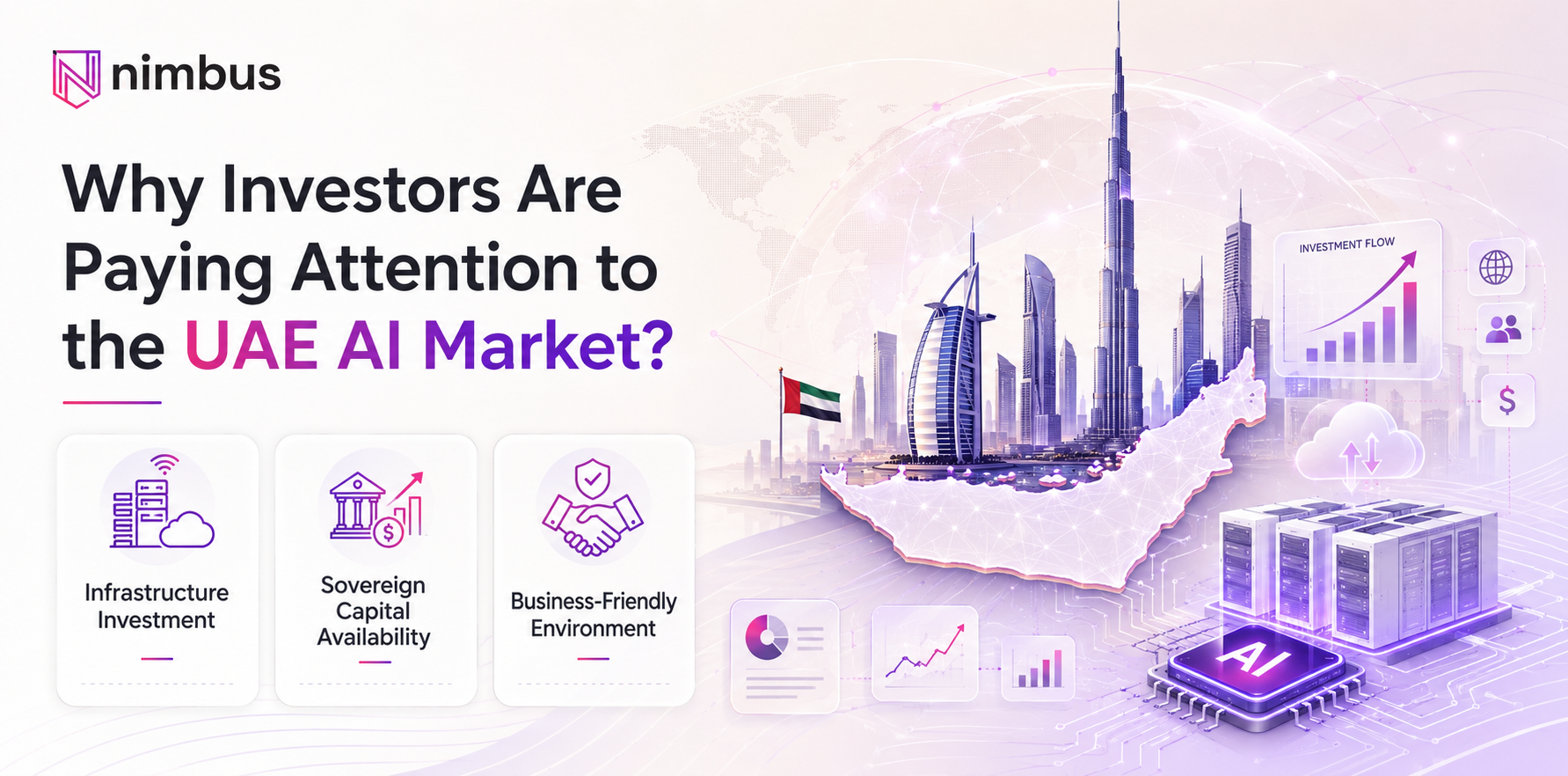
International investors are taking note of the UAE’s AI ecosystem as it offers several structural advantages, backed by considerable investments. Here are some of the key ones.
1. Infrastructure Investment
One of the UAE’s most important competitive advantages is its willingness to invest in infrastructure ahead of full-scale commercial demand. This strategy is positioning the country as a regional processing and deployment hub for AI technologies. Recent developments include:
- Microsoft’s planned US$15.2 billion AI and cloud investment through 2029
- Expansion of large-scale data center capacity across the UAE
- Development of hyperscale computing infrastructure
The UAE AI data center market alone is projected to grow from approximately US$330 million in 2025 to more than US$797 million by 2031.
2. Sovereign Capital Availability
The UAE benefits from substantial sovereign-backed investment capacity. Government-supported investment platforms are directing capital into:
- AI infrastructure
- Semiconductor technologies
- Cloud systems
- Advanced computing
- Sector-focused AI deployment
This creates a funding environment where capital is actively aligned with national economic priorities.
3. Business-Friendly Environment
The UAE continues to maintain competitive tax policies, strong digital infrastructure, efficient licensing systems, and flexible immigration policie. These advantages continue to attract international startups and institutional investors.
Top Commercial Sectors Accelerating Enterprise AI Deployment in the UAE
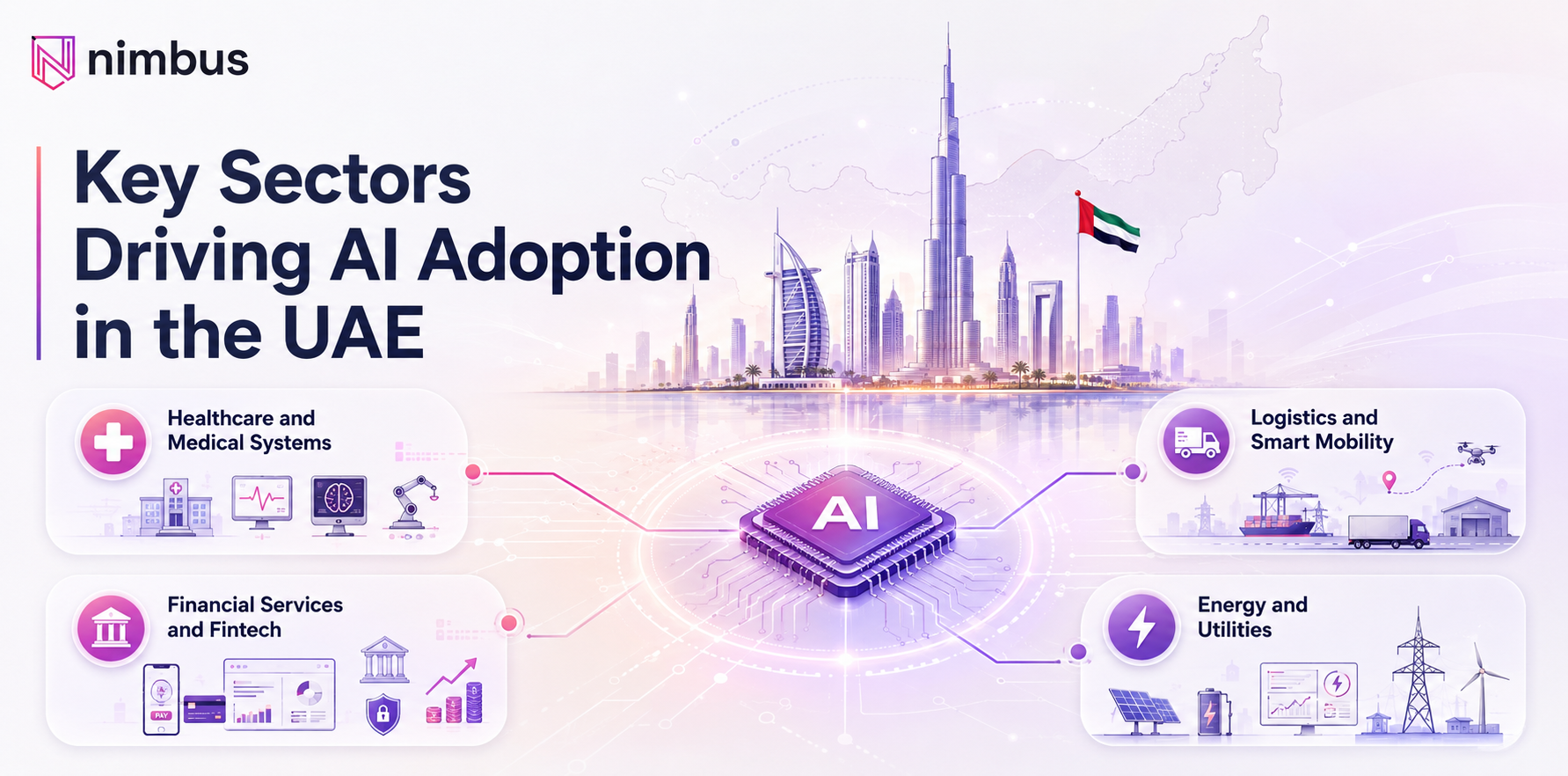
AI demand in the UAE is increasingly tied to practical deployment within existing economic systems. The strongest opportunities currently exist in several priority sectors.
1. Healthcare and Medical Systems
Healthcare remains one of the UAE’s fastest-growing AI application areas. Demand includes:
- Predictive diagnostics
- Patient data analytics
- AI-assisted imaging
- Healthcare management systems
Government investment in healthcare modernization is creating sustained long-term opportunities.
2. Logistics and Smart Mobility
The UAE’s logistics sector is adopting AI across:
- Supply chain optimization
- Port management
- Freight operations
- Warehouse automation
With Dubai and Abu Dhabi functioning as regional logistics hubs, AI deployment in this sector is expected to accelerate significantly.
3. Financial Services and Fintech
Financial institutions are increasingly implementing AI-driven systems for:
- Risk analysis
- Fraud detection
- Automated compliance
- Customer service automation
Both DIFC and ADGM continue to support fintech innovation through structured regulatory frameworks.
4. Energy and Utilities
AI is also becoming central to the UAE’s energy diversification strategy.
Applications include smart grid systems, energy forecasting, and resource management. As the country invests further in renewable energy and smart infrastructure, AI integration is expected to deepen.
Choosing the Right Structure for AI Companies Entering the UAE
For technology firms, selecting the correct legal structure is essential during business setup in the UAE. The right setup depends on operational goals, licensing needs, and target markets.
1. UAE Freezone Setup for AI Businesses
A UAE freezone setup is often suitable for:
- SaaS platforms
- AI software development firms
- Data analytics companies
- Technology consulting firms
Free zones offer advantages such as streamlined incorporation, technology-focused ecosystems, and access to innovation clusters. Technology-oriented free zones also provide easier access to networking, partnerships, and startup ecosystems.
2. UAE Mainland Setup for Commercial Expansion
A UAE mainland setup may be more suitable for businesses that intend to work directly with UAE government entities or domestic commercial clients. This structure supports:
- Broader local market access
- Public sector contracts
- Direct operational flexibility within the UAE market
Conclusion: Strategy and Compliance for Long-Term AI Success in the UAE
The UAE’s AI economy is entering a more mature and commercially structured phase. Infrastructure investment, sovereign capital, public-sector modernization, and regulatory development are now converging to create one of the region’s most sophisticated artificial intelligence ecosystems.
For global investors, the opportunity remains highly attractive, but successful business setup in the UAE now depends on more than speed and innovation alone.
Companies need sector alignment, regulatory readiness, local ecosystem integration, and strong governance frameworks. All in all, the companies that make a compliant setup with the help of professional guidance have improved chances of long-term success.
Comments are closed