

Among these, the Articles of Association (AOA) play a major role in determining how a business is controlled, managed, and protected after incorporation.
A poorly drafted AOA may not create problems immediately. The issues usually emerge later during investor negotiations, shareholder disputes, banking reviews, ownership transfers, or expansion plans.
This guide explains how Articles of Association work across different UAE jurisdictions, the difference between MOA and AOA in the UAE, and why investors should review these documents carefully before completing UAE company formation.
Why Articles of Association Matter in UAE Company Formation
During company formation, founders are required to prepare legal documents that define both the company structure and its operating framework. The Articles of Association establish the internal rules that govern the business after it has been incorporated.
These rules usually cover:
- Shareholder rights
- Voting powers
- Director or manager authority
- Share transfers
- Dividend distribution
- Decision-making procedures
- Company amendments
- Dispute resolution
For a single-owner business, these matters may seem straightforward. However, once a company involves multiple shareholders, outside investors, family ownership, or future expansion plans, the wording of the Articles becomes significantly more important.
In short, the AOA effectively acts as the operational rulebook of the company.
MOA vs AOA in UAE: What Is the Difference?
One of the most common areas of confusion is understanding the distinction between the Memorandum of Association (MOA) and the Articles of Association (AOA). Although both documents relate to company structure, they serve different purposes.
| Document | Primary Purpose | Commonly Covers |
|---|---|---|
| Memorandum of Association (MOA) | Records the company’s legal foundation and formation details. | Company name, legal structure, shareholders, share capital, business activities, registered address, and liability structure. |
| Articles of Association (AOA) | Governs how the company operates internally after registration. | Governance procedures, voting rights, shareholder approvals, manager authority, ownership transfers, and internal dispute procedures. |
For many UAE mainland setup structures, particularly LLCs, the MOA carries greater legal importance than the AOA.
In simple terms, the MOA explains what the company is, while the AOA explains how the company functions. Both documents should work together consistently. If they conflict, the company may face complications with banks, regulators, investors, or licensing authorities.
How Articles of Association Differ Across UAE Mainland and Free Zone Companies
Articles of Association are not treated the same way across all UAE jurisdictions. The importance and structure of the document depend heavily on the type of company and where it is registered.
1. Articles of Association for UAE Mainland Companies
In a UAE mainland setup, especially for limited liability companies (LLCs), the MOA often serves as the primary constitutional document. This means mainland companies may rely less heavily on separate AOA compared to financial centres or joint stock companies.
However, this does not reduce the importance of governance planning. For mainland businesses, the legal documents should still clearly define:
- Shareholder powers
- Manager authority
- Ownership percentages
- Approval procedures
- Banking authority
If these details are unclear, operational issues may arise later during bank account opening, licence amendments, and market entry. For companies planning long-term operations in the UAE domestic market, careful document alignment remains essential.
2. Articles of Association for UAE Free Zone Companies
In a UAE free zone setup, the treatment of AOA varies depending on the authority involved. Different free zones maintain their own company laws and registration procedures.
Examples include DMCC, IFZA, and JAFZA. Some free zones provide standard Articles templates, while others allow customised drafting depending on shareholder needs.
For investors comparing free zone options, it is important to understand that:
- Not all free zones allow identical governance flexibility
- Amendment procedures differ
- Investor rights may require custom drafting
- Share transfer rules vary by authority
Choosing the wrong structure initially can result in expensive amendments later.
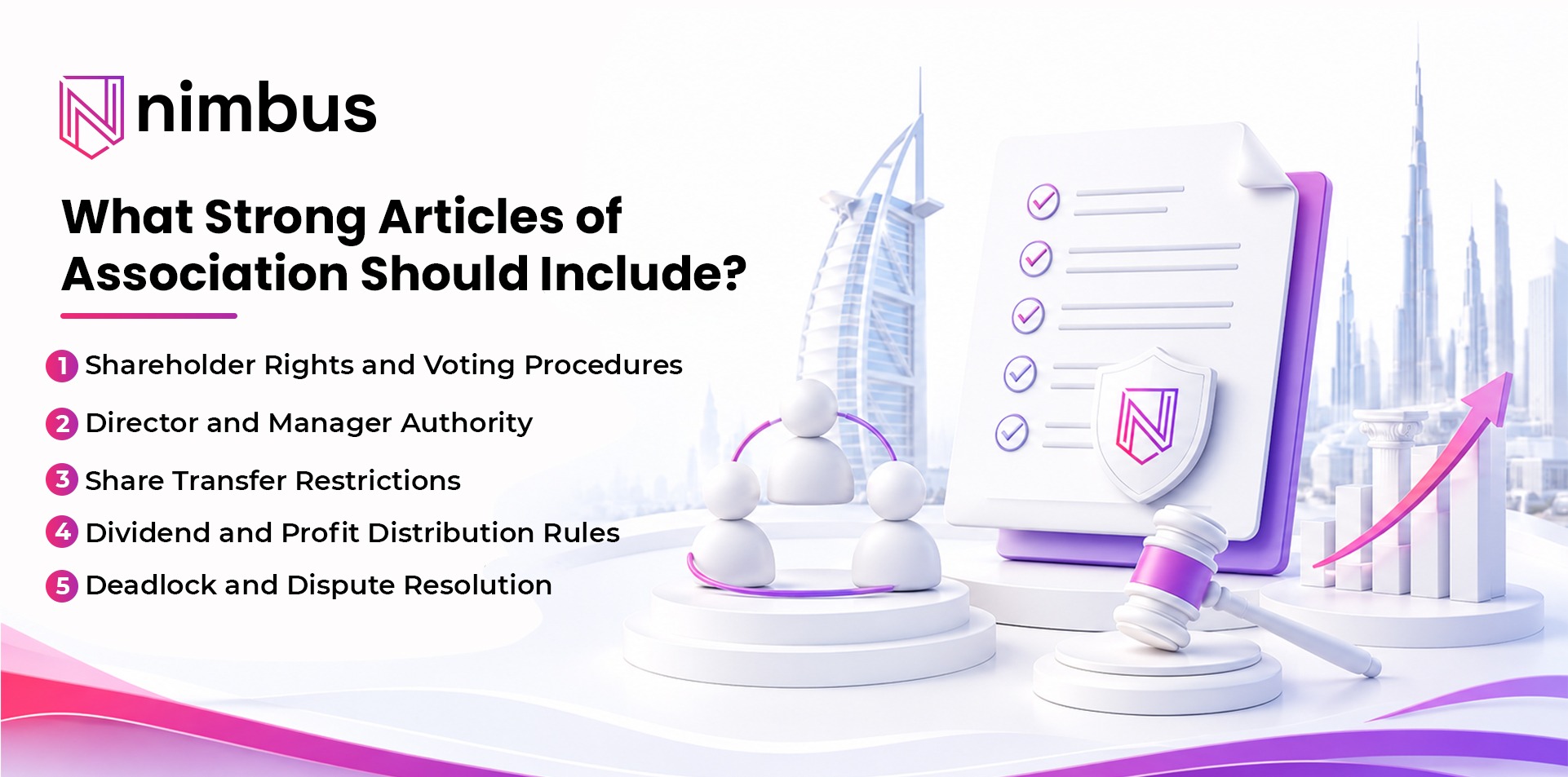
Key Clauses Every UAE Articles of Association Should Include
A well-prepared AOA should reflect how the company will actually operate in practice, not simply satisfy a filing requirement. Important areas include the following.
1. Shareholder Rights and Voting Procedures
The Articles should explain voting thresholds, reserved matters, minority protections, approval procedures, and shareholder meeting rules. This becomes especially important in 50/50 ownership structures where disagreements can otherwise create operational deadlock.
2. Director and Manager Authority
Clear authority provisions reduce confusion around who can legally bind the company. The AOA should define appointment powers, removal procedures, signature authority, and borrowing powers.
3. Share Transfer Restrictions
Strong transfer clauses help preserve ownership stability. The Articles should address pre-emption rights, share sale procedures, transfer approvals, and family or inheritance transfers. Without these provisions, shareholder exits can quickly become contentious.
4. Dividend and Profit Distribution Rules
Profit distribution expectations should be documented early. The AOA can clarify dividend approval procedures, retained earnings policies, investor preference rights, and reserve allocations. This reduces misunderstandings between founders and investors later.
5. Deadlock and Dispute Resolution
Many shareholder disputes emerge because constitutional documents fail to anticipate disagreement. Good Articles of Association often include:
- Deadlock mechanisms
- Buyout procedures
- Forced transfer rights
- Default provisions
- Dispute resolution forums
For global investors, these clauses provide essential operational protection.
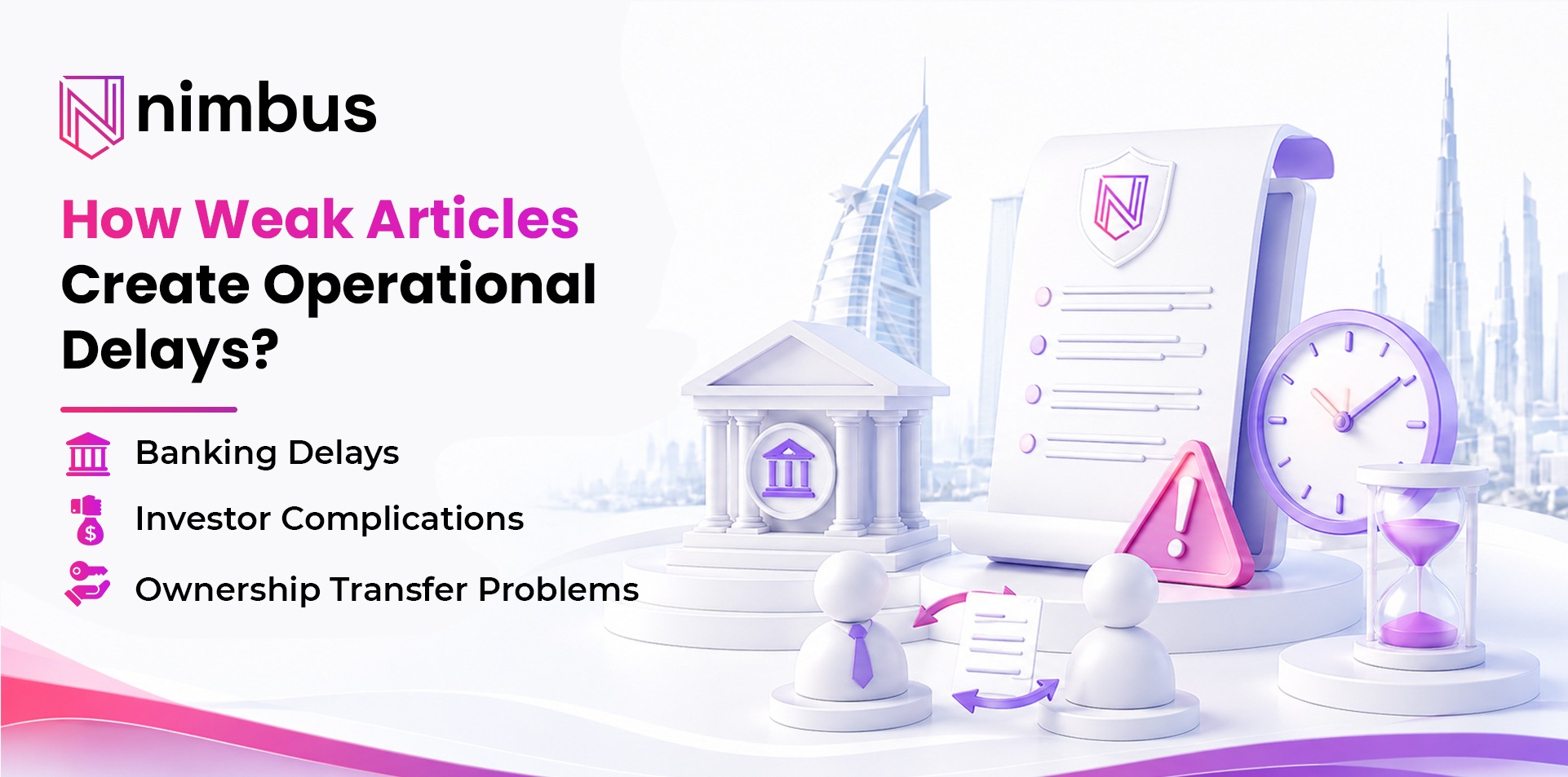
How Weak AOA Drafting Can Delay Banking, Investment, and Share Transfers
Poorly drafted company documents rarely create problems immediately after incorporation. The issues usually emerge when the company needs to make changes quickly. Common problem areas include the following.
1. Banking Delays
Banks often review constitutional documents carefully before approving corporate accounts. If authority provisions are inconsistent, the bank may delay account activation or require further clarification.
2. Investor Complications
Investors frequently require board representation, reserved matters, veto rights, information rights, and special voting arrangements. If these rights are absent from the AOA, amendments may be required before funding can proceed.
3. Ownership Transfer Problems
Unclear transfer wording can delay share sales, family succession, founder exits, and acquisitions. This is particularly risky for businesses planning future investment rounds or ownership changes.
Closing Thoughts
The UAE remains one of the most attractive jurisdictions for international expansion for businesses seeking regional growth opportunities, operational flexibility, and tax efficiency.
However, successful UAE company formation requires more than obtaining a licence. The underlying constitutional documents determine how the business will operate long after registration is complete.
Articles of Association define:
- Decision-making authority
- Shareholder rights
- Ownership transfer rules
- Governance procedures
- Dispute mechanisms
When drafted properly, these documents create operational clarity, investor confidence, and long-term stability. For investors entering the UAE market, reviewing governance structures early can prevent costly disputes, banking complications, and restructuring delays later.

Comments are closed