

The traditional image of business setup in the UAE often involves founders being physically present where their company operates. However, the rapid evolution of digital infrastructure, government services, and international business regulations has fundamentally changed that assumption.
Today, entrepreneurs can establish, manage, and grow companies across borders without relocating. Its continuous business reformations have allowed international founders to operate businesses remotely while maintaining full legal ownership and compliance.
As interest in business setup in the UAE continues to grow among global investors and businesses, one question consistently arises:
Do you actually need to live in the UAE to run a company there?
The answer is no.
In many cases, business owners can legally own and manage a UAE-based company while residing elsewhere. However, success depends on choosing the right structure, understanding regulatory obligations, and implementing proper operational processes from the start.
Why Remote Business Ownership Is Growing in the UAE
Over the past several years, the UAE has transformed itself into one of the world’s most business-friendly jurisdictions. Government-led digitalization initiatives have made company registration, licensing, tax administration, and compliance significantly more accessible.
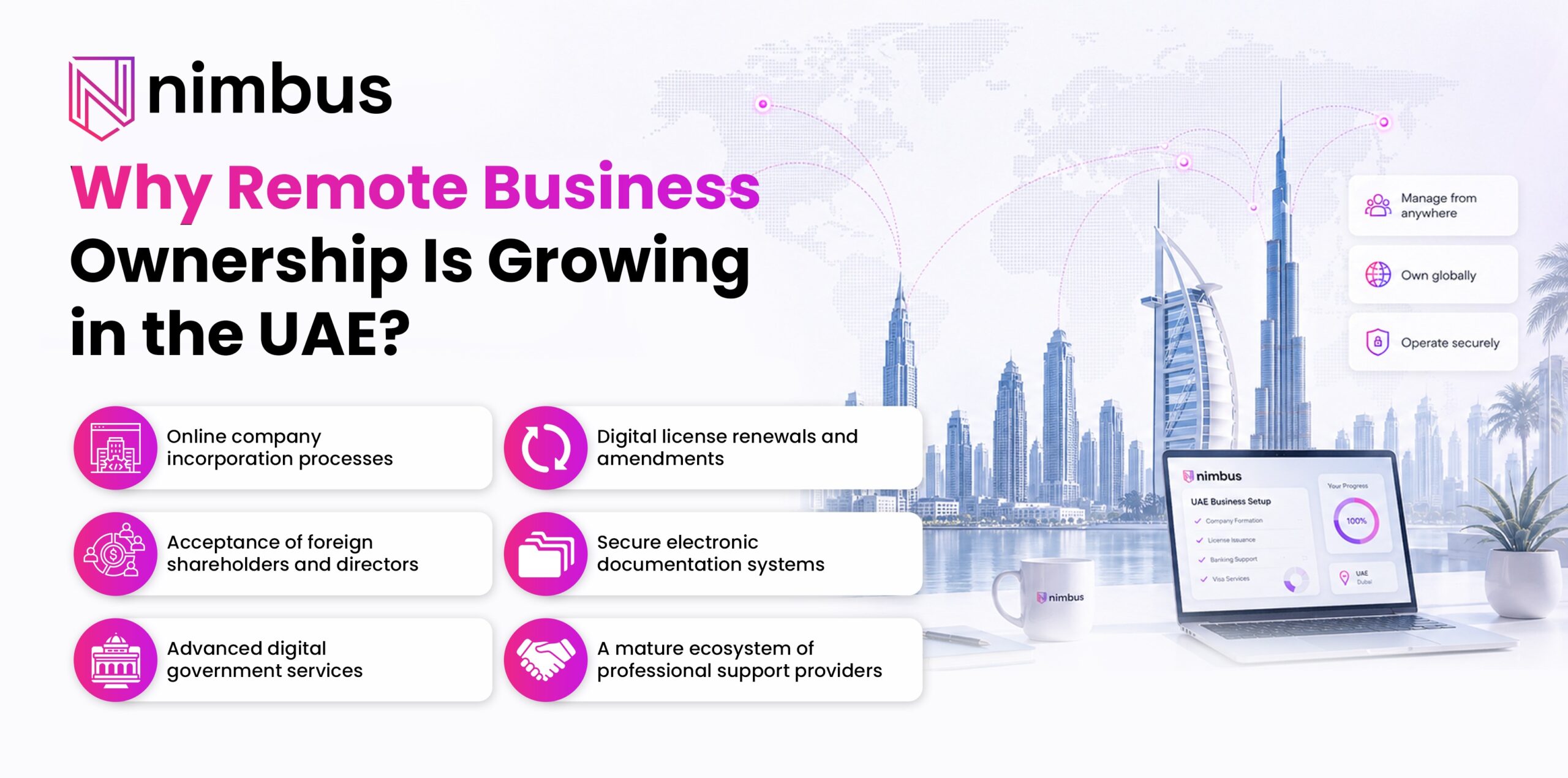
Several developments have contributed to the rise of remote company ownership:
- Online company incorporation processes
- Digital license renewals and amendments
- Acceptance of foreign shareholders and directors
- Secure electronic documentation systems
- Advanced digital government services
- A mature ecosystem of professional support providers
Can a Non-Resident Legally Start a Business in the UAE?
Yes. Non-residents can legally own and operate companies in the UAE. Recent regulatory reforms have expanded foreign ownership opportunities across both free zone and mainland jurisdictions. As a result, many business activities now permit full foreign ownership without requiring a local partner. Key advantages include:
- 100% foreign ownership in many sectors
- No mandatory residency requirement for shareholders
- Full repatriation of profits and capital
- Access to international markets through a UAE-licensed entity
This has made UAE company formation a viable option for entrepreneurs seeking a base for international expansion without relocating their personal residence.
What Does Running a UAE Business Remotely Actually Mean?
Remote ownership does not mean operating outside the legal framework of the UAE. Instead, it means the company remains fully registered and compliant within the UAE while the owner manages operations from another country. The arrangement involves:
- A UAE-registered company
- Overseas shareholders or directors
- Digital communication and management systems
- Remote administration of day-to-day activities
- Ongoing compliance with UAE regulations
Many founders periodically travel to the UAE for meetings, banking, expansion activities, or strategic planning. However, living in the country on a full-time basis is not generally required. The key distinction is that the business remains legally established in the UAE regardless of where the owner resides.
Best Business Models for Remote UAE Company Setup
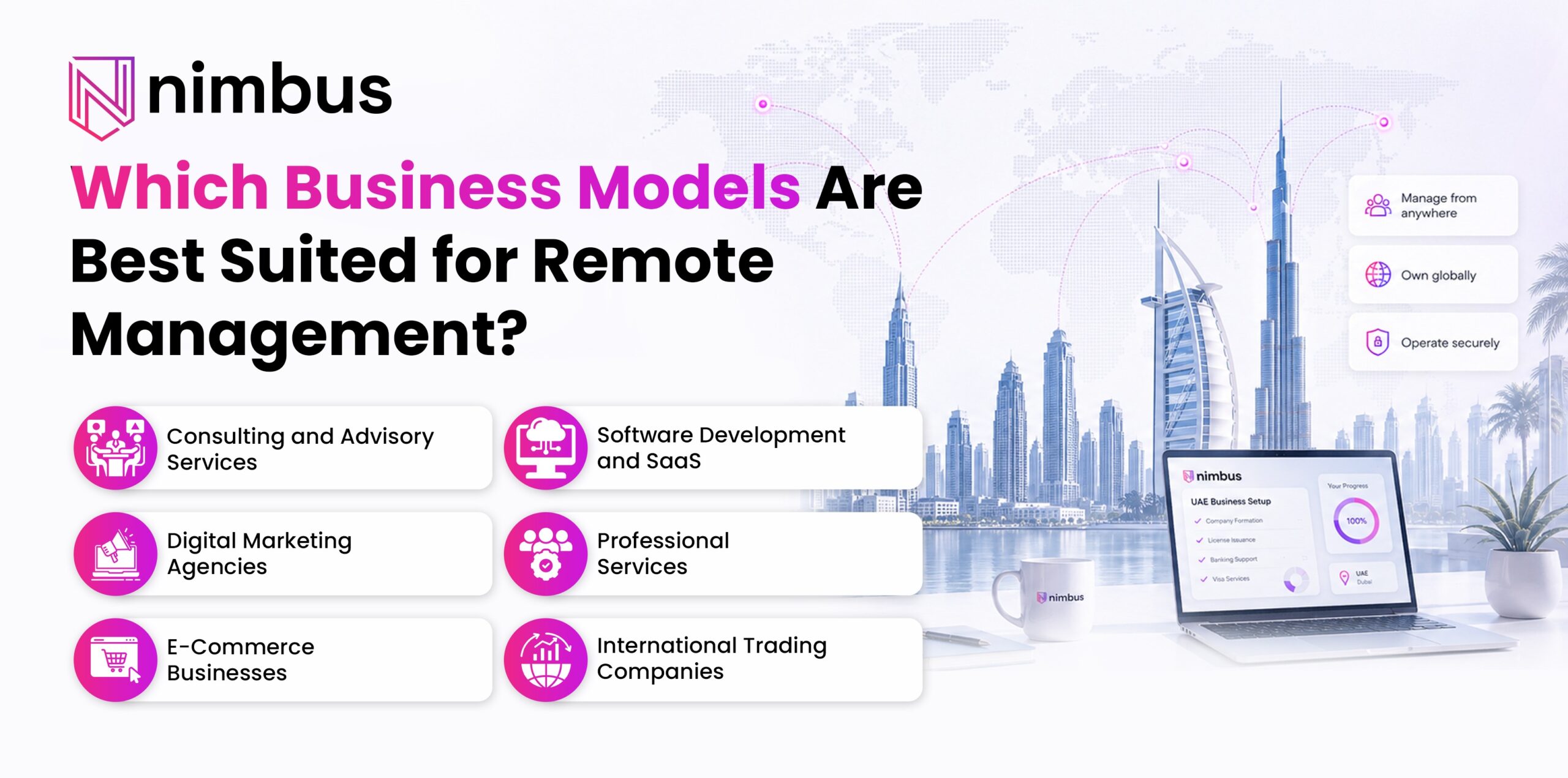
Not every business operates equally well under a remote structure. Businesses that rely primarily on technology, consulting, or digital delivery tend to perform best. Examples include:
- Consulting and Advisory Services: Consultants can serve clients globally while maintaining a UAE-based corporate structure.
- Software Development and SaaS: Technology companies often operate with distributed teams and cloud-based systems, making remote management highly practical.
- Digital Marketing Agencies: Marketing, branding, content creation, and advertising services can typically be delivered entirely online.
- Professional Services: Business support, coaching, training, and specialized advisory services are often ideal candidates for remote ownership.
- E-Commerce Businesses: Many online retailers can operate successfully through third-party logistics providers, reducing the need for physical infrastructure.
- International Trading Companies: Trading businesses can function remotely depending on the nature of products, logistics arrangements, and banking requirements.
Businesses requiring extensive physical operations, warehousing, manufacturing, or frequent face-to-face interactions may benefit more from a local presence.
Managing Your UAE Company Formation Remotely
One of the reasons remote ownership has become increasingly viable is that many core business functions can now be handled digitally. Common activities that can usually be managed remotely include:
- Company incorporation
- Trade license issuance
- Corporate tax registration
- Accounting and bookkeeping
- Annual license renewals
- Regulatory filings
With the right systems and professional support, these processes can often be completed without significant disruption.
When Do You Need to Visit the UAE for Business Setup?
Although remote ownership is possible, certain activities may still require in-person participation. Examples include:
- Corporate Banking: Bank account opening remains one of the most sensitive aspects of UAE company formation. Banks typically conduct:
- Identity verification
- Source-of-funds reviews
- Compliance assessments
- Know Your Customer (KYC) procedures
While some institutions have introduced digital onboarding elements, personal attendance may still be required depending on the applicant profile.
- Immigration and Visa Processes: Certain visa-related activities may involve biometric registration or in-country procedures.
- Regulated Business Activities: Industries requiring specialized approvals may involve additional documentation or direct interaction with authorities. Understanding these requirements in advance helps prevent unnecessary delays.
Opening a Corporate Bank Account in Dubai for Non-Residents
A common misconception is that obtaining a UAE corporate bank account is automatic. In reality, banking remains highly compliance-driven. Factors that banks frequently evaluate include:
- Nature of business activity
- Shareholder background
- Source of funds
- Expected transaction volumes
- Geographic exposure
- Corporate structure
Non-resident founders should be prepared for enhanced due diligence and detailed documentation requests.
Corporate Tax & Compliance for Non-Resident UAE Companies
Operating remotely does not remove regulatory obligations. All UAE companies must remain compliant with applicable rules regardless of where shareholders reside. Areas requiring attention include:
- Corporate tax registration
- Annual corporate tax filings
- VAT registration where thresholds apply
- Accounting record maintenance
- Financial reporting requirements
Failure to maintain compliance can create unnecessary risks, penalties, and operational disruptions. Professional oversight often helps ensure that obligations are met consistently and on time.
Why Proper Structuring Matters
The success of a remotely managed UAE company often depends less on geography and more on planning. Founders who invest time in choosing the right jurisdiction, licensing structure, banking strategy, and compliance framework typically experience fewer operational challenges. Professional advisors can assist with:
- Business structure selection and setup process
- Banking support and tax planning
- Regulatory compliance
Ready to Start Your UAE Business Without Relocating?
The idea that entrepreneurs must live where their company operates is becoming increasingly outdated. Thanks to digital infrastructure, modern regulations, and streamlined incorporation processes, running a UAE business from abroad is now a practical reality for many founders.
Non-resident entrepreneurs can legally own and operate companies without relocating. However, remote ownership requires careful planning, appropriate jurisdiction selection, sound banking preparation, and ongoing compliance management.

Comments are closed