

Family-owned businesses have played a defining role in the UAE’s economic success. From manufacturing companies to real estate groups, family enterprises continue to drive private sector growth across the Emirates.
However, while building a successful business is a remarkable achievement, preserving it across generations is often a far greater challenge. Studies on family enterprises consistently show that many businesses struggle to survive beyond the founder’s generation.
While exact figures vary across markets, succession planning remains one of the leading reasons family businesses lose momentum, experience ownership disputes, or ultimately cease operations.
Recognizing the economic importance of family enterprises, the UAE introduced Federal Decree-Law No. 37 of 2022 on Family Businesses, providing a legal framework that supports governance, ownership continuity, and long-term sustainability. Institutions such as the Dubai Centre for Family Businesses also continue to promote education and best practices for family-owned companies.
In this post, we take a closer look at UAE’s family business law and how succession planning should be viewed as a strategic business process rather than a one-time legal exercise.
Why Family Business Succession Planning in the UAE is Critical?
Many founders postpone succession planning because the business is performing well or because conversations around retirement can be uncomfortable. Unfortunately, waiting too long often creates avoidable problems.
Unexpected events such as illness, incapacity, or death can leave businesses facing uncertainty if no clear succession strategy exists. Common consequences include:
- Leadership disputes among family members
- Ownership conflicts
- Disruption to banking and commercial relationships
- Difficulty preserving family wealth
Succession planning involves establishing governance structures, protecting business assets, and ensuring ownership transitions occur smoothly.
Structuring Your Business: Ownership vs. Management in Family Enterprises
One of the biggest misconceptions within family businesses is assuming that every shareholder should also be involved in managing the company. Successful family enterprises often distinguish between ownership and management.
Ownership provides rights such as:
- Holding company shares
- Receiving dividends
- Voting on major corporate decisions
Management involves:
- Running daily operations
- Leading employees
- Managing finances
- Driving business growth
Not every family member possesses the skills, interest, or experience to manage a business effectively. Likewise, capable executives may not necessarily require equal ownership stakes. Separating these roles creates greater clarity while reducing the likelihood of family disagreements.
Many successful family businesses appoint professional executives alongside family shareholders to ensure operations remain efficient while preserving family ownership.
Choosing the Right Succession Model for Your Dubai Family Business
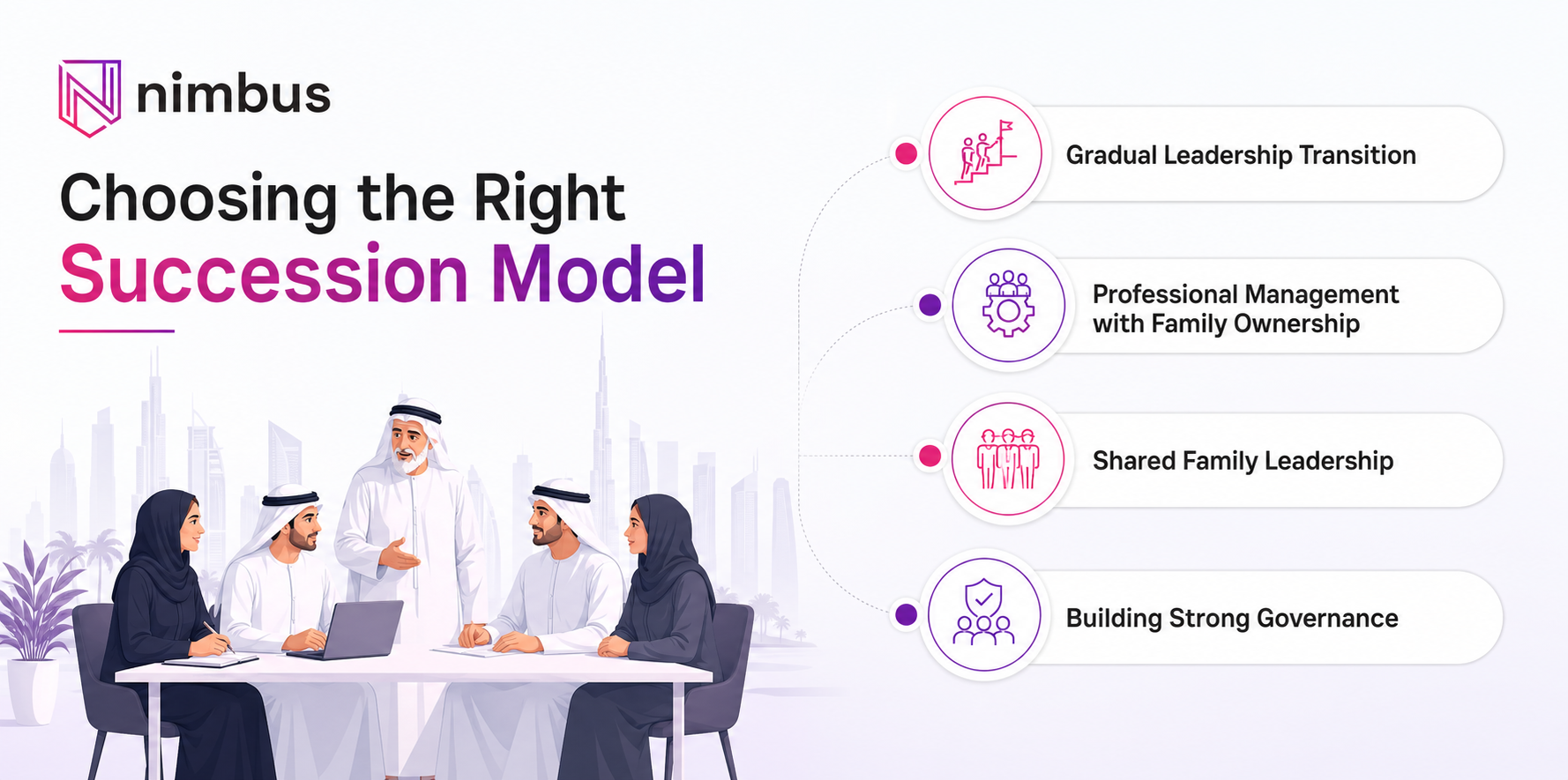
Every family business has different priorities, making succession planning highly individual. Several succession models are commonly used across the UAE.
1. Gradual Leadership Transition
This is one of the most common approaches. The founder gradually transfers executive responsibilities to the next generation while remaining involved as chairman or strategic advisor. Benefits include:
- Continuous knowledge transfer
- Reduced operational disruption
- Increased confidence among employees and stakeholders
- Opportunity to mentor future leaders
The success of this model depends on the founder’s willingness to gradually step back and allow successors to make independent decisions.
2. Professional Management with Family Ownership
Some families prefer to retain ownership while appointing experienced external executives to lead the business. This approach works particularly well when:
- No family member wishes to manage operations.
- Specialist expertise is required.
- The business has grown significantly.
- Expansion into international markets is planned.
The family continues making strategic ownership decisions while professional managers oversee day-to-day operations.
3. Shared Family Leadership
Where multiple family members possess complementary skills, leadership responsibilities may be divided. For example:
- One sibling oversees finance.
- Another manages operations.
- Another leads sales and business development.
Clear reporting lines and decision-making authority are essential for this structure to succeed.
4. Building Strong Governance
Governance is often the factor that separates successful multi-generational businesses from those that struggle during succession. Rather than relying solely on informal family discussions, successful businesses establish structured governance systems. These may include:
- Family Council: Focuses on family-related matters rather than daily business operations.
- Board of Directors: Many family businesses now include independent directors who contribute to industry expertise, objective decision-making, and mediation during family disagreements.
- Executive Management: Remains responsible for operating the business according to the strategy approved by the board.
Using Holding Companies for Family Wealth Preservation in the UAE
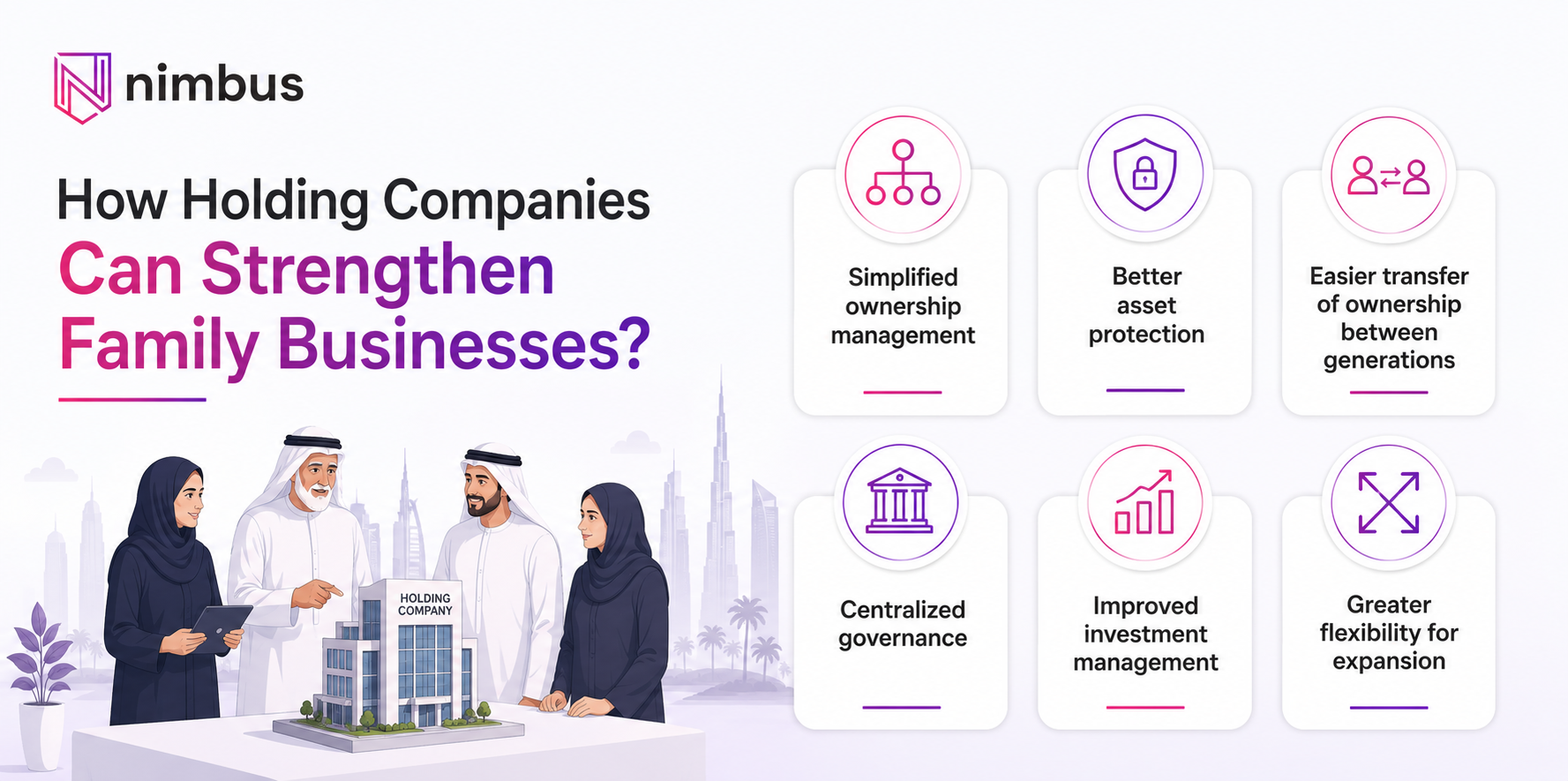
As family businesses grow, many choose to restructure ownership through holding companies. Instead of individual family members directly owning several operating businesses, a holding company owns the subsidiaries while family members own shares in the parent entity. This structure offers several advantages, such as:
- Simplified ownership management
- Better asset protection
- Easier transfer of ownership between generations
- Centralized governance
- Improved investment management
- Greater flexibility for expansion
Holding companies in the UAE can also simplify future acquisitions and corporate restructuring. For families considering company formation in the UAE, establishing a holding company early can create a stronger long-term ownership framework while supporting future business growth.
Protecting Assets with DIFC and ADGM Foundations
Families with significant wealth increasingly use foundations established in the Dubai International Financial Centre (DIFC) or Abu Dhabi Global Market (ADGM). Foundations are separate legal entities that hold assets on behalf of beneficiaries according to the founder’s wishes. These structures can provide:
- Long-term asset protection
- Clear succession mechanisms
- Privacy for family assets
- Continuity regardless of changes in family ownership
- Protection against fragmented inheritance
For many high-net-worth families, foundations have become a preferred vehicle for preserving wealth across multiple generations.
The Role of Shareholders’ Agreements in UAE Family Business Law
A comprehensive shareholders’ agreement is just as important as selecting the right legal structure. It should clearly address:
- Share transfer restrictions
- Buy-sell provisions
- Valuation methods and dividend policies
- Deadlock resolution procedures
- Exit mechanisms for family members
Without these agreements, problems between shareholders can escalate into lengthy legal disputes that disrupt business operations.
Common Mistakes in Succession Planning and How to Avoid Them
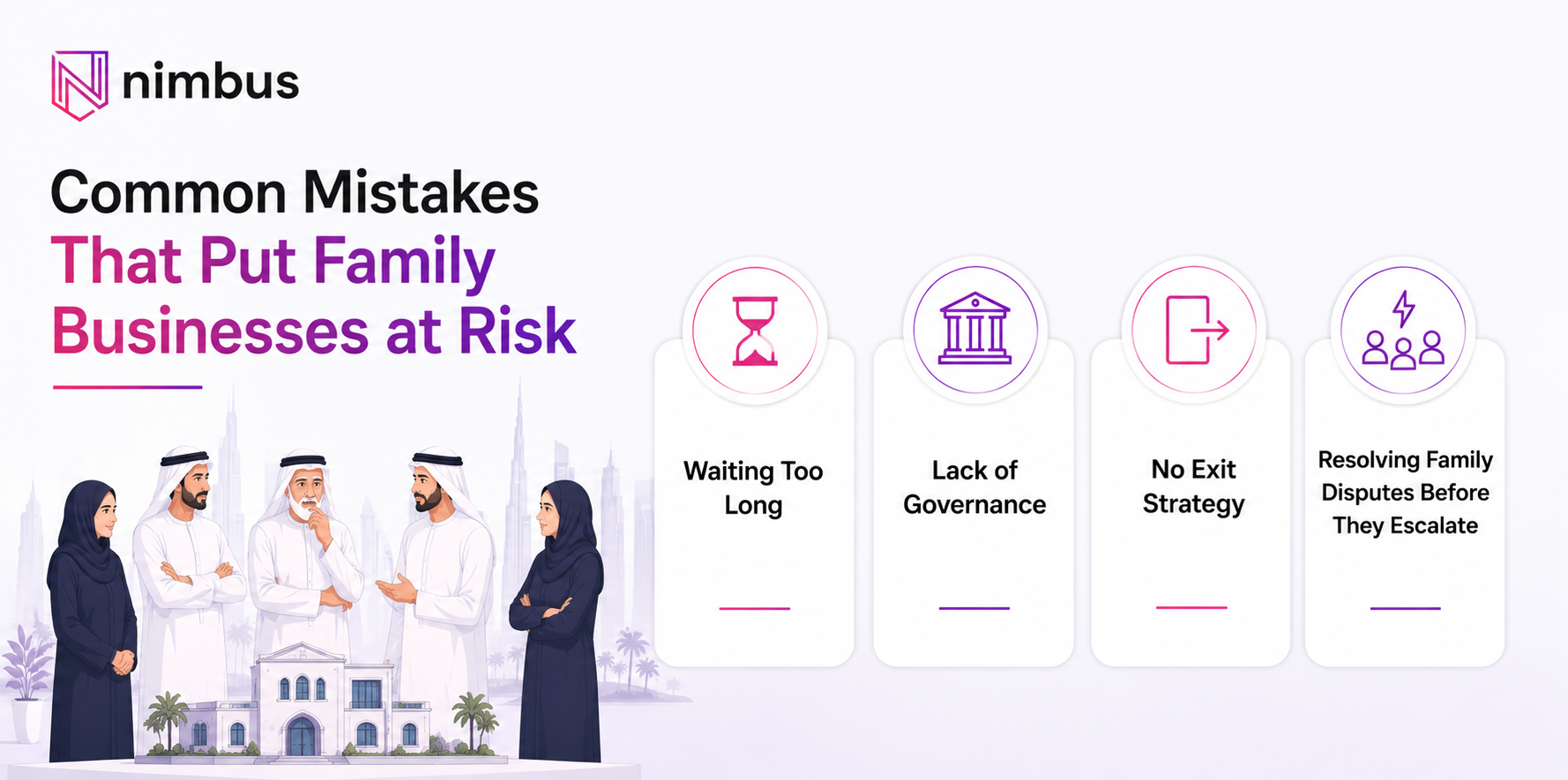
Many succession failures are avoidable with early planning. Some of the most common mistakes are listed below.
1. Waiting Too Long
Many founders postpone succession discussions until retirement or unexpected health issues force immediate decisions. Without adequate preparation, leadership transitions become rushed and difficult.
2. Lack of Governance
Businesses without documented governance frameworks often struggle when disagreements arise. Unclear authority frequently leads to conflicts that delay important decisions.
3. No Exit Strategy
Not every family member wants to remain involved in the business. Having predetermined buyout mechanisms and valuation methods allows shareholders to exit without damaging family relationships.
Resolving Family Business Disputes Under UAE Federal Decree-Law No. 37
Disagreements are common in multi-generational businesses, but they do not always need to result in litigation. Many successful family enterprises rely on structured dispute resolution processes. These may include:
- Family council discussions
- Independent board mediation
- Shareholder buyout mechanisms
Early intervention usually preserves both business continuity and family relationships far better than prolonged legal proceedings.

Summing Up
Succession planning is about protecting the legacy that founders have spent decades building while ensuring the business continues to grow for future generations. With the UAE introducing stronger legal frameworks for family-owned businesses, now is the ideal time for business owners to prepare for generational transfer.
Whether through holding companies, shareholders’ agreements, or DIFC or ADGM foundations, early planning significantly improves the chances of long-term success. Businesses considering expansion through UAE company formation should also view succession planning as part of their long-term corporate strategy.
Comments are closed