
Why Did Saudi Arabia Introduce the UBO Rules?
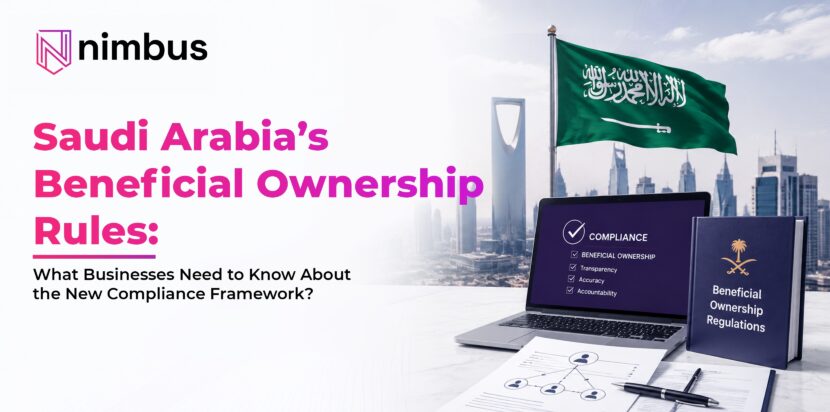
The concept of beneficial ownership is not unique to Saudi Arabia. Over the last decade, countries around the world have strengthened ownership transparency regulations to combat financial crime and improve corporate accountability. The primary objectives behind UBO regulations include:
- Preventing money laundering
- Combating terrorist financing
- Increasing transparency in corporate structures
- Reducing the misuse of shell companies
- Strengthening investor confidence
- Aligning with international compliance standards
What is an Ultimate Beneficial Owner (UBO) in KSA?
An Ultimate Beneficial Owner is the natural person who ultimately owns, controls, or benefits from a company, regardless of how many layers of ownership may exist between the individual and the business.
The purpose of the UBO framework is to ensure that ownership structures cannot be used to conceal the identities of the individuals who exercise real control over a company.
In practice, a business may have multiple shareholders, holding companies, trusts, or investment vehicles involved in its ownership chain. The UBO framework requires businesses to look beyond these structures and identify the actual individuals who benefit from the company.
Criteria: Who Qualifies as a UBO Under Ministry of Commerce Rules?
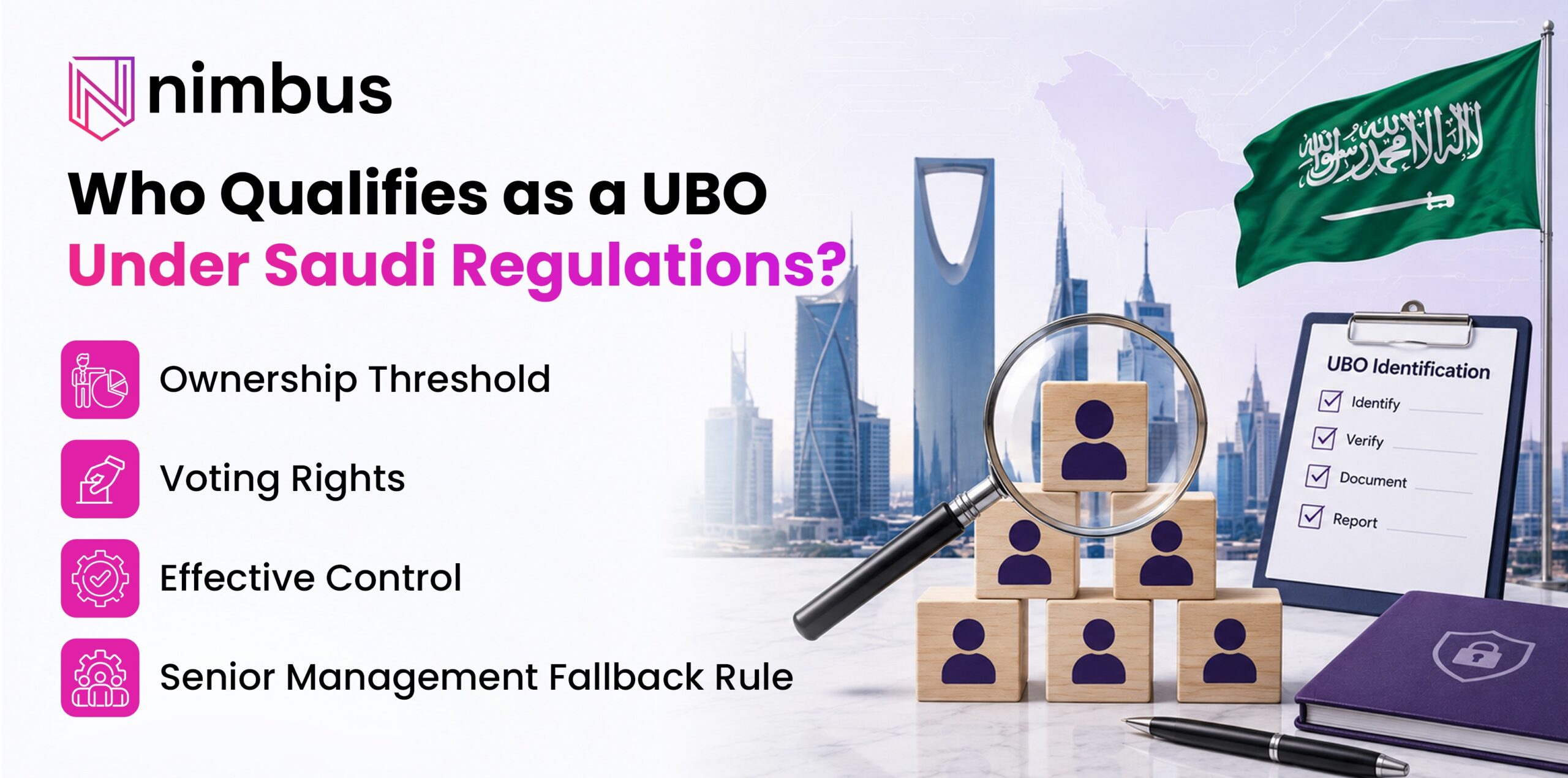
Under the Ministry of Commerce rules, an individual is generally considered an Ultimate Beneficial Owner if they meet one or more of the following criteria:
1. Ownership Threshold
The individual directly or indirectly owns at least 25% of the company’s capital.
2. Voting Rights
The individual controls 25% or more of the voting rights associated with the company.
3. Effective Control
The individual exercises significant influence over business decisions through:
- Shareholder agreements
- Voting arrangements
- Contractual rights
- Strategic decision-making authority
4. Senior Management Fallback Rule
If no individual satisfies the ownership or control thresholds, the company must identify an appropriate senior representative, such as:
- Company manager
- Board chairman
- Board member
- Legal representative
This ensures that every company has a designated beneficial owner for reporting purposes.
Which KSA Companies Are Subject to UBO Disclosure Requirements?
The UBO Rules apply to most companies registered in Saudi Arabia, including entities established through:
- Saudi company formation structures
- Foreign-owned companies
- Joint ventures
- Limited Liability Companies (LLCs)
- Branch offices of foreign companies
Certain categories of organizations may be exempt, including publicly listed joint-stock companies and other entities specifically exempted by regulators. However, most businesses involved in company formation in the KSA will fall within the reporting requirements.
Key UBO Compliance Requirements for Business Setup in Saudi Arabia
The UBO framework introduces several ongoing obligations that businesses must satisfy throughout their lifecycle.
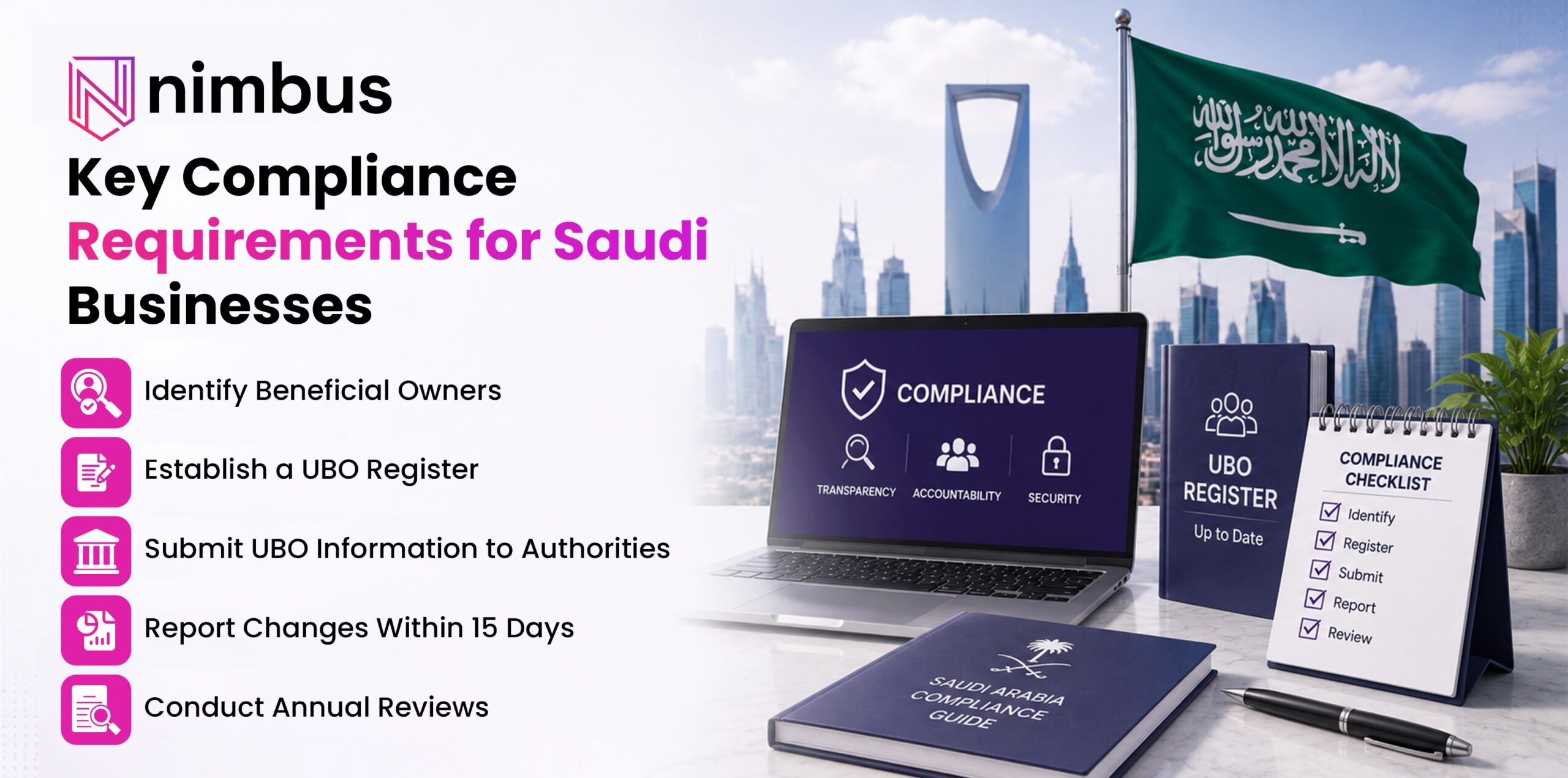
1. Identify Beneficial Owners
Upon incorporation or registration, companies must determine who qualifies as their Ultimate Beneficial Owner. This requires reviewing:
- Shareholding structures
- Corporate ownership chains
- Voting rights
- Governance arrangements
- Control mechanisms
2. Establish a UBO Register
Companies must maintain a dedicated Ultimate Beneficial Owner Register. The register may be kept:
- In physical form
- Electronically
- At the company’s registered office
The register must contain accurate information regarding each identified beneficial owner.
3. Submit UBO Information to Authorities
Businesses must submit beneficial ownership information through the Saudi Business Center (SBC). The submission forms part of the company’s regulatory compliance obligations and may be reviewed by authorities when necessary.
4. Report Changes Within 15 Days
One of the most important requirements under the new framework is the obligation to report ownership changes promptly. Companies must notify authorities within 15 days if there are changes involving:
- Shareholders
- Ownership percentages
- Voting rights
- Control structures
- Beneficial ownership status
This requirement applies throughout the life of the company.
5. Conduct Annual Reviews
Businesses must review their UBO records annually to ensure information remains accurate and up to date. Annual reviews should verify:
- Ownership structures
- Shareholder details
- Control arrangements
- Regulatory filings
Impact of KSA UBO Rules on Foreign Investors and Holding Companies
Foreign investors pursuing business setup in Saudi Arabia should pay particular attention to the new rules. International ownership structures often involve:
- Parent companies
- Holding companies
- Multiple shareholder layers
- Cross-border investments
- Investment funds
These arrangements can make beneficial ownership identification more complex. When planning business incorporation in Saudi Arabia, investors should ensure that ownership structures are documented clearly from the outset to simplify future reporting obligations. Early planning can significantly reduce compliance risks later.
Ministry of Commerce Penalties for UBO Non-Compliance in KSA
The Ministry of Commerce has introduced significant penalties for businesses that fail to comply with UBO obligations. Potential violations include:
- Failure to identify beneficial owners
- Failure to maintain accurate records
- Failure to update ownership information
- Failure to submit required filings
- Providing inaccurate information
Companies found in breach may face penalties of up to SAR 500,000. Non-compliance can also result in delays in licensing approvals, reputational damage, and reduced investor confidence. For growing businesses, these risks can have long-term operational implications.
Best Practices for Maintaining a UBO Register in Saudi Arabia
Companies can reduce risk by implementing structured compliance processes. Recommended practices include:
- Conduct ownership reviews regularly
- Maintain updated shareholder records
- Monitor ownership changes continuously
- Review governance structures annually
- Document all ownership transfers properly
- Seek professional compliance support when necessary
Conclusion: Navigating Corporate Governance and Business Setup in KSA
Saudi Arabia’s new Ultimate Beneficial Owner Rules represent a significant step forward in strengthening transparency, accountability, and corporate governance across the Kingdom.
Businesses can no longer rely on complex ownership structures to obscure who ultimately controls or benefits from their operations. Instead, companies must maintain accurate ownership records, report changes promptly, and conduct ongoing reviews to remain compliant.
For organizations pursuing company formation in the KSA, understanding UBO obligations should be a priority from the very beginning. Companies that embrace these transparency requirements early will also position themselves more effectively in one of the region’s fastest-evolving business environments.
Comments are closed