

The Gulf Cooperation Council (GCC) region continues to attract businesses from around the world seeking access to fast-growing economies, investor-friendly policies, and ambitious economic diversification programs.
Countries such as the UAE, Saudi Arabia, Qatar, Bahrain, Oman, and Kuwait have invested heavily in infrastructure, technology, financial services, and foreign investment frameworks, making the region a prime destination for international expansion.
However, while market entry opportunities are significant, compliance remains one of the most underestimated challenges for foreign companies entering the GCC, especially for business setup in the UAE and KSA.
Many businesses focus on incorporation and commercial growth but overlook ongoing regulatory obligations that can result in penalties, operational disruptions, visa issues, and reputational risks.
Whether pursuing company formation in the KSA or expanding into the UAE, or establishing operations elsewhere in the Gulf, understanding common compliance pitfalls can help businesses avoid costly mistakes and build a stable foundation for long-term success.
Why Compliance Matters More Than Ever in the GCC?
Over the past decade, GCC governments have significantly strengthened regulatory oversight. New tax systems, anti-money laundering requirements, beneficial ownership disclosures, labor reforms, and digital reporting obligations have transformed the compliance landscape.
Regulators are increasingly leveraging technology to monitor businesses in real time, making it easier to identify inconsistencies, missed filings, or non-compliance. As a result, compliance has become a critical component of business sustainability and corporate governance.
Top Compliance Mistakes During GCC Company Formation
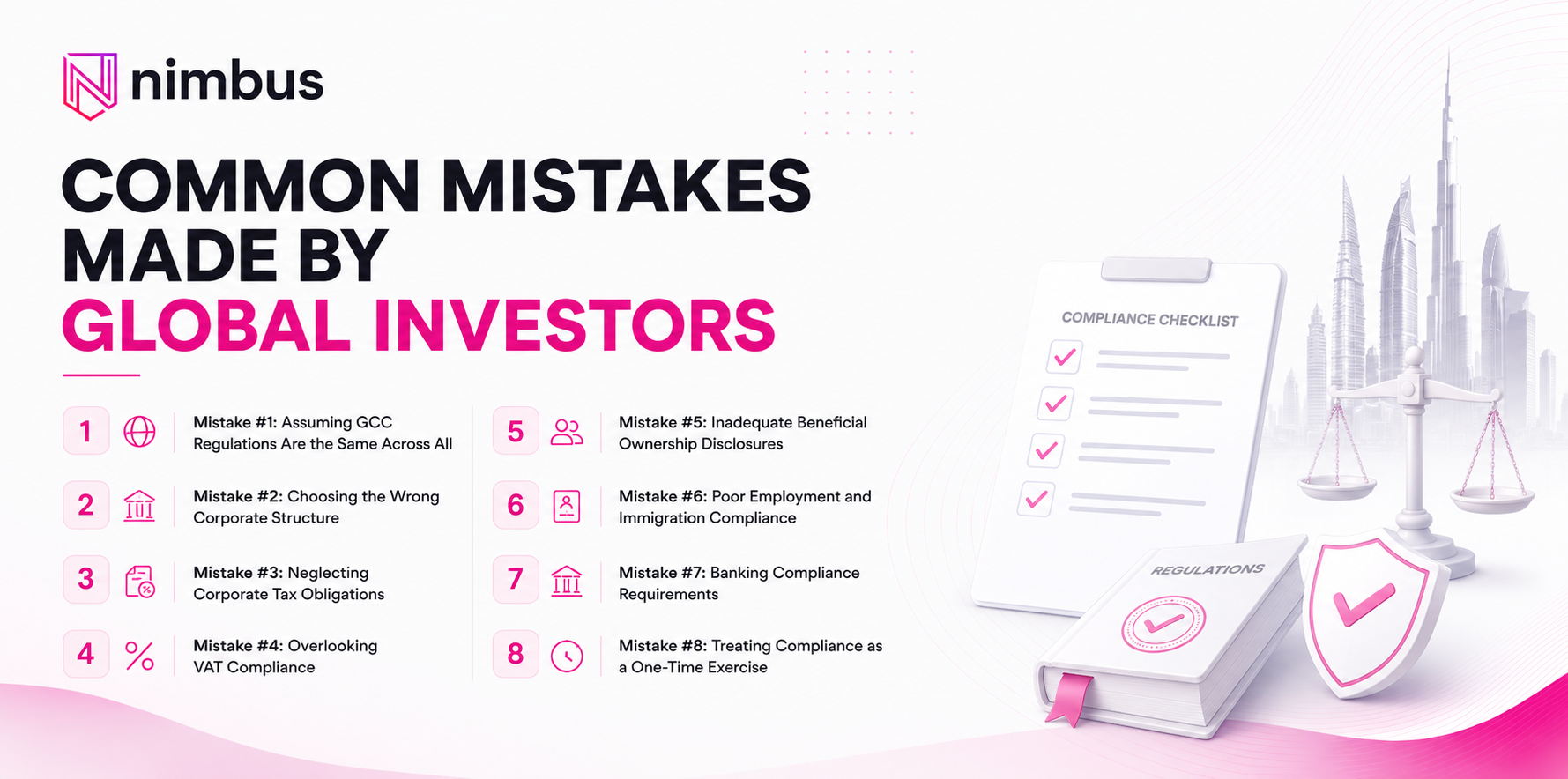
Mistake #1: Assuming GCC Regulations Are the Same Across All Countries
One of the most common misconceptions among foreign investors is that the GCC operates under a single regulatory framework. While GCC countries share cultural, economic, and legal similarities, each jurisdiction maintains its own:
- Corporate laws
- Tax regulations
- Employment requirements
- Licensing rules
- Foreign ownership policies
- Data protection regulations
- Industry-specific approvals
For example:
- UAE corporate tax regulations differ significantly from Saudi Arabia’s tax framework.
- Labor regulations vary between the UAE, Saudi Arabia, Qatar, and Bahrain.
Businesses should conduct country-specific compliance assessments rather than applying a one-size-fits-all approach across the region.
Mistake #2: Choosing the Wrong Corporate Structure
Selecting the wrong legal structure at the outset can create long-term operational challenges. Many foreign companies rush into incorporation without fully evaluating corporate and business setup structures.
For example, during a UAE company formation process, businesses often choose a free zone company without considering restrictions on conducting business directly within the UAE mainland market.
Similarly, some companies establish branch offices when a locally incorporated entity would better support commercial activities. Careful structuring during company formation in the GCC can prevent expensive restructuring later.
Mistake #3: Neglecting Corporate Tax Obligations
The introduction of corporate taxation in several GCC countries has created new compliance requirements for businesses. In the UAE, many companies mistakenly assume that free zone status automatically eliminates all tax obligations. In reality:
- Corporate tax registration may still be required.
- Annual tax returns must generally be filed.
- Transfer pricing requirements may apply.
- Documentation obligations continue regardless of tax liability.
Similarly, companies operating in Saudi Arabia must understand the distinction between:
- Corporate income tax
- Zakat obligations
- Withholding tax requirements
Failure to register, file returns, or maintain proper documentation can result in significant penalties.
Mistake #4: Overlooking VAT Compliance
VAT has become a major compliance focus throughout the GCC. Foreign businesses frequently encounter issues such as:
- Late VAT registration
- Incorrect invoicing
- Improper VAT recovery claims
- Missing documentation
- Errors in cross-border transaction reporting
VAT rules differ across GCC jurisdictions, making it essential to understand country-specific requirements. Companies involved in business setup in the UAE should ensure VAT obligations are assessed from the beginning rather than waiting until revenue thresholds are exceeded.
Mistake #5: Inadequate Beneficial Ownership Disclosures
Beneficial ownership transparency has become a global regulatory priority. Many GCC jurisdictions now require businesses to disclose Ultimate Beneficial Owners (UBOs) and maintain updated ownership records. Common mistakes include:
- Failing to submit UBO information
- Not updating ownership changes
- Providing incomplete shareholder records
- Neglecting annual reporting requirements
Regulators increasingly monitor beneficial ownership disclosures as part of anti-money laundering initiatives.
Mistake #6: Poor Employment and Immigration Compliance
Labor and immigration violations remain among the most common compliance challenges for foreign businesses. Typical issues include:
- Delayed visa renewals
- Incorrect employment contracts
- Failure to meet localization requirements
- Non-compliant payroll practices
- Inaccurate employee classifications
For example, companies operating under UAE mainland setup structures must comply with labor regulations and workforce localization initiatives such as Emiratisation. In Saudi Arabia, businesses must monitor Saudization requirements under the Nitaqat program.
Mistake #7: Banking Compliance Requirements
Opening a corporate bank account is often more challenging than company incorporation itself. Banks throughout the GCC have strengthened compliance procedures relating to:
- Source of funds verification
- Ultimate beneficial ownership
- Transaction monitoring
- Business activity validation
Foreign businesses frequently experience delays because:
- Corporate structures are unclear
- Documentation is incomplete
- Business activities are poorly explained
- Compliance records are insufficient
Proper preparation before engaging with banks can significantly improve approval outcomes.
Mistake #8: Treating Compliance as a One-Time Exercise
Many foreign investors focus heavily on incorporation and licensing but neglect ongoing obligations. Compliance is not a one-time milestone. It requires continuous management of:
- License renewals
- Tax filings
- Employment obligations
- Corporate governance requirements
- Industry-specific permits
Businesses that adopt proactive compliance strategies are far less likely to encounter operational disruptions.
Best Practices for Maintaining Compliance Across the GCC
To reduce regulatory risk, businesses should consider the following measures:
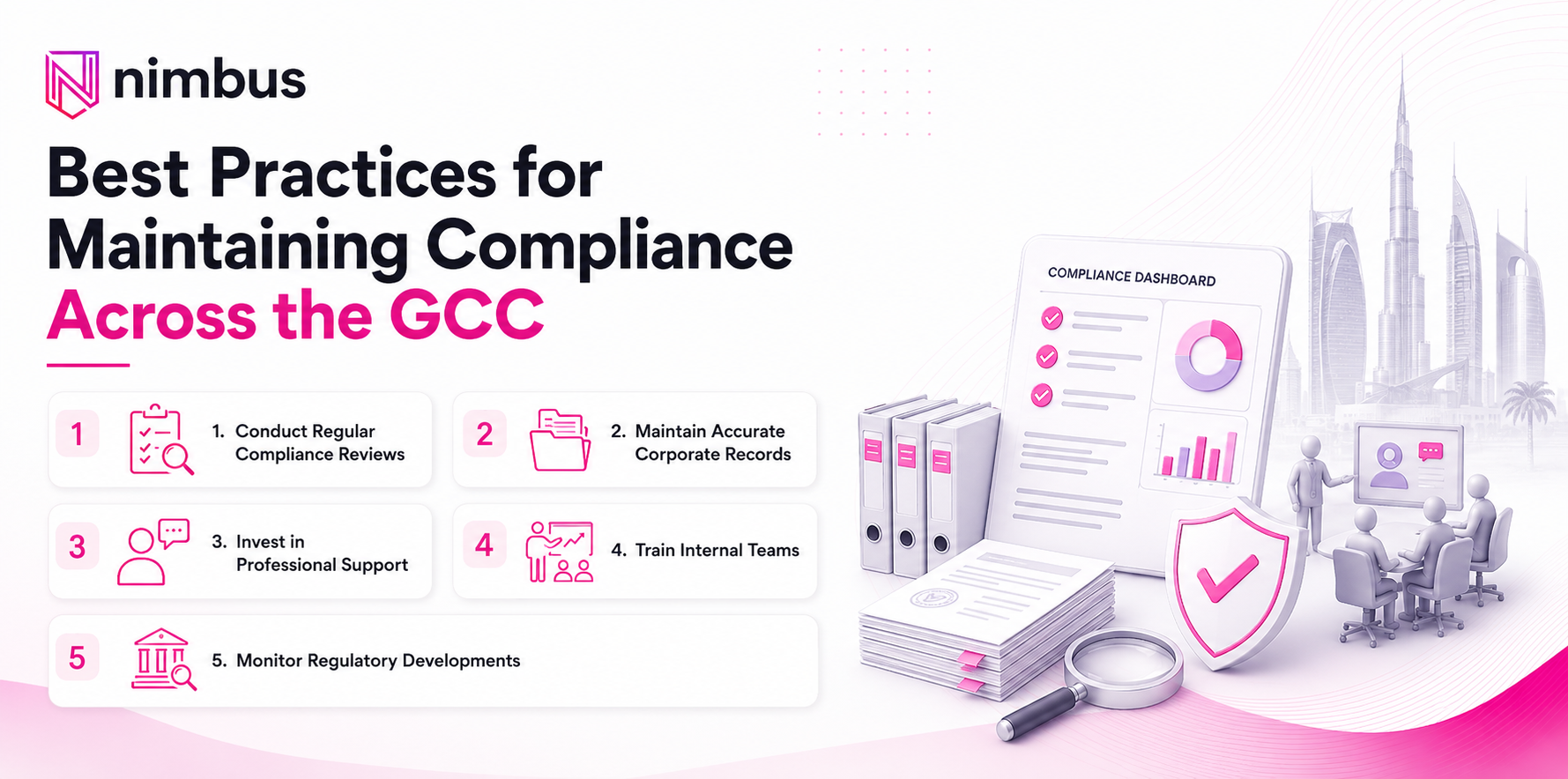
- Conduct Regular Compliance Reviews: Periodic assessments help identify gaps before regulators do.
- Maintain Accurate Corporate Records: Keep ownership records, licenses, tax filings, and governance documents up to date.
- Invest in Professional Support: Experienced advisors can help navigate changing regulations across multiple jurisdictions.
- Train Internal Teams: Compliance awareness should extend beyond legal departments and involve finance, HR, operations, and management teams.
- Monitor Regulatory Developments: GCC regulations continue to evolve rapidly, particularly in areas such as taxation, ESG reporting, digital assets, and data protection.
The region also offers extraordinary opportunities for international businesses seeking international expansion. However, regulatory compliance has become increasingly sophisticated and demands careful attention.
Whether pursuing business setup in the UAE or evaluating business incorporation in the KSA, businesses must recognize that long-term success depends on more than obtaining a trade license.
By understanding common compliance mistakes and mitigating risks from the beginning, foreign companies can maintain operational continuity and build a sustainable presence across the GCC’s evolving business landscape.
Comments are closed