


UAE Wage Protection System (WPS) 2026: The New Salary Rules Explained
The UAE government has consistently enhanced labor protections to strengthen employee rights and improve workplace standards. The latest changes reflect a broader commitment to transparency, accountability, and timely wage payments. Under the revised rules:
- Salaries earned during one month must be paid by the first day of the following Gregorian month.
- Payments must be processed through the WPS or another MOHRE-approved payment channel.
- Late salary payments are no longer protected by a grace period.
- Employers must maintain comprehensive payroll documentation.
- Companies remain legally responsible for payroll compliance even when using third-party payroll providers.
The first payroll cycle affected by the new regulations began on June 1, 2026.
Why the Removal of the WPS 15-Day Grace Period Matters
The elimination of the 15-day grace period represents a fundamental shift in payroll compliance. Under the previous framework, many businesses used the grace period to manage:
- Cash flow timing
- Banking delays
- Payroll processing issues
- Internal administrative approvals
Those delays are no longer tolerated under the revised framework. Instead, payroll has become a strict compliance obligation with immediate regulatory consequences for missed deadlines.
For entrepreneurs considering business setup in the UAE, these changes highlight the importance of establishing robust HR, finance, and payroll systems from day one.
Key Updates Under Ministerial Resolution No. 340 of 2026
1. Uniform Salary Payment Deadline
The most significant change is the introduction of a standardized payment deadline across MOHRE-registered private-sector businesses. Previously:
- Salary due dates were largely governed by employment contracts.
- Employers had a 15-day grace period before violations were recorded.
Now, salaries must be paid by the first day of the following month and any delay beyond that date is considered a violation. This creates a consistent compliance framework across the private sector.
2. Removal of the Grace Period
The removal of the grace period means enforcement starts much sooner. Employers can no longer rely on additional time to resolve payroll issues before attracting regulatory attention. As a result:
- Payroll processing schedules must be adjusted.
- Treasury planning must become more proactive.
- Internal controls must be strengthened.
3. Increased Documentation Requirements
The new framework also introduces stricter recordkeeping obligations. Employers must maintain:
- Payroll records
- Salary transfer confirmations
- Documentation supporting deductions
- Employee payment histories
These records must be available upon request from MOHRE.
The New 85% WPS Compliance Threshold for UAE Companies
The updated regulations introduce an 85 percent compliance threshold measured at both company and employee levels.
1. Company-Level Compliance
An employer may be considered compliant if at least 85 percent of total wages due are paid on time.
2. Employee-Level Compliance
An employee is not considered unpaid if they receive at least 85 percent of their entitled salary and if any remaining amount results from lawful deductions.
However, employees still retain the legal right to claim unpaid balances, file complaints, and pursue labor claims if necessary. Businesses involved in company formation in the UAE should ensure payroll systems can accurately monitor these thresholds.
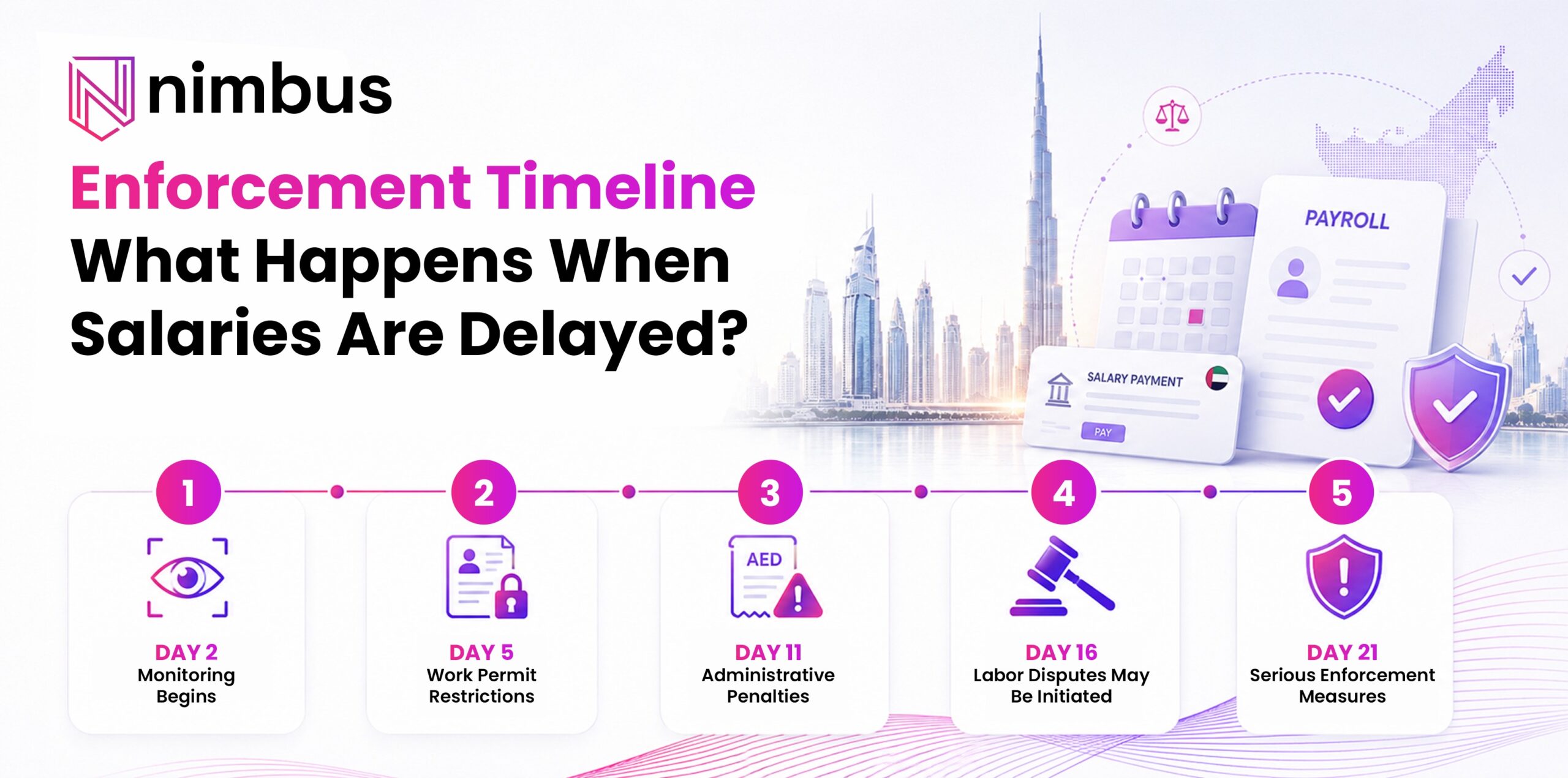
WPS Penalties and Enforcement Timeline for Delayed Salaries
One of the most important aspects of the revised framework is the accelerated enforcement schedule.
Day 2: Monitoring Begins
Within two days of a missed salary payment, electronic monitoring is activated and MOHRE notifications are issued.
Day 5: Work Permit Restrictions
If salaries remain unpaid, new work permit applications may be suspended and employers may receive formal compliance demands. This can significantly impact recruitment efforts and operational growth.
Day 11: Administrative Penalties
At this stage, administrative fines may apply. Businesses may be downgraded to a lower classification category. These penalties can affect a company’s regulatory standing and ability to access government services.
Day 16: Labor Disputes May Be Initiated
Regulators may automatically register labor disputes on behalf of affected employees. This means employees may not need to file complaints themselves and the issue escalates into formal proceedings. Additional work permit restrictions may also be imposed.
Day 21: Serious Enforcement Measures
After 21 days:
- Wage recovery proceedings may begin.
- Precautionary asset seizures may be considered.
- Travel bans may be imposed on responsible company officials.
- Certain cases may be referred to Public Prosecution.
Although these actions remain discretionary rather than automatic, they represent a significant escalation compared to previous enforcement practices.
Which Industries Face the Highest Risk Under the 2026 UAE Payroll Rules?
While all MOHRE-registered businesses are affected, some sectors face increased regulatory scrutiny. These include:
- Construction and transportation
- Security services
- Cleaning services
- Recruitment agencies
- Domestic worker recruitment offices
These industries are viewed as critical to labor market stability and may attract enhanced regulatory attention.
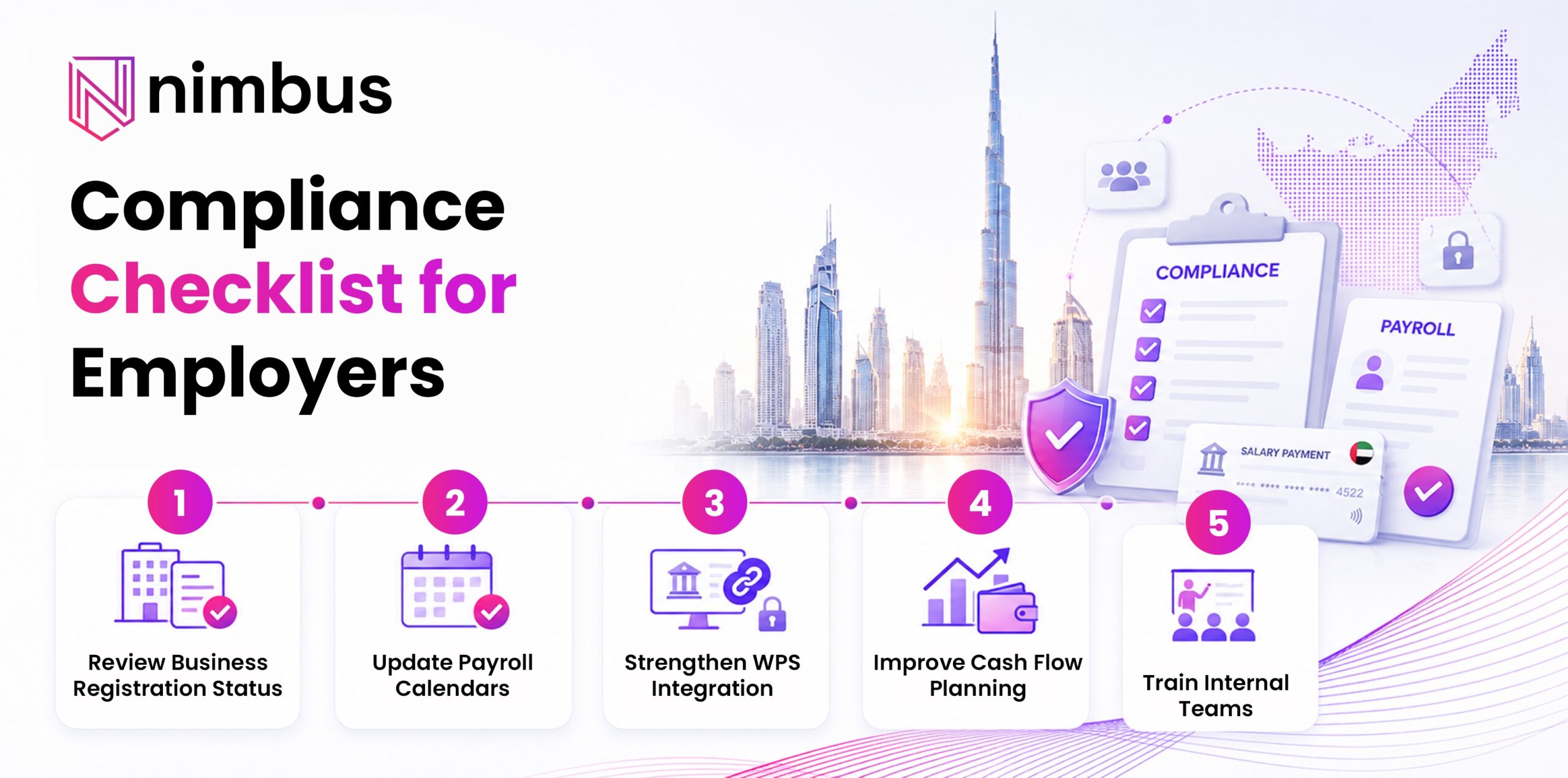
WPS Compliance Checklist for UAE Employers in 2026
To remain compliant under the revised salary payment rules, businesses should take proactive measures.
1. Review Business Registration Status
Confirm whether your company is registered with MOHRE and operating under a separate free zone authority. Companies with UAE freezone setup structures should verify applicable requirements directly with their respective authorities.
2. Update Payroll Calendars
Immediately align payroll schedules with the new deadline. Ensure that internal approval processes do not create delays and salaries clear by the first day of each month.
3. Strengthen WPS Integration
Verify that payroll systems connect properly with WPS, generate accurate payment records, and allow timely salary transfers.
4. Improve Cash Flow Planning
Businesses should maintain sufficient liquidity before payroll deadlines. Coordinate treasury and HR functions.
5. Train Internal Teams
HR and finance teams should understand:
- Compliance obligations
- Enforcement timelines
- Potential penalties
How the New WPS Rules Impact UAE Business Setup and Company Formation
The revised wage protection framework demonstrates the country’s continued focus on labor rights and regulatory transparency. Businesses entering through business setup in the UAE should incorporate payroll compliance into their broader operational planning from the outset.
Final Thoughts on Navigating UAE Payroll Compliance
The UAE’s revised Wage Protection System marks a major shift in how salary compliance is monitored and enforced. By removing the 15-day grace period and introducing faster enforcement actions, the government has made timely wage payments a central component of labor compliance.
For employers, payroll deadlines are strict regulatory obligations with significant consequences for non-compliance. Organizations that adapt early will be better positioned to avoid penalties, protect their workforce, and maintain operational continuity in the UAE.
Comments are closed