


The UAE is entering the final phase of its private-sector workforce nationalization strategy. With the government targeting 10% Emirati participation in skilled roles by 2026, businesses with UAE mainland setup are facing stricter compliance expectations.
For companies involved in business setup in the UAE, Emiratization is now a critical part of workforce planning, HR strategy, and operational compliance. Employers must ensure that Emirati hiring targets are met consistently as authorities intensify monitoring and enforcement.
While the policy aims to increase Emirati participation in private-sector employment, it also requires companies to adapt their recruitment pipelines, compensation structures, and internal compliance systems.
Businesses that fail to meet the required quotas risk financial penalties and other regulatory sanctions. This article explains how Emiratization works, which companies must comply, key deadlines leading to 2026, and the practical steps businesses should take now to remain compliant.
Emiratization and Its Role in the UAE Economy
Emiratization is the UAE’s national workforce localization policy designed to increase the participation of Emirati citizens in private-sector employment.
Historically, the UAE labor market has been dominated by expatriate workers. While this global workforce has been essential to economic growth, policymakers have long aimed to create more sustainable career pathways for Emirati nationals in the private sector.
For this, the government has implemented a combination of:
- Mandatory hiring quotas
- Regulatory enforcement mechanisms
- Wage support and training programs
One of the most important initiatives supporting this strategy is the Nafis program, which connects Emirati job seekers with private-sector employers while offering financial incentives and training support.
Which Companies Must Comply with Emiratization?
The Emiratization framework primarily applies to UAE mainland businesses regulated by the Ministry of Human Resources and Emiratisation (MoHRE).
Companies operating with a UAE freezone setup are currently exempt from mandatory quotas, although authorities encourage voluntary participation in national hiring initiatives. The specific compliance requirements depend on company size and sector.
Requirements for Companies With 50 or More Employees
Large mainland companies face the most structured Emiratization obligations. Businesses employing 50 or more workers must increase the share of Emiratis in skilled roles by 2% annually. These increases are measured in half-year increments of 1%, allowing gradual progress toward the final target.
By 2026, these companies must ensure that 10% of their skilled workforce consists of Emirati nationals. The quotas apply only to skilled positions, which are defined according to MoHRE job classifications.
These typically include managerial, technical, and professional roles rather than entry-level positions. Companies conducting UAE mainland setup operations must therefore incorporate Emiratization into long-term hiring strategies.
Emiratization Rules for Smaller Companies
In 2024, the UAE expanded Emiratization policies to cover smaller companies operating in selected sectors. Businesses employing 20 to 49 workers in certain industries are now subject to hiring milestones. These companies must employ at least one Emirati national by the end of 2024 and two Emirati nationals by the end of 2025.
The targeted sectors include:
- Information and communications
- Finance and insurance
- Real estate
- Professional and technical services
- Healthcare and social work
- Wholesale and retail trade
- Transportation and logistics
- Hospitality and accommodation
For a compliant company formation in the UAE, businesses operating within these sectors must plan workforce requirements.
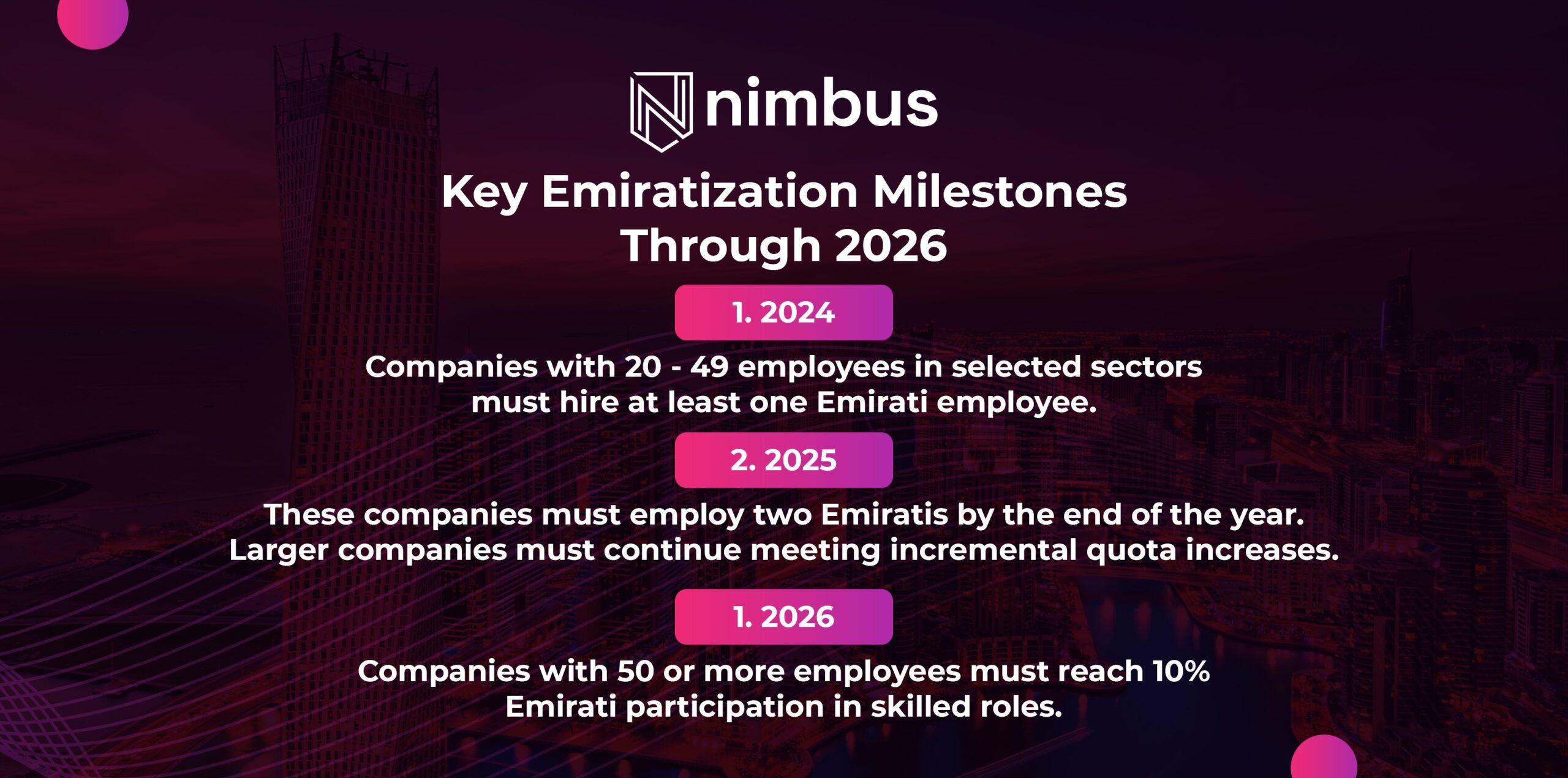
Key Emiratization Milestones Through 2026
Companies should view Emiratization compliance as a multi-year process rather than a single deadline. The main milestones include:
1. 2024
Companies with 20 – 49 employees in selected sectors must hire at least one Emirati employee.
2. 2025
These companies must employ two Emiratis by the end of the year.
Larger companies must continue meeting incremental quota increases.
3. 2026
Companies with 50 or more employees must reach 10% Emirati participation in skilled roles.
At the same time, salary requirements for Emirati workers will also increase. From January 1, 2026, the minimum salary for Emirati employees in the private sector will rise to AED 6,000 per month for new or renewed work permits. Existing employers have until June 30, 2026 to adjust salaries accordingly.
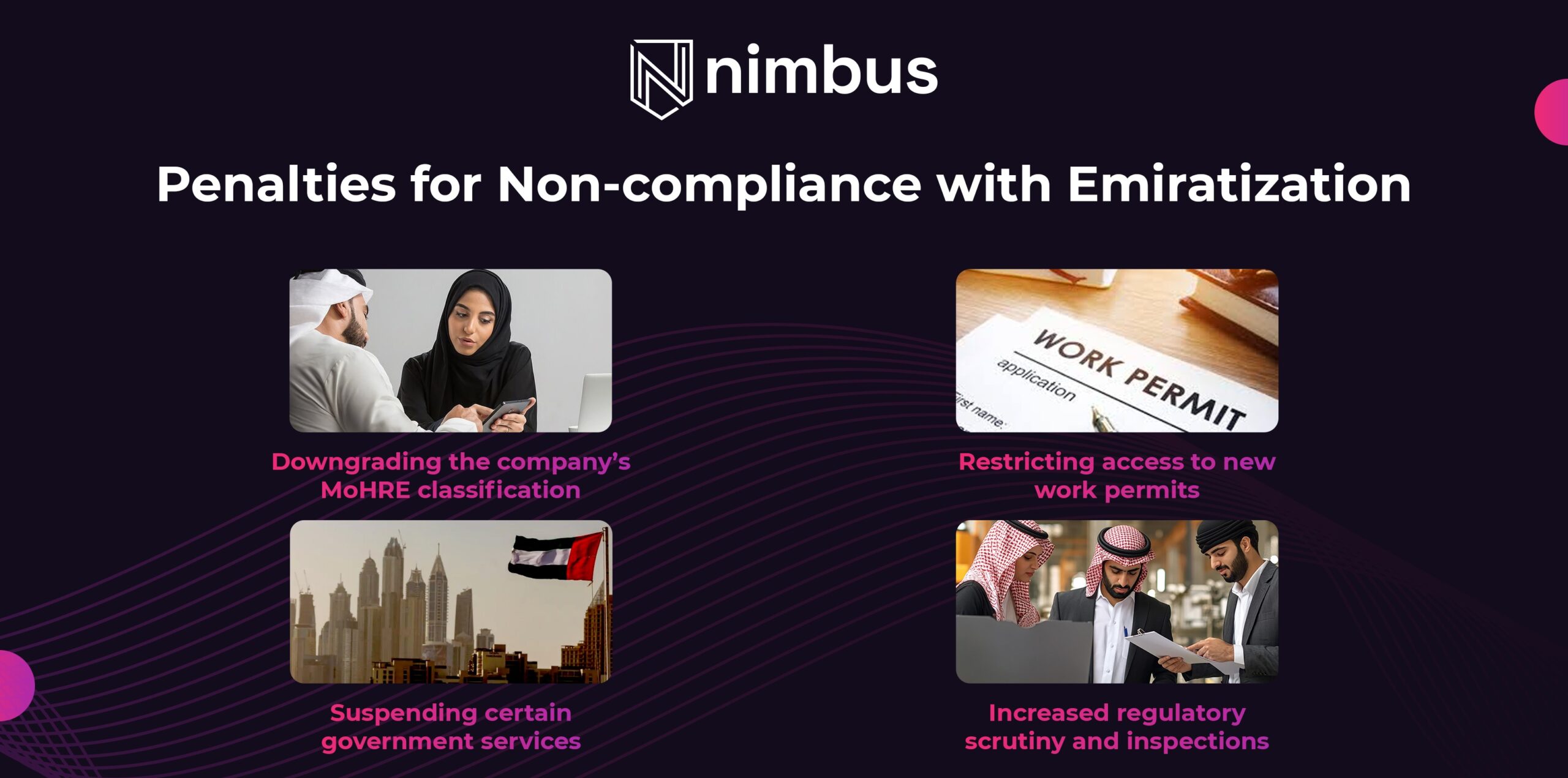
Penalties for Non-compliance with Emiratization
To ensure companies comply with workforce localization policies, the UAE government has issued financial penalties for companies that fail to meet Emiratization quotas. The standard fine is AED 6,000 per missing Emirati employee per month.
This penalty increases annually until 2026. In addition to financial penalties, regulators may impose administrative sanctions such as:
- Downgrading the company’s MoHRE classification
- Restricting access to new work permits
- Suspending certain government services
- Increased regulatory scrutiny and inspections
Authorities also actively investigate “fake Emiratization” schemes, where companies hire Emiratis on paper without genuine employment. Businesses found engaging in such practices face severe penalties and legal exposure.
Incentives Supporting Emirati Hiring
The UAE government also provides incentives to support private companies that hire Emirati workers. The Nafis program offers several benefits, including:
- Wage subsidies for Emirati employees
- Training and skills development programs
- Job-matching services
- Recruitment support through digital platforms
For companies operating in the UAE, these incentives can significantly reduce the financial burden associated with meeting national hiring requirements.
Practical Strategies for Compliance
As the 2026 targets approach, businesses must plan structured compliance. Several strategies can help companies manage Emiratization obligations effectively.
1. Conduct Workforce Compliance Audits
Companies should regularly review workforce composition to determine current Emirati participation levels. This analysis allows HR teams to identify compliance gaps early and develop realistic hiring timelines.
2. Integrate Emiratization into HR Planning
Businesses should incorporate Emiratization into their long-term recruitment strategies. Using recruitment platforms such as Nafis can help companies identify qualified Emirati candidates more efficiently.
3. Focus on Retention and Career Development
Meeting hiring quotas alone is not enough. Companies must also focus on retaining Emirati employees through career development opportunities and development training programs.
High turnover can quickly create compliance gaps if Emirati employees leave and are not replaced.
Why Emiratization Matters for Business Setup in the UAE?
Emiratization is now a permanent feature of the UAE’s economic strategy.
As of June 2025, more than 152,000 Emiratis were employed across approximately 29,000 private-sector companies. This number will grow as authorities expand national workforce participation. Businesses that plan early will be better positioned to:
- Control labor costs
- Build sustainable hiring pipelines
- Avoid regulatory penalties
- Strengthen relationships with government authorities
Preparing for the 2026 Emiratization Milestone
The UAE’s workforce localization strategy is a necessity now. With stricter quotas and rising penalties, Emiratization compliance is now a central responsibility for mainland employers.
Businesses going for a UAE mainland setup must ensure that hiring strategies, HR policies, and workforce planning align with national workforce goals.
Companies that act early can access government incentives and a stronger position in the UAE’s evolving labor market. Those that delay compliance may face rising financial costs and regulatory restrictions as the 2026 Emiratization targets approach.
Comments are closed