

The UAE has entered a new phase of financial regulation as the Central Bank of the UAE (CBUAE) introduces updated guidance on anti-money laundering (AML), combating the financing of terrorism (CFT), and counter-proliferation financing (CPF).
The updated framework reflects the UAE’s refined strategy to strengthen financial transparency and position itself as a globally trusted business and investment hub. For UK businesses and investors considering business setup in the UAE, the reforms carry serious operational, legal, and strategic implications.
Understanding these regulatory developments is now essential for any UK company planning UAE company formation.
Why the UAE Is Tightening AML Regulations
The UAE has spent the past several years strengthening its financial oversight systems following increased international scrutiny around financial transparency and illicit financial flows.
After its removal from the Financial Action Task Force (FATF) “grey list” in 2024, the UAE accelerated reforms designed to reinforce confidence among global investors, correspondent banks, and multinational corporations.
The updated guidance issued by the CBUAE on April 16, 2026 forms part of that broader
strategy. The reforms are aligned with:
- FATF international standards
- Federal Decree-Law No. 10 of 2025
- Greater cross-border transaction oversight
- Enhanced beneficial ownership transparency requirements
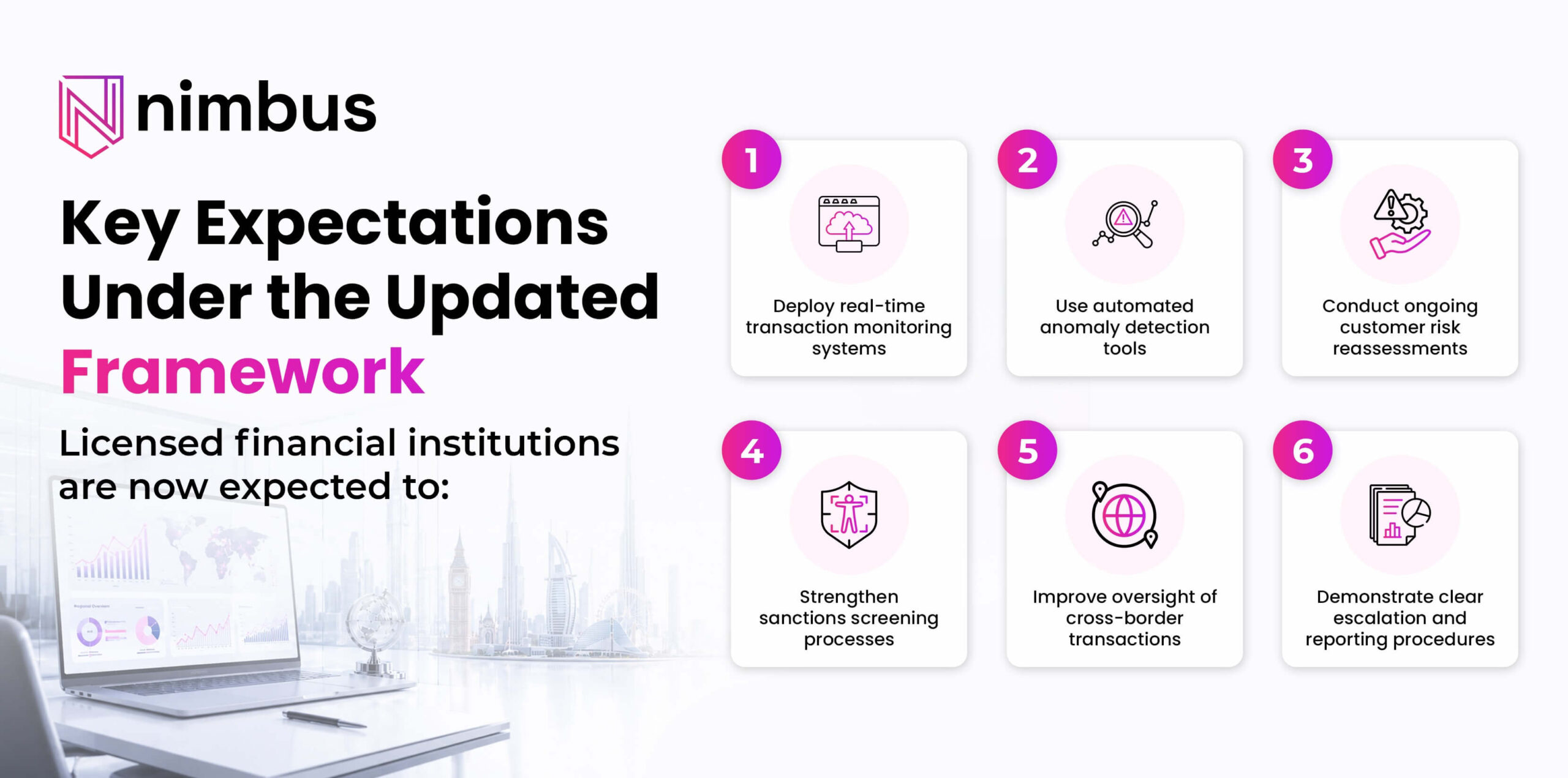
Key Expectations Under the Updated Framework
Licensed financial institutions are now expected to:
- Deploy real-time transaction monitoring systems
- Use automated anomaly detection tools
- Conduct ongoing customer risk reassessments
- Strengthen sanctions screening processes
- Improve oversight of cross-border transactions
- Demonstrate clear escalation and reporting procedures
This is especially important for UK investors and companies expanding into sectors such
as financial services, fintech, digital assets, and international trade.
Rising Compliance Costs Across the UAE Financial Sector
One of the most immediate effects of the updated AML framework will be higher compliance-related costs. Financial institutions and regulated businesses operating in the UAE are expected to invest significantly more in:
- Compliance technology
- Internal audit systems
- Regulatory reporting infrastructure
- Ongoing due diligence processes
- Legal and advisory support
Industry estimates suggest that AML compliance already accounts for approximately 5–10 percent of operating expenses for many mid-sized financial firms in the UAE. That figure is expected to rise further as enforcement intensifies.
What This Means for UK Businesses
For UK companies planning company formation in the UAE, compliance budgeting should be taken into consideration and should now factor in the following:
- AML software implementation costs
- Enhanced onboarding procedures
- Employee compliance training
- Data management systems
Technologies Gaining Importance
Financial institutions in the UAE are increasingly expected to adopt AI-powered transaction monitoring, automated KYC and enhanced due diligence tools, integrated sanctions screening platforms, and data analytics systems.
This trend creates significant commercial opportunities for UK technology firms specializing in SaaS platforms, risk analytics, and fraud detection solutions.
Increased Pressure on Smaller Financial Firms
The updated framework is expected to create greater pressure on smaller financial institutions and startups. The AML updates are likely to drive:
- Market consolidation
- Outsourced compliance partnerships
- White-label compliance solutions
- Strategic mergers and acquisitions
For UK entrepreneurs and investors, this may create acquisition opportunities within the UAE market, particularly in fintech and payment services. It also reinforces the importance of selecting the right legal and operational structure during UAE company formation.
How the Changes Affect UK Investors Entering the UAE Market
The updated AML environment impacts international investors and businesses establishing operations in the Emirates. UK investors establishing businesses through UAE mainland setup or UAE freezone setup structures should expect:
- Detailed source-of-funds checks
- Increased scrutiny during banking onboarding
- Enhanced due diligence on shareholder structures
- More comprehensive transaction reviews
Fintech and Digital Asset Firms Face Higher Standards
The UAE has become a major regional hub for fintech innovation and virtual assets. At the
same time, regulators are increasing oversight of digital finance activities. Fintech
firms and virtual asset service providers will need to:
- Implement bank-level AML controls
- Conduct enhanced customer due diligence
- Monitor crypto-related transaction activity
For UK fintech companies, these requirements may increase setup complexity.
Wealth Management and Private Banking Will See Tighter Oversight
Private banking and wealth management firms serving high-net-worth clients are also
expected to face stricter compliance obligations. New expectations include:
- Enhanced source-of-wealth verification
- Ongoing client monitoring
- More detailed onboarding documentation
- Increased reporting requirements
UK wealth management firms entering the UAE market should prepare for a more
compliance-intensive operating environment.
Strategic Implications for Business Setup in the UAE
The UAE remains highly attractive for foreign direct investment, but market entry
strategies are evolving. Compliance infrastructure must now form part of the expansion
strategy from the beginning. UK businesses should carefully assess:
- Regulatory exposure
- Transaction risk levels
- Banking access requirements
- Cross-border operational flows
- Industry-specific compliance obligations
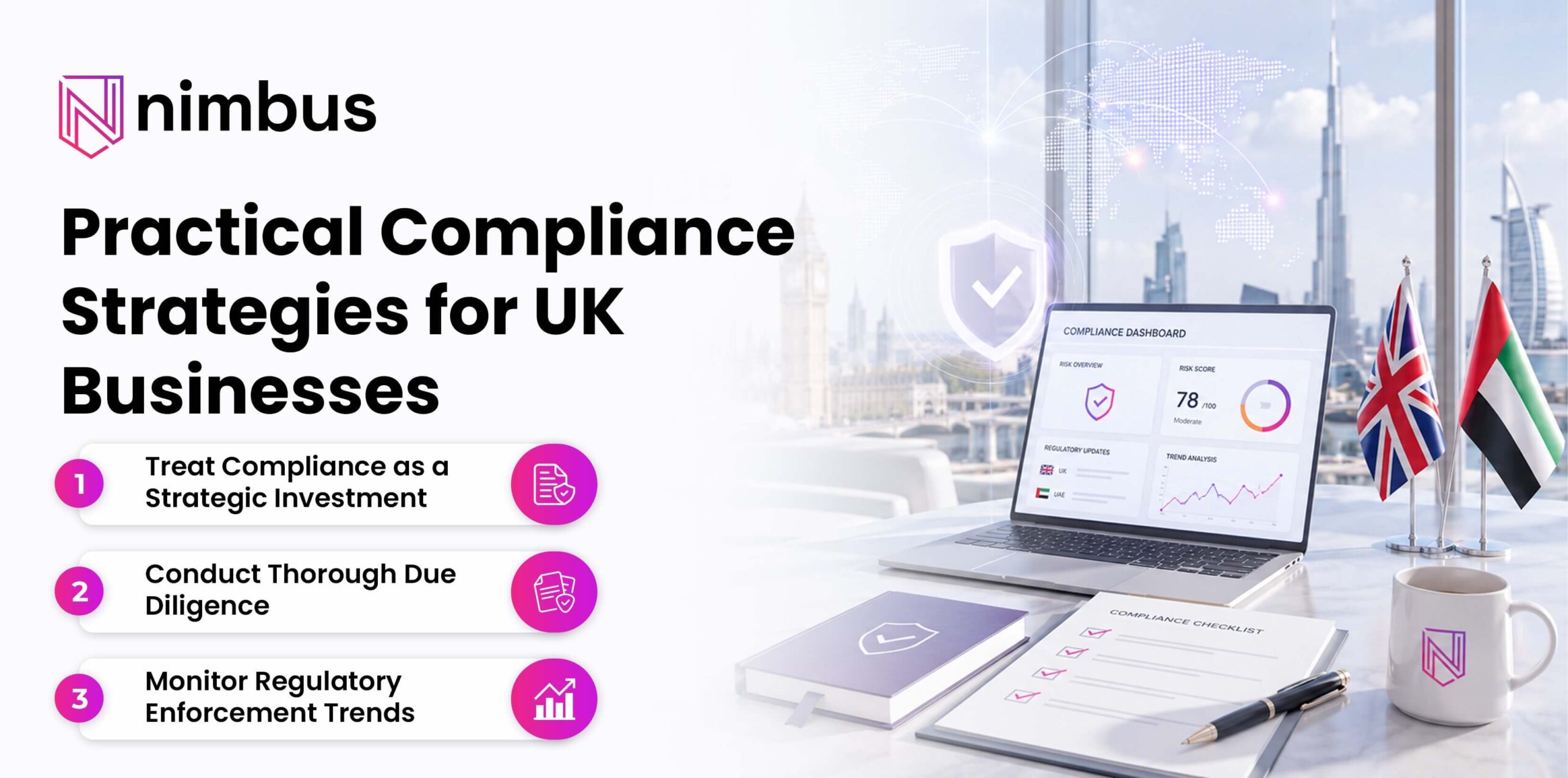
Practical Compliance Strategies for UK Businesses
Companies planning business setup in the UAE should adopt a proactive approach to
compliance.
1. Treat Compliance as a Strategic Investment
AML compliance should be integrated into business planning from the beginning. Businesses
should allocate resources for technology implementation and internal compliance staffing.
2. Conduct Thorough Due Diligence
Enhanced due diligence is becoming increasingly important in cross-border trade and
financial services. Businesses should carefully assess supplier networks, customer risk
exposure, and third-party service providers.
3. Monitor Regulatory Enforcement Trends
The UAE is shifting toward stronger enforcement mechanisms, including administrative
penalties, increased inspections, and regulatory investigations. Understanding how
regulators enforce rules is becoming just as important as understanding the regulations
themselves.
Conclusion: Is the UAE Still Attractive for UK Business Expansion?
The UAE’s updated AML policies mark a major evolution in the country’s regulatory
framework. The shift toward real-time, technology-driven compliance reflects the UAE’s
ambition to position itself as one of the world’s most trusted international financial
and commercial centers.

Comments are closed