

A move from free zone to mainland UAE Dubai often becomes necessary when a startup begins expanding into the local market.
International investors looking for business setup in the UAE often begins with a free zone registration. The main reasons behind this are faster setup process, feasible investment options, and the regulatory environment designed to support international businesses entering the market for the first time.
Although many startups begin their journey through a UAE freezone setup, its operational needs often change as the business grows. Companies that initially chose a free zone for cost savings may eventually need a mainland presence for better commercial opportunities and operational flexibility.
Understanding when to transition from a free zone structure to a UAE mainland company is therefore a big decision. This article lists the growth signals that indicate when a startup should move from freezone to mainland, including the practical considerations involved in restructuring and expansion.
Role of Free Zones for Startups
Free zones have a significant role in the UAE’s growth. The UAE has more than forty-five zones offering a simplified setup process and support for industries ranging from technology and media to logistics and finance. For many founders, free zones offer an easy entry point in the UAE.
A UAE freezone setup offers several business benefits, including full foreign ownership, streamlined licensing procedures, and relatively low setup costs. In many zones, companies can operate with flexible office requirements, such as shared workspaces or virtual offices, which helps reduce overhead expenses.
Free zones also provide strong administrative support, with many authorities offering visa services and licensing assistance through integrated digital platforms. In short, a free zone structure provides startups with the flexibility needed during the first stages of growth.
Structural Limitations of a Free Zone
While a free zone entity can operate internationally, there are certain limitations when conducting business directly within the domestic market. For instance, freezone companies could not sell goods or services directly to mainland clients without appointing a local distributor or creating a separate mainland entity.
Although recent regulatory reforms have introduced more flexibility in some cases, operational restrictions can still apply depending on the business activity and jurisdiction.
These limitations hinder growth as startups expand their customer base, hire additional employees, or begin bidding for larger contracts. As a result, many founders eventually reconsider their original structure once their business begins to scale.
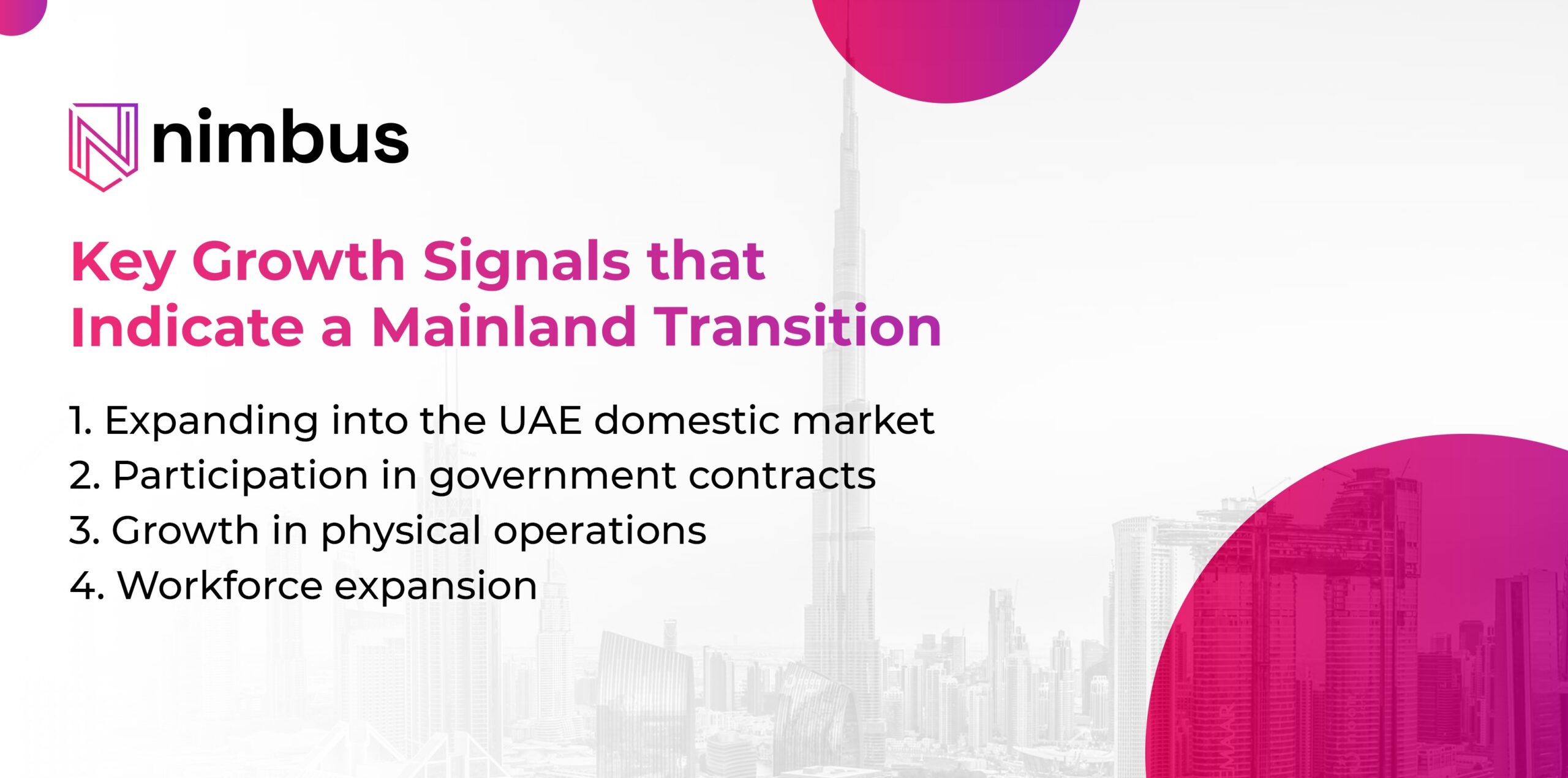
Key Growth Signals that Indicate a Mainland Transition
A startup does not need to move to the mainland immediately after launching. In fact, many companies operate successfully in free zones for years. However, certain operational developments often indicate that transitioning to a mainland structure may become advantageous and a necessity.
Expanding into the UAE domestic market
One of the most common reasons for shifting from a free zone to a mainland entity is the desire to serve clients within the UAE without restrictions. When a company’s revenue increasingly comes from customers from the UAE rather than overseas markets, a mainland licence can simplify transactions and remove the need for intermediaries.
A UAE mainland setup allows companies to contract directly with local clients, invoice domestic customers without distribution arrangements, and operate physical locations across the country. For service providers, this flexibility can significantly improve operational efficiency and client relationships.
Participation in government contracts
Another important factor influencing the decision to move to the mainland is access to government procurement opportunities. Government entities, semi-government organisations, and many large corporations often require vendors to hold a mainland licence in order to participate in tender processes.
Startups in sectors such as technology services, engineering, and infrastructure frequently encounter this requirement as they begin pursuing larger contracts. For companies aiming large-scale expansion, transitioning from UAE freezone setup to mainland becomes a strategic necessity.
Growth in physical operations
Some startups begin as digital businesses or service providers that operate primarily online. Over time, they may decide to open physical offices, showrooms, or retail locations. In such cases, mainland licensing often becomes more suitable because it allows businesses to establish premises throughout the UAE without geographic limitations.
Retail operations in particular require a mainland commercial licence, especially when operating in shopping centres or high-traffic commercial districts.
Workforce expansion
As companies grow, they often hire larger teams and establish multiple departments. Although free zones offer visa allocations for employees, certain zones may have limitations on visa quotas based on office size or licensing categories. A mainland structure may provide greater flexibility for companies planning for workforce expansion, open multiple branches, or establish larger operational facilities.
Structural Options
Startups considering a mainland presence have several options. One approach is to establish a separate mainland company while retaining the original free zone entity. This allows the business to maintain international operations through the free zone while conducting domestic activities through the mainland entity.
Another option involves converting or relocating the existing company structure where permitted by regulators. Some free zones now allow companies to migrate their licences to mainland jurisdictions under specific conditions.
The proper approach depends on factors such as tax planning, operational requirements, and growth strategy. However, proper planning is a mandatory to ensure seamless transition without disrupting existing contracts, banking arrangements, or regulatory compliance.
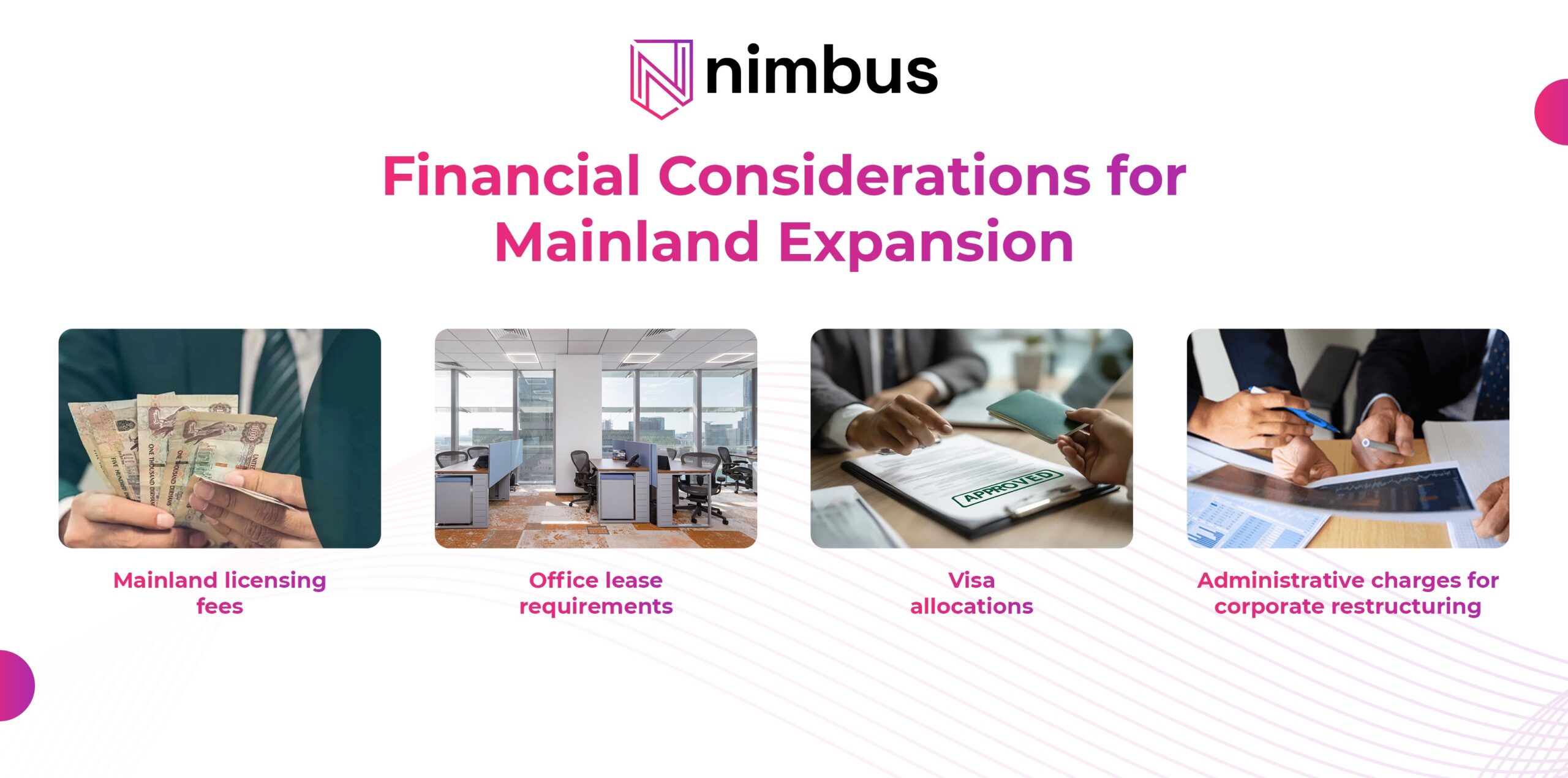
Financial Considerations for Mainland Expansion
Transitioning to a mainland structure may involve additional costs compared with operating exclusively in a free zone. These costs may include:
- Mainland licensing fees
- Office lease requirements
- Visa allocations
- Administrative charges for corporate restructuring
However, the financial benefits of accessing the domestic market often outweigh the additional expenses. Companies with the UAE mainland setup benefit from larger client bases, government contracts, and increased revenue potential.
Building the Right Foundation
The UAE continues to attract international investors because of its open economic environment, modern infrastructure, and supportive regulatory policies. Choosing the right corporate structure is one of the most important decisions founders make during business setup in the UAE.
For many startups, free zones provide the ideal launchpad. Yet as companies mature and pursue larger opportunities within the local market, a UAE mainland setup often becomes the logical next step.
Recognising the right moment to make this transition can unlock new markets, strengthen partnerships, and position a company for long-term success within the region’s dynamic economy. With proper planning and the right advisory support, startups can evolve in the UAE alongside their business objectives.
Comments are closed