


Setting up a UAE regional headquarters is a strategic move for international businesses expanding into the Middle East.
The UAE has emerged as one of the world’s most strategic headquarters destinations. With its central geographic position, strong regulatory framework, and pro-business policies, the UAE, particularly Dubai and Abu Dhabi, has become a preferred hub for multinational corporations (MNCs) expanding across the Middle East.
Today, more than 70% of Fortune 500 companies maintain a presence in Dubai, and the UAE hosts the largest number of regional headquarters in the Middle East. For enterprises seeking operational efficiency and regulatory stability, establishing a regional headquarters (RHQ) in the UAE offers a powerful platform for global growth.
This post explains why companies choose the UAE for regional headquarters, the available structures, regulatory considerations, and what international investors should plan before going for business setup in the UAE
Why the UAE is the Ideal Location for Regional Headquarters
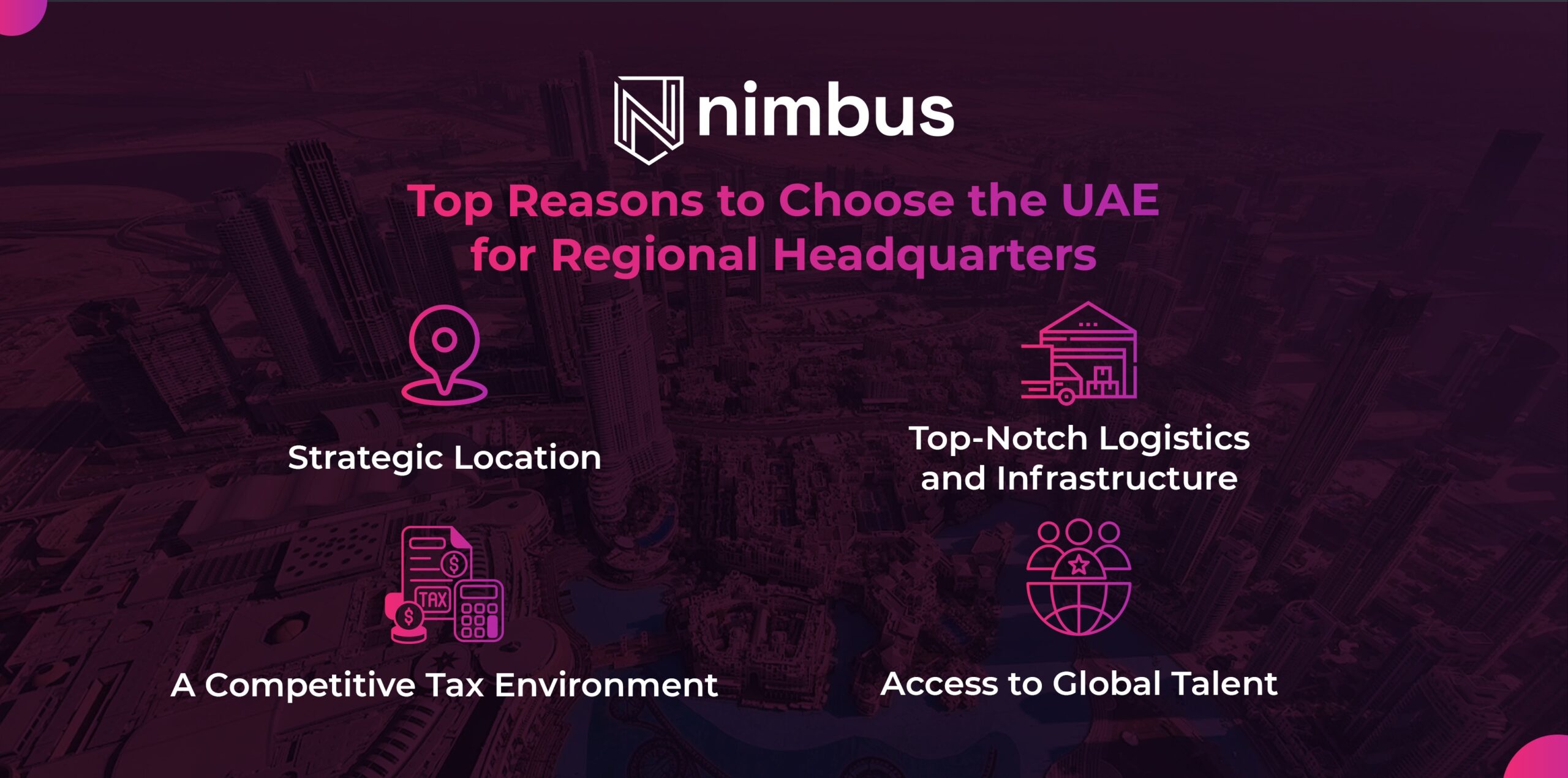
The UAE has spent the past two decades building an environment specifically designed to attract MNCs and global investors. Several factors make the country particularly attractive for RHQ operations.
Strategic Location
The UAE sits at the crossroads of Europe, Asia, and Africa, placing more than two-thirds of the world’s population within an eight-hour flight radius. This location benefit allows companies to manage operations across multiple continents from a single location.
Dubai’s aviation network is one of the most extensive globally. Combined with world-class logistics infrastructure, the location benefit makes the UAE an efficient base for managing regional operations.
Top-Notch Logistics and Infrastructure
The UAE consistently ranks among the world’s top performers in logistics and infrastructure. Key assets include:
- Jebel Ali Port, one of the largest container ports in the world
- Dubai Logistics Corridor, linking ports, airports, and free zones
- Al Maktoum International Airport, designed to become the world’s largest airport by cargo capacity
- DP World, one of the world’s largest port operators
According to the World Bank’s Logistics Performance Index, the UAE scores 4.1 out of 5, reflecting its highly efficient trade and transport systems. For multinational companies managing regional supply chains and trade operations, this infrastructure significantly reduces operational complexity.
A Competitive Tax Environment
Another major attraction for company formation in the UAE is its tax framework, which remains one of the most competitive globally. Key features include:
- Corporate tax rate of 9%, among the lowest globally
- 0% personal income tax
- No withholding tax on dividends, interest, or royalties
- Extensive double taxation treaty network with over 130 countries
Free zone companies may also qualify for 0% corporate tax on qualifying income under the UAE’s Qualifying Free Zone Person regime. For multinational groups managing regional investments, holding structures, or intellectual property, this environment offers significant tax efficiency.
Access to Global Talent
The UAE workforce is one of the most diverse in the world. Professionals from over 200 nationalities live and work in the country, providing companies with access to multilingual and internationally experienced talent. Recent immigration reforms have further strengthened the UAE’s talent ecosystem.
- Golden Visa residency for investors and professionals
- Remote work visas
- Long-term residency for entrepreneurs and researchers
These initiatives allow MNCs to attract and retain talented personnel more easily than in many other jurisdictions.
Choosing the Right Business Structure for UAE Regional Headquarters
International companies establishing regional headquarters in the UAE typically choose between mainland entities and free zone companies. The best option depends on business activities, regulatory requirements, and target markets.
UAE Mainland Setup
A UAE mainland setup enables businesses to operate across the domestic market without restrictions. It is often preferred when companies plan to conduct business directly with UAE clients or participate in government projects.
UAE Free Zone Setup
The UAE hosts more than 45 free zones, each focused on specific industries. Many multinational companies choose free zones for holding companies and regional management offices. Major examples include:
- Dubai International Financial Centre (DIFC)
- Dubai Multi Commodities Centre (DMCC)
- Jebel Ali Free Zone (JAFZA)
Business Licensing and Regulatory Requirements in the UAE
Although the UAE is known for efficient business registration processes, international investors must still consider several regulatory steps. Major requirements for UAE company formation include:
- Choosing the correct jurisdiction
- Obtaining the appropriate commercial licence
- Securing office premises
- Appointing directors or managers
- Registering for corporate tax and VAT
- Opening a corporate bank account
Corporate Banking Process and Compliance in the UAE
Opening a corporate bank account is often the most time-consuming stage of UAE company formation. Banks typically conduct extensive due diligence.
- Ownership structure verification
- Business activity assessment
- Source of funds review
- AML compliance checks
Cost Considerations for Setting Up a Regional Headquarters in the UAE
Although the UAE offers strong tax advantages, companies should plan realistically for operational costs.
- Company licence fees
- Office space and real estate
- Employee visas
- Healthcare insurance
- Schooling and housing
Why the UAE is a Long-Term Strategic Business Hub
The UAE offers a high standard of living, strong healthcare, and a safe environment, making it attractive for both companies and relocating executives.

Wrapping Up
Establishing a regional headquarters in the UAE offers international investors a powerful combination of strategic location, competitive taxation, and world-class infrastructure.
However, successful market entry requires careful planning. Choosing the right jurisdiction, licensing structure, and compliance strategy is essential for long-term success.
Comments are closed