


For international investors, the UAE offers one of the most dynamic entry points. Over the past decade, the country has transformed its regulatory landscape to attract global businesses, like enabling full foreign ownership in many sectors.
One of the most efficient ways for businesses to enter the market is through a branch licence in the UAE. Rather than forming a completely new legal entity, a branch office allows a foreign company to operate directly in the region as an extension of its parent organisation.
For organisations evaluating business setup in the UAE, the branch structure offers operational flexibility, brand continuity, and faster market entry. However, setting up one requires a clear understanding of regulatory requirements, taxation rules, and jurisdictional differences.
This post explains how branch licences work, when they are appropriate, and how companies can navigate the process seamlessly.
Understanding the UAE Branch Office Structure
A branch office in the UAE operates as an extension of its foreign parent company rather than as a separate legal entity. The branch conducts business under the parent company’s name and legal identity.
Any obligations, liabilities, or contractual commitments created by the branch are legally enforceable against the parent company. Despite this legal connection, a branch office can perform many operational activities in the UAE, including:
- Entering contracts with UAE-based clients
- Hiring employees under UAE labour regulations
- Sponsoring residence visas for staff
- Participating in public and private sector tenders
For enterprises pursuing company formation in the UAE, the reputation and credibility of the parent company can be valuable when bidding for government projects or large corporate engagements.
Why International Companies Choose a Branch Licence?
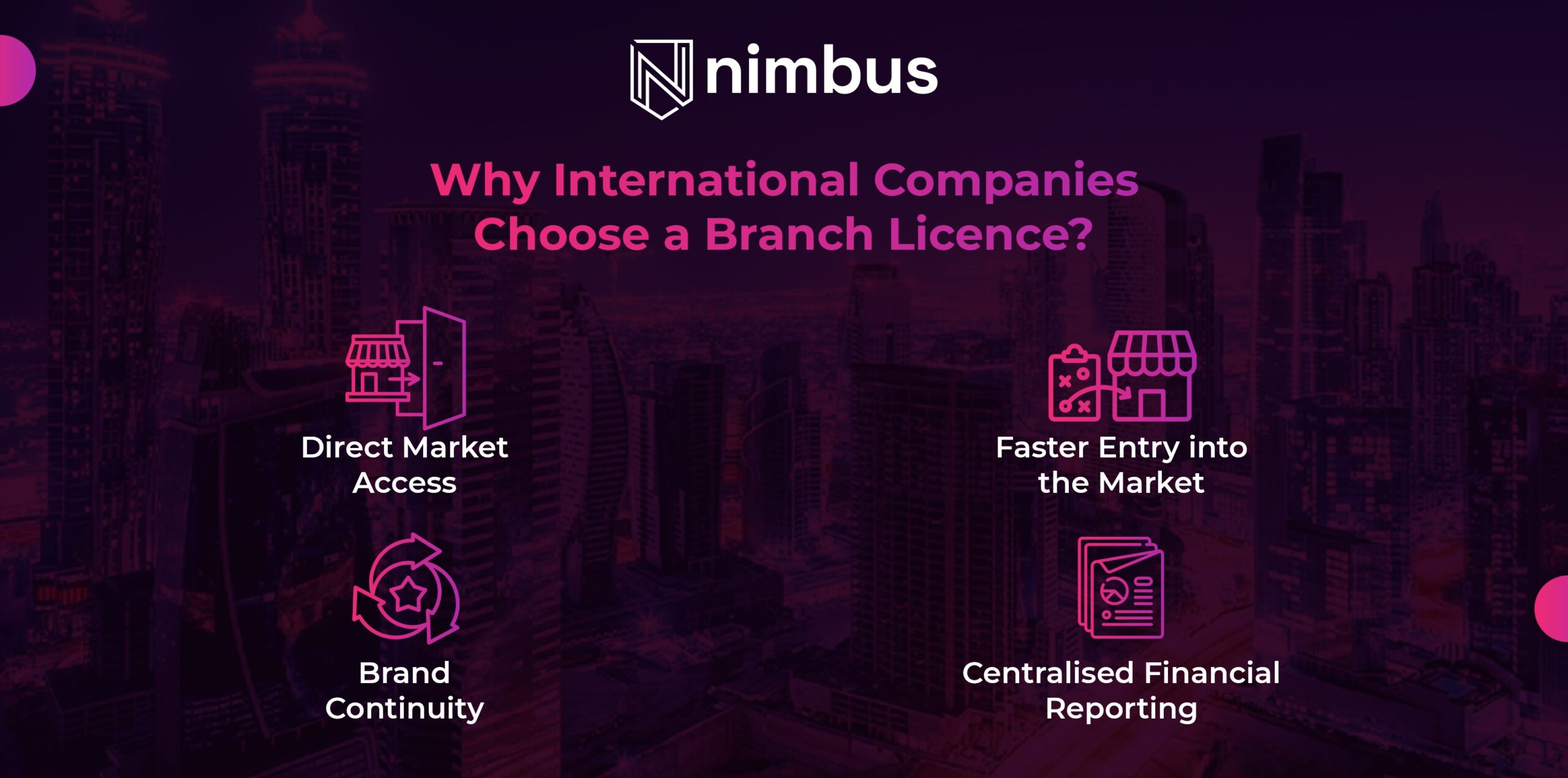
Many multinational businesses choose the branch structure because of its strategic advantages, including:
Direct Market Access
A branch office can conduct commercial activities in the UAE without relying on intermediaries, particularly when operating under a UAE mainland setup.
Faster Entry into the Market
Because the company already exists internationally, establishing a branch often involves fewer structural steps than forming a new entity.
Brand Continuity
The branch operates under the parent company’s name, strengthening recognition and trust among clients.
Centralised Financial Reporting
Revenue and financial reporting remain connected to the parent company’s accounts.
Regulatory Framework Governing UAE Branches
The legal basis for foreign company branches in the UAE comes primarily from Federal Decree-Law No. 32 of 2021, also known as the Commercial Companies Law. Under this law, foreign companies may establish branches or representative offices in the UAE provided that:
- The branch operates within approved activity categories
- Licensing approvals are obtained from relevant authorities
- A branch manager is formally appointed
Foreign Ownership Reforms
Prior to 2020, many commercial activities in the UAE required a local shareholder or partner. However, reforms introduced through Federal Decree-Law No. 26 of 2020 changed the scenario. The reforms removed the mandatory requirement for UAE national ownership in most sectors.
As a result, many foreign companies establishing branches today can maintain full foreign ownership, save certain strategic sectors, such as banking and insurance and telecommunications.
Choosing Between Mainland and Free Zone Branch Licensing
A key decision when establishing a branch office involves choosing between UAE mainland setup and UAE freezone setup. Both structures provide distinct advantages depending on the company’s operational strategy.
Mainland Branch Offices
Mainland branches are licensed by the Department of Economic Development (DED) in each emirate. Businesses often choose a mainland branch when they intend to:
- Sell goods or services to UAE residents or businesses
- Open retail stores or service locations
- Bid for government contracts
Free Zone Branch Offices
A UAE freezone setup can also accommodate branch offices. Many are designed for specific industries such as trading, logistics, or technology. Advantages of free zone branches include:
- Simplified licensing procedures
- Sector-focused business ecosystems
- Potential tax efficiencies
Licensing Process for Opening a UAE Branch
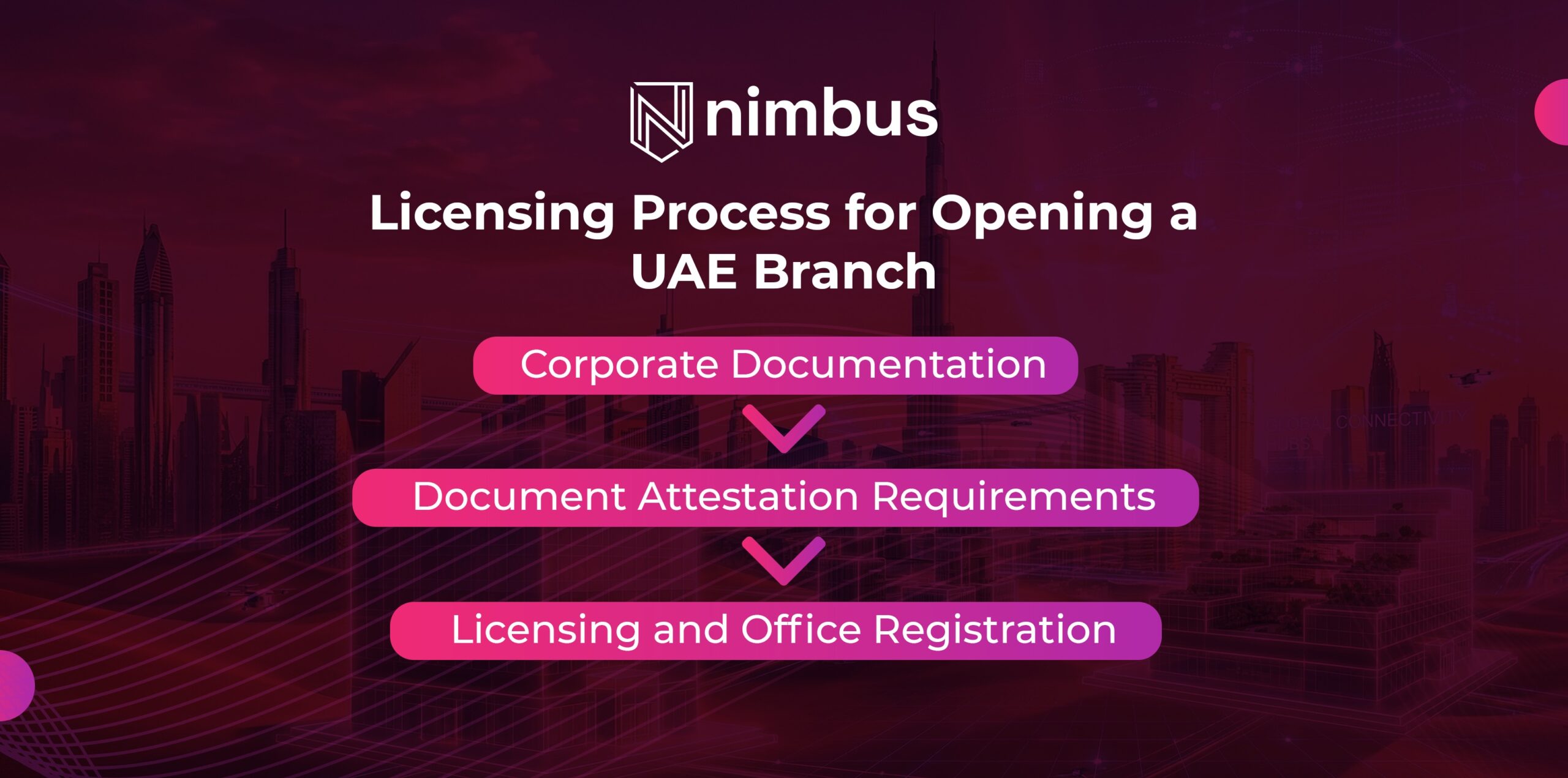
Although the exact process varies by emirate or free zone authority, there are certain common steps for establishing a branch office that are listed below.
Corporate Documentation
The parent company must provide several legal documents, including:
- Certificate of incorporation
- Memorandum and Articles of Association
- Board resolution approving the branch office
- Power of attorney for the appointed branch manager
Document Attestation Requirements
Foreign corporate documents must undergo a formal attestation process before submission.
This process involves:
- Notarisation in the country of origin
- Attestation by the UAE Embassy in that country
- Attestation by the UAE Ministry of Foreign Affairs
- Certified Arabic translation within the UAE
Licensing and Office Registration
Once documents are approved, companies must secure office premises and register the lease with the relevant authority. After licensing approval, the branch can proceed with visas, recruitment, and operational setup.
Corporate Tax Obligations
Branches operating in the UAE are subject to the country’s corporate tax framework. Under Federal Decree-Law No. 47 of 2022, corporate tax rates apply as follows:
Branches must register with the Federal Tax Authority and submit annual tax returns.
| Taxable Income | Corporate Tax Rate |
| Up to AED 375,000 | 0% |
| Above AED 375,000 | 9% |
When a Branch Licence Is the Right Choice?
A branch structure is particularly well suited for companies that:
- Want immediate brand recognition in the UAE
- Provide professional services or consulting
- Execute project-based contracts
- Require direct access to UAE clients without forming a new entity
Plan a Successful UAE Market Entry

The UAE continues to strengthen its position as a global hub for international business. With modern infrastructure and favourable regulations, the country offers significant opportunities for companies seeking regional expansion.
Opening a branch office a direct pathways into the market. However, success depends on making informed decisions regarding jurisdiction and compliance obligations.
Comments are closed