


As trade and investment between the UAE and the UK continue to expand, understanding the tax relationship between the two jurisdictions has become an absolute necessity for investors and MNCs.
One of the key mechanisms facilitating trade between these two countries is the UAE–UK Double Taxation Agreement (DTA). The treaty helps eliminate the risk of income being taxed twice while also promoting cross-border investment.
For companies considering expansion via business setup in the UAE, understanding how this treaty works can significantly improve tax efficiency and reduce compliance risks.
This blog post delves into the structure, benefits, and practical implications of the UAE–UK tax treaty and how businesses can strategically leverage it for company formation in the UAE.
What are Double Taxation Agreements (DTAs)?
Double Taxation Agreements are bilateral arrangements designed to prevent income from being taxed twice. Without these treaties, businesses operating internationally could face taxation both in the country where income is generated and in the country where the company or investor resides.
For example, a UK company earning profits in the UAE could be taxed in both jurisdictions, while a UAE holding company receiving UK dividends could face withholding tax and corporate taxation simultaneously. Tax treaties resolve these issues by defining which country has the primary right to tax specific income streams.
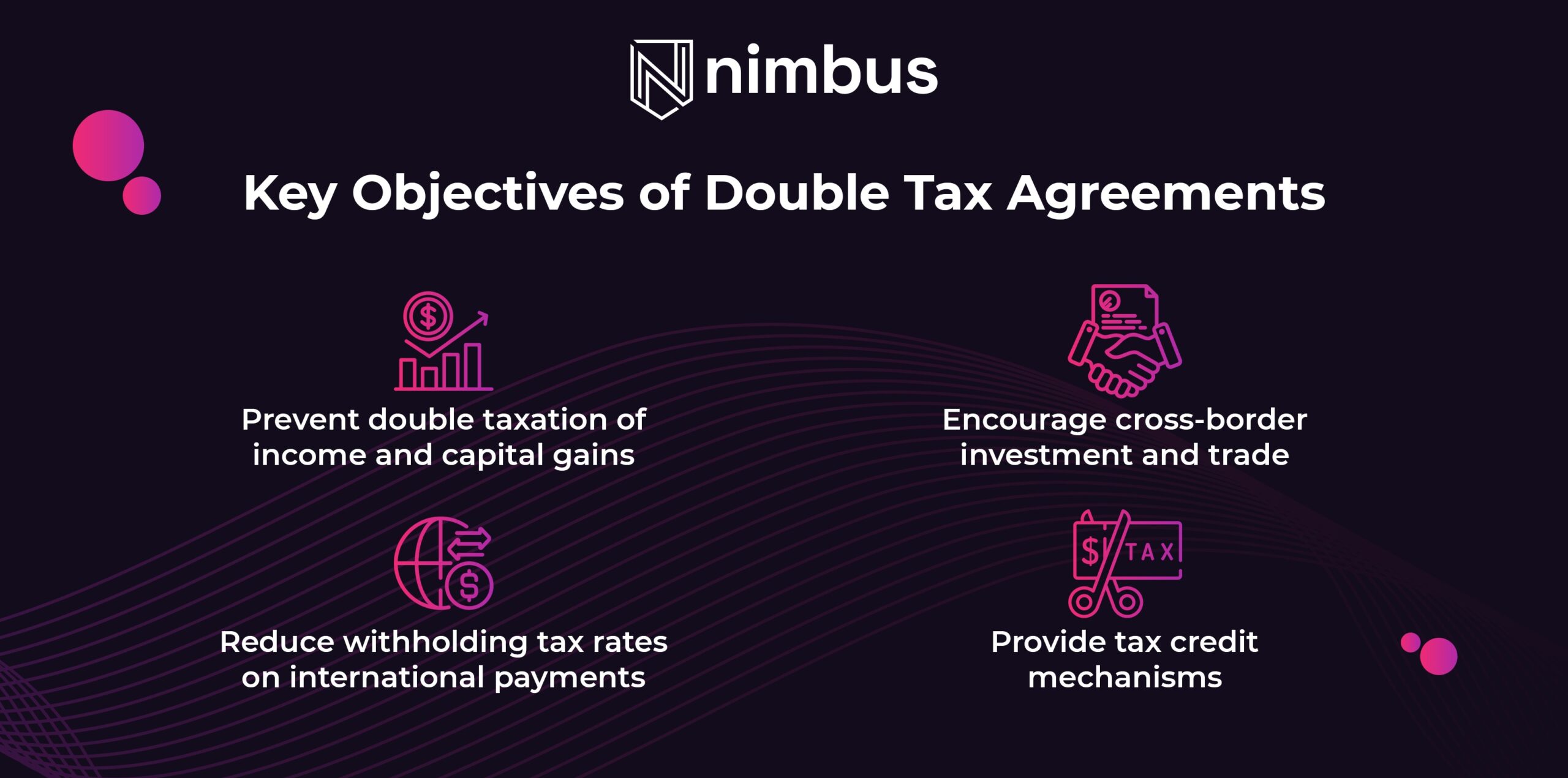
Key Objectives of Double Tax Agreements
- Prevent double taxation of income and capital gains
- Encourage cross-border investment and trade
- Reduce withholding tax rates on international payments
- Provide tax credit mechanisms
Understanding the UAE–UK Double Tax Treaty
The UAE–UK Double Taxation Agreement was signed on 12 April 2016 and entered into force later that year. Its primary purpose is to prevent the same income from being taxed in both jurisdictions while clarifying how taxing rights are allocated between the two countries.
The treaty plays a crucial role in strengthening economic relations between the two regions and encourage investors. It provides a clear framework for managing tax exposure when interacting with UK partners or subsidiaries.
- Applies to: Tax residents of the UAE or the UK, including individuals and corporate entities
- Objective: Avoid double taxation on income and capital gains
Withholding Taxes: Domestic Rules vs Treaty Benefits
One of the most significant benefits of the UAE–UK treaty relates to withholding tax (WHT). Withholding tax is typically deducted at source when payments are made to foreign recipients.
These taxes often apply to payments such as dividends, interest, royalties, and rental income. The treaty significantly reduces or eliminates these taxes in many scenarios.
UAE Domestic Withholding Tax Framework
The UAE introduced a federal corporate tax regime in June 2023, but its withholding tax structure remains highly favourable. Under UAE law:
- Outbound withholding tax is set at 0%.
- Payments to non-residents are generally not subject to withholding tax unless the income is attributable to a permanent establishment (PE) within the UAE.
This makes the UAE one of the most attractive jurisdictions globally for cross-border corporate structures and international holding companies.
UK Domestic Withholding Tax Rules
The UK imposes withholding tax on certain payments made to non-residents. However, treaty benefits can reduce or eliminate these taxes when applicable.
- Under UK domestic law, dividends paid by UK companies are subject to 0% withholding tax, regardless of the shareholder’s residency.
- Interest payments to foreign recipients are typically subject to 20% withholding tax, unless reduced under a tax treaty.
- Royalty payments to overseas individuals or companies generally attract 20% withholding tax under UK domestic legislation.
- Rental income derived from UK property is taxed under the Non-Resident Landlord Scheme, with a standard withholding tax rate of 20%.
- Management and service fees paid to foreign entities are usually not subject to withholding tax unless connected with UK property income.
Practical Benefits for UK Investors
Thanks to the DTA, UK investors gain advantages when establishing companies in the UAE. For instance:
- The UAE does not impose withholding tax on outbound payments.
- Tax treaty provisions help clarify permanent establishment exposure.
- Businesses face reduced risk of double taxation.
These benefits often encourage UK entrepreneurs to explore business setup in the UAE as part of their international expansion strategy.
Permanent Establishment: A Key Treaty Concept
A central concept within tax treaties is Permanent Establishment (PE). A PE arises when a company has a sufficient physical or operational presence in another country that allows that country to tax the company’s profits.
Common Permanent Establishment Triggers
Typical scenarios that may create a PE include:
- Operating through a fixed office or branch
- Construction projects exceeding treaty time thresholds
- Agents with authority to conclude contracts
- Warehouses used for commercial operations rather than storage
How the Treaty Prevents Double Taxation?
Even when income is taxable in both jurisdictions, the treaty provides mechanisms to prevent double taxation. The most common method is the foreign tax credit system.
How Tax Credits Work?
If income is taxed in one country, the taxpayer can generally claim a credit for that tax when calculating their tax liability in the other country. For example:
- A UK resident paying tax on UAE income may claim credit for UAE tax paid.
- A UAE company taxed on UK property income may receive credit against UAE tax obligations.
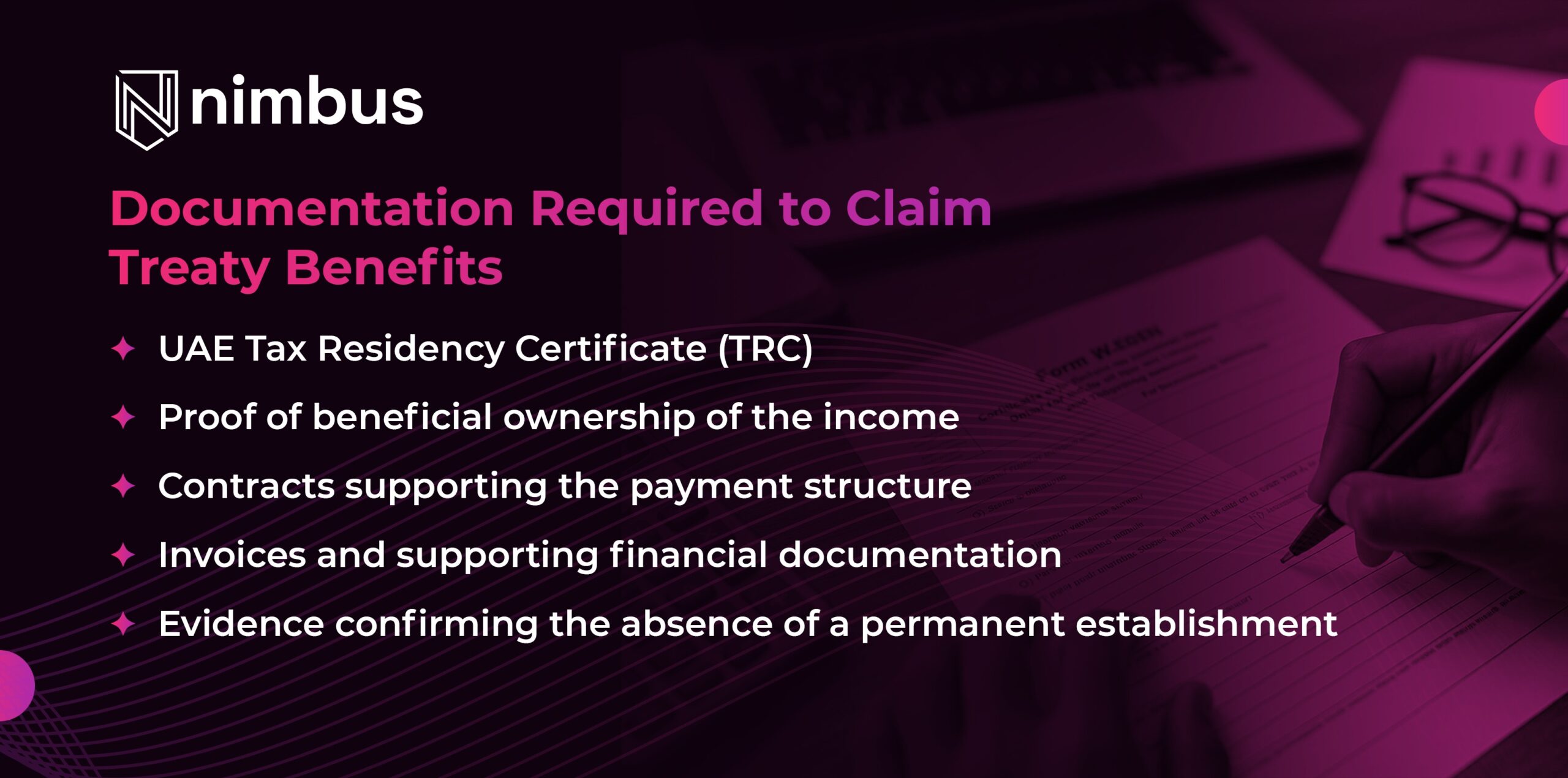
Documentation Required to Claim Treaty Benefits
Businesses seeking treaty protection must provide supporting documentation for claiming the benefits. Key requirements include:
- UAE Tax Residency Certificate (TRC)
- Proof of beneficial ownership of the income
- Contracts supporting the payment structure
- Invoices and supporting financial documentation
- Evidence confirming the absence of a permanent establishment
Common Reasons Treaty Claims Are Rejected
Despite the treaty’s advantages, relief is not automatic. Applications may be rejected for several reasons. Some common reasons are:
- Invalid or expired tax residency certificates
- Failure to prove beneficial ownership of income
- Incorrect classification of permanent establishment status
- Anti-avoidance provisions such as the Principal Purpose Test (PPT)
The UAE–UK Double Taxation Agreement plays a vital role in strengthening economic ties between the two countries. It helps reduce tax barriers for cross-border investment, eliminate withholding tax on several income streams, and prevent double taxation.
However, accessing treaty benefits requires careful structuring and compliance with both jurisdictions’ regulations. Professional tax advice is therefore essential to ensure compliance and minimize risks.