

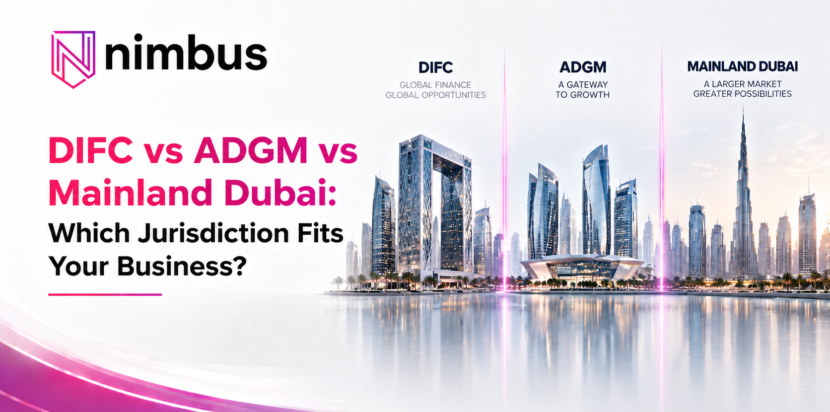
Choosing where to establish a company in Dubai is about much more than selecting an address.
For international investors, the choice between Dubai mainland, the Dubai International Financial Centre (DIFC), and the Abu Dhabi Global Market (ADGM) can affect everything from ownership and licensing to employment rules, dispute resolution and operating costs.
All three can support international businesses, but they are designed for different purposes, and the choice can heavily impact setup costs and operations. This makes jurisdiction selection one of the most important decisions in UAE company formation.
1. Dubai Mainland Business Setup: The Best Choice for Local Market Access
For many companies, UAE mainland setup remains the most straightforward option. A mainland company can be particularly useful when the business needs to deal directly with customers throughout Dubai and the wider UAE.
Dubai’s official investment platform describes mainland companies as businesses operating outside free zones and confirms that they can operate both within and outside the UAE. Mainland Dubai can therefore be a strong fit for:
- Restaurants and hospitality companies
- Construction companies
- Manufacturing operations
- Real estate-related businesses
- Companies targeting government or semi-government contracts
The structure also offers a broad selection of commercial, professional and industrial licences.
2. DIFC Company Setup: Dubai’s Premier Financial Hub
DIFC is often associated with banks and investment firms, but its ecosystem extends beyond traditional financial institutions. It has developed into a major centre for financial services, wealth management, investment structures and regional headquarters.
One of its biggest differentiators is its legal environment. The DIFC Courts operate independently from the UAE’s Arabic-language civil-law court system and administer an English-language common-law jurisdiction.
The courts can hear disputes connected with DIFC and can also hear civil and commercial disputes where parties agree in writing to DIFC Courts jurisdiction.
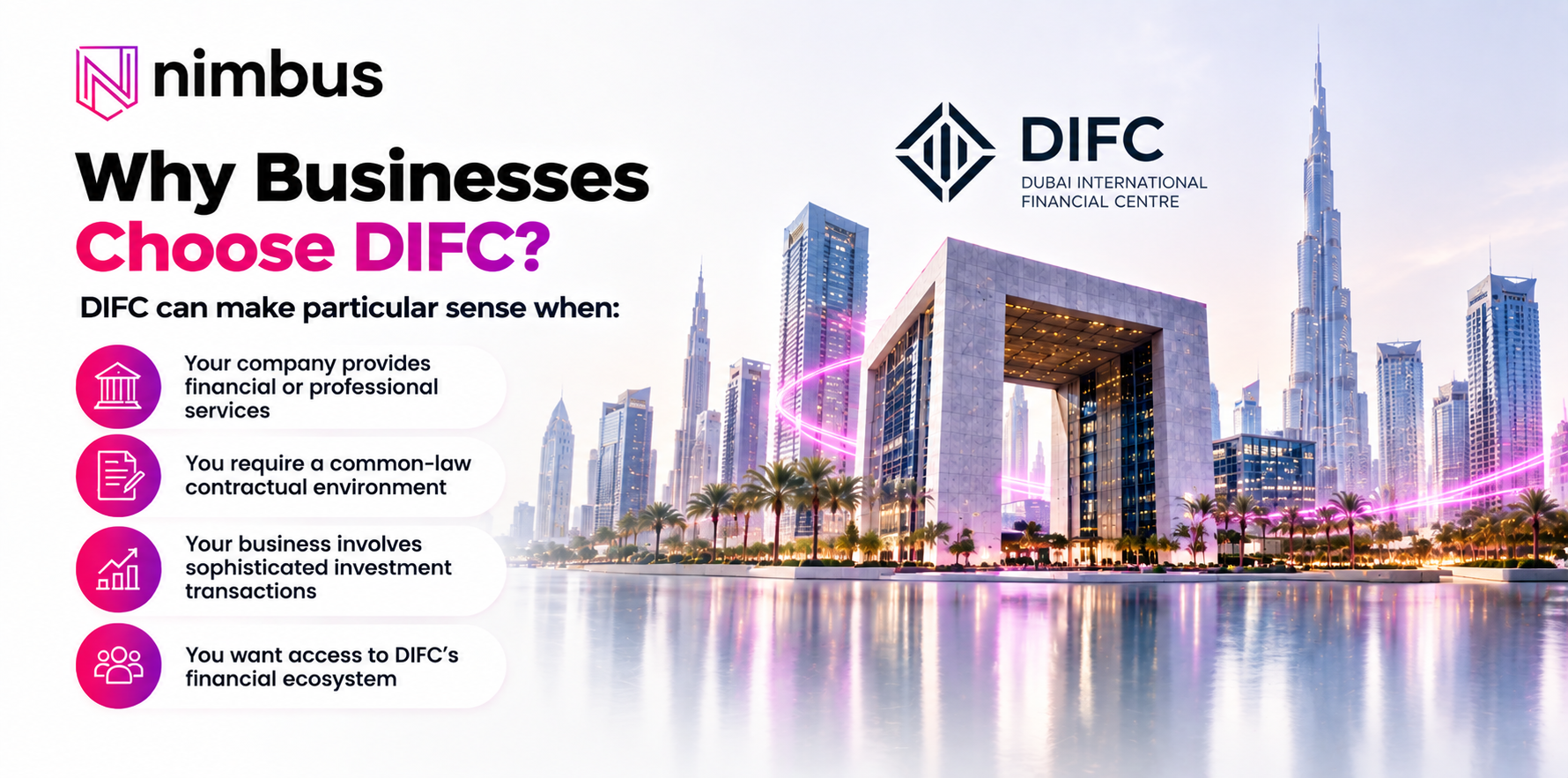
Key Benefits of Setting Up a Company in DIFC
DIFC can make particular sense when:
- Your company provides financial or professional services
- You require a common-law contractual environment
- Your business involves sophisticated investment transactions
- You want access to DIFC’s financial ecosystem
DIFC also has dedicated regulation for financial services through the Dubai Financial Services Authority (DFSA). This distinction is important. A company being incorporated in DIFC does not automatically mean it is authorised to conduct regulated financial services. Businesses carrying out regulated activities may need separate DFSA authorisation.
3. ADGM Company Formation: Abu Dhabi’s Common-Law Jurisdiction
ADGM offers many of the same broad advantages associated with DIFC, but it operates from Abu Dhabi. It has its own Registration Authority, Financial Services Regulatory Authority and independent courts.
ADGM’s legal framework is particularly distinctive because English common law has direct application through its legal framework. ADGM describes this as the first direct application of English common law in a Middle Eastern jurisdiction.
The courts operate in English and are modelled on the English judicial system. ADGM Courts include a Court of First Instance and a Court of Appeal and have dedicated divisions covering areas including commercial, civil, employment and small claims matters.
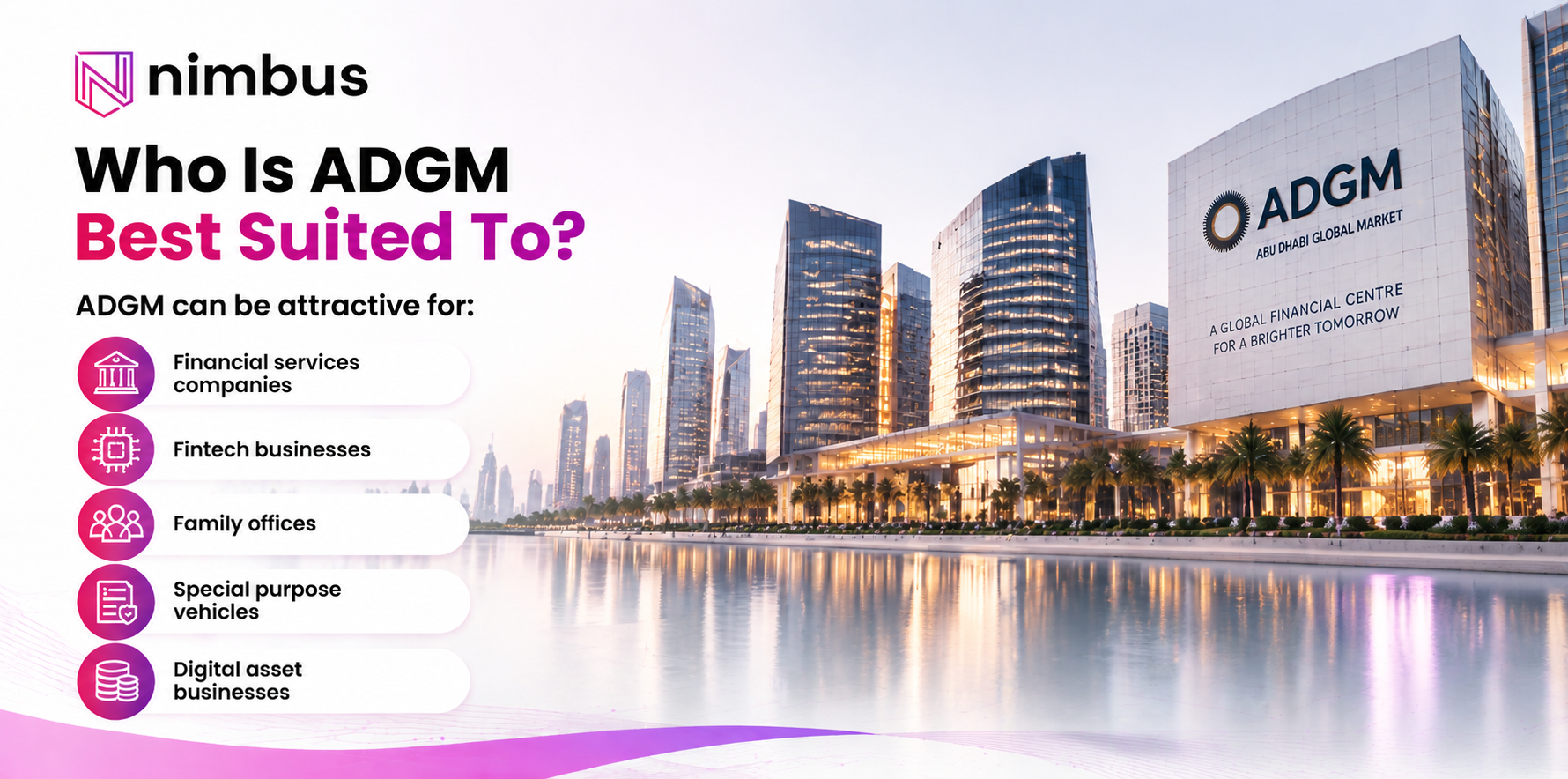
Which Businesses Should Choose ADGM Setup?
ADGM can be attractive for:
- Financial services companies
- Fintech businesses
- Family offices
- Special purpose vehicles
- Digital asset businesses
Its growing ecosystem also makes it attractive to businesses that want to operate close to Abu Dhabi’s sovereign wealth, investment and institutional ecosystem.
4. DIFC vs ADGM: Which Financial Free Zone is Right for You?
The DIFC and ADGM are often compared because both provide an English common-law environment within the UAE. But they are not identical. DIFC’s location in central Dubai makes it particularly attractive for businesses whose operations depend on Dubai’s financial and commercial ecosystem.
ADGM, meanwhile, benefits from its position in Abu Dhabi, one of the world’s major capital and investment centres. The choice may therefore come down to where your customers, investors, employees and business relationships are concentrated.
DIFC may be preferable if:
- Dubai is your primary commercial market
- Your business relies on Dubai’s professional-services ecosystem
- Your clients are concentrated in Dubai
- You want an established common-law court system in Dubai
ADGM may be preferable if:
- Abu Dhabi is your main market
- You are establishing a family office or investment structure
- Your business is closely connected to institutional capital
- You operate in fintech or digital assets
- You want a common-law jurisdiction in Abu Dhabi
Neither jurisdiction is universally better. The business model should determine the jurisdiction.
UAE Company Formation Costs: Looking Beyond Initial License Fees
Cost is naturally one of the first questions entrepreneurs ask. However, comparing only the headline incorporation fee can produce a misleading result. The actual cost of setting up a company can include:
- Incorporation fees
- Commercial licence fees
- Registered office costs
- Visa and immigration expenses
- Employee-related costs
- Regulatory fees
- Annual renewal costs
ADGM, for example, publishes separate incorporation, commercial licence and data protection fees, with costs varying according to the type of entity and activity. DIFC also has different fee structures depending on whether a company conducts financial services or non-financial activities. The actual quote depends on the entity, activity, and regulatory requirements.
UAE Employment Laws & Visas: Mainland vs Free Zone
Jurisdiction selection also affects how you manage employees. A mainland company is generally subject to UAE Federal Labour Law and applicable federal employment regulations while DIFC and ADGM have their own employment regimes. This difference can influence payroll administration, leave, termination procedures and end-of-service benefits.
DIFC and DEWS
DIFC uses the Employee Workplace Savings (DEWS) system for eligible employees instead of the traditional end-of-service gratuity model.
Current DIFC guidance states that employers generally contribute 5.83% of basic salary for employees with less than five years of service and 8.33% for employees with more than five years, subject to the applicable rules and exemptions. This can make employee benefit planning materially different from a mainland structure.
ADGM Employment Framework
ADGM has its own employment regulations. Importantly, its current framework includes statutory end-of-service gratuity provisions. ADGM’s published guidance states that gratuity is calculated at 21 days of basic wage for each year during the first five years and 30 days for each additional year, subject to the rules in the applicable regulations.
5. UAE Free Zone Setup: Cost-Effective Alternatives to DIFC and ADGM
DIFC and ADGM are both free zones, but they are specialised financial free zones rather than typical low-cost commercial free zones. This distinction matters.
The UAE has numerous other free zones designed around activities such as trading, logistics, technology, media, and professional services. Dubai alone has more than 20 free zones, according to the city’s official investment platform.
For a small consultancy or e-commerce company, a conventional UAE freezone setup may be more economical than DIFC or ADGM. But if the company needs a sophisticated financial-services ecosystem, investment structure or common-law framework, DIFC or ADGM may offer advantages that a low-cost free zone cannot provide.
Can You Use More Than One Structure?
Yes, and sophisticated groups sometimes use multiple UAE entities for different purposes. For example, a group could potentially use:
- A DIFC or ADGM entity for holding or investment activities
- A mainland Dubai entity for local operating activities
- A conventional free-zone company for specialised trading or services
The correct structure depends on the activities, ownership, tax position, regulatory requirements and commercial relationships involved. This can be particularly useful for larger groups that want to separate investment assets from operating businesses.
However, adding entities also adds accounting, governance, banking and compliance obligations. More companies do not automatically mean a better structure.
Conclusion: Choosing the Right Jurisdiction for Your UAE Business
There is no single winner. Mainland Dubai is often the strongest choice for businesses that need broad access to the UAE market and practical day-to-day operations.
DIFC is particularly compelling for financial services, and businesses that value Dubai’s financial ecosystem and mature English-language common-law court system. ADGM is a strong alternative for businesses connected to Abu Dhabi, investment structures, digital assets and institutional capital.
For some businesses, the answer may even be a combination of jurisdictions. And if your priority is a sector-focused ecosystem with a more cost-conscious setup, another UAE free zone may be worth evaluating.
The key is to look beyond the incorporation fee. Your jurisdiction determines much of the legal and operational environment. So, getting that decision right at the beginning can make compliance and dispute management significantly easier later.

Comments are closed