

The reforms simplify commercial registration, replace the previous fragmented registration model with a central electronic register, and create a more flexible framework for foreign investment.
At the same time, investors still need to navigate licensing, tax, employment and corporate governance requirements. For companies considering business setup in Saudi Arabia, understanding these changes before incorporation can make the process considerably easier.
Navigating the Unified Commercial Registration in Saudi Arabia
Historically, businesses operating across different parts of Saudi Arabia could face additional administrative requirements connected with local commercial registrations.
The new Commercial Register Law changes this approach. Under the new framework, a single Commercial Register is sufficient at the Kingdom level. The Ministry of Commerce has confirmed that subsidiary commercial registers have been cancelled, while businesses no longer need to specify a city or administrative region for their commercial registration.
This is an important change for companies planning to expand beyond one location. Instead of managing separate registrations for different branches or regions, businesses can operate under a central commercial registration covering their activities, subject to the applicable licensing and regulatory requirements.
The reform is designed to reduce administrative and financial burdens while making commercial information easier to access and update.
Key Changes in the Saudi Commercial Register Law
The new Commercial Register Law introduces several practical changes that foreign investors should understand. The main changes include:
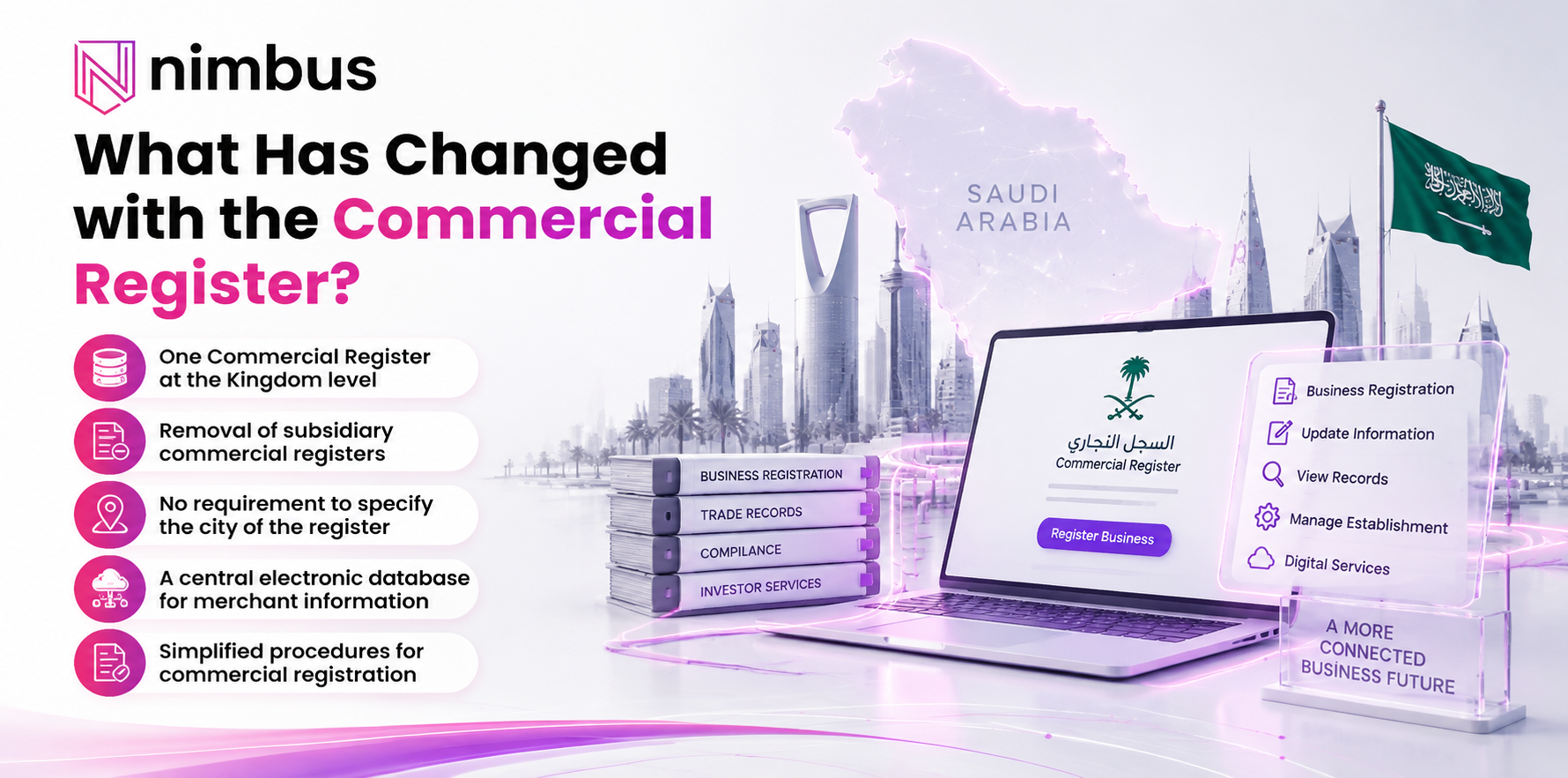
- One Commercial Register at the Kingdom level
- Removal of subsidiary commercial registers
- No requirement to specify the city of the register
- A central electronic database for merchant information
- Simplified procedures for commercial registration
Another notable change is that the Commercial Register no longer has an expiry date in the previous sense. Instead, businesses are required to confirm their data annually. For international businesses, this can make ongoing corporate administration more predictable.
However, companies must still maintain the licences, permits and approvals required for their particular activities.
How the Updated MISA Investment Law Streamlines Market Entry
The updated Investment Law introduces another significant change for foreign investors. Rather than relying on the previous foreign investment licensing model, the updated framework uses registration with the Ministry of Investment, now commonly referred to as MISA.
The law establishes a national register for investors and requires foreign investors to register with the Ministry before engaging in investment activities, subject to the applicable rules and exceptions.
According to MISA, once the foreign investor receives notification that registration has been completed, the investor can proceed with issuing the commercial registration and obtaining the necessary licences from the relevant authorities. This creates a clearer sequence for company formation in the KSA.
The process, however, can still involve multiple government authorities, particularly for regulated sectors, but the overall framework is designed to reduce duplication.

The Impact of Reforms on Saudi Company Formation & Foreign Ownership
The reforms can make Saudi company formation more attractive to international businesses, particularly those looking for greater control over their Saudi operations.
A foreign-owned company may be able to operate without a local equity partner, depending on the activity and applicable regulations. This can offer several advantages, including:
- Greater control over management
- Direct ownership of the Saudi business
- Easier integration with a multinational group’s structure
- Greater flexibility for future expansion
- Clearer investor rights
- Access to government and private-sector opportunities
The updated Investment Law also provides investors with protections relating to fair treatment, property and the ability to transfer investment-related funds through lawful channels.
It also recognises alternative dispute resolution mechanisms such as arbitration, mediation and conciliation. These protections are important when a foreign company is committing substantial capital to a long-term Saudi operation.
Saudization (Nitaqat) Compliance for Foreign Companies in KSA
Businesses operating in the Kingdom must comply with Saudization requirements, which vary according to factors such as business activity, profession and establishment characteristics.
These requirements can change over time as the government adjusts labour-market policies. For example, Saudi Arabia’s Ministry of Human Resources and Social Development announced that increased Saudization rates for specified marketing and sales professions took effect on 19 April 2026.
The applicable rate was raised to 60 percent for establishments employing three or more workers in those professions, alongside a salary threshold for Saudi employees to count toward the requirement. This illustrates why workforce planning should be part of the initial business setup in Saudi Arabia.
Benefits of the KSA Regulatory Framework for Foreign Investors
Taken together, the reforms point toward a broader objective: making Saudi Arabia easier to navigate for investors while maintaining strong regulatory oversight.
The commercial registration reforms reduce duplication while the Investment Law creates a more unified investment framework. Foreign ownership rules provide greater flexibility in many activities.
Digital registration makes the entry process more efficient. At the same time, corporate governance, taxation and Saudization continue to require careful attention. In other words, Saudi Arabia is reorganising the regulatory environment around a more centralised and digital model.
Next Steps for Your Business Setup in Saudi Arabia
Saudi Arabia’s commercial registration and investment reforms represent a meaningful step in the Kingdom’s effort to create a more competitive investment environment.
For foreign businesses, the move toward a unified Commercial Register, electronic processes and broader foreign ownership opportunities can make market entry more straightforward.
But flexibility comes with responsibility. Investors still need to comply with sector-specific rules, corporate governance requirements, taxation and Saudization policies.
For companies exploring business setup in Saudi Arabia, this is perhaps the most important takeaway: the KSA is becoming more accessible to international investors, but successful entry still depends on completely understanding the rules and complying to those.
With the right preparation, Saudi Arabia’s evolving regulatory environment can provide international businesses with a clearer path to establishing and operating in one of the GCC’s most important markets.

Comments are closed