


The UAE is preparing to implement a nationwide electronic invoicing system that will significantly change how companies record and exchange transaction data. This reform represents one of the most important developments in the UAE’s tax administration since the introduction of value-added tax in 2018.
The initiative is led jointly by the UAE Ministry of Finance and the Federal Tax Authority (FTA) with the objective of improving transparency and strengthening VAT compliance.
For companies considering business setup in the UAE, the upcoming e-invoicing mandate will require operational, technological, and compliance adjustments. This article explains how the UAE e-invoicing system will work and provides a practical checklist to help businesses prepare for the transition.
Understanding the UAE’s Electronic Invoicing System
Electronic invoicing, often referred to as e-invoicing, replaces traditional invoice formats such as paper documents or PDF files with structured digital data that can be automatically processed by accounting systems.
Under the new system, invoices must be generated in machine-readable XML format and transmitted through accredited intermediaries connected to the Peppol interoperability network.
The guidelines confirm that the system will apply to any business operating in the UAE, regardless of whether the entity is VAT-registered, unless specific exemptions apply.
The reform primarily applies to business-to-business transactions and business-to-government transactions. At present, business-to-consumer transactions are not included in the mandate.
Architecture Behind the UAE E-Invoicing Model
The UAE has adopted a Decentralized Continuous Transaction Control and Exchange model. This system allows invoices to move between trading partners through certified intermediaries rather than being submitted directly to the tax authority.
The process typically follows these steps:
- The supplier generates the invoice in XML format
- The supplier’s accredited service provider validates the invoice data
- The validated invoice is transmitted through the Peppol network
- The buyer’s service provider receives and confirms the invoice
- Transaction data is reported to the tax authority for monitoring and verification
This structure allows the FTA to receive structured tax information while enabling businesses to exchange invoices seamlessly with their trading partners. For companies managing large volumes of transactions, this system is expected to improve operational efficiency by reducing manual administrative work over time.
Implementation Timeline for E-Invoicing Rollout
The UAE government has introduced a phased implementation schedule to allow businesses sufficient time to prepare for the new requirements.
1. Pilot Phase Beginning July 1, 2026
Organizations may voluntarily participate in the system to test integrations and processes before mandatory compliance begins.
2. Phase 1 Beginning January 1, 2027
Large businesses with annual turnover of at least AED 50 million must begin issuing electronic invoices through accredited service providers. These companies must appoint a provider by July 31, 2026.
3. Phase 2 Beginning July 1, 2027
SMBs with turnover below AED 50 million must implement electronic invoicing. These companies must appoint an Accredited Service Provider (ASP) by March 31, 2027.
4. Phase 3 Beginning October 1, 2027
Federal government entities will complete the transition to the system.
Businesses across the UAE should carefully monitor these timelines to avoid compliance risks.
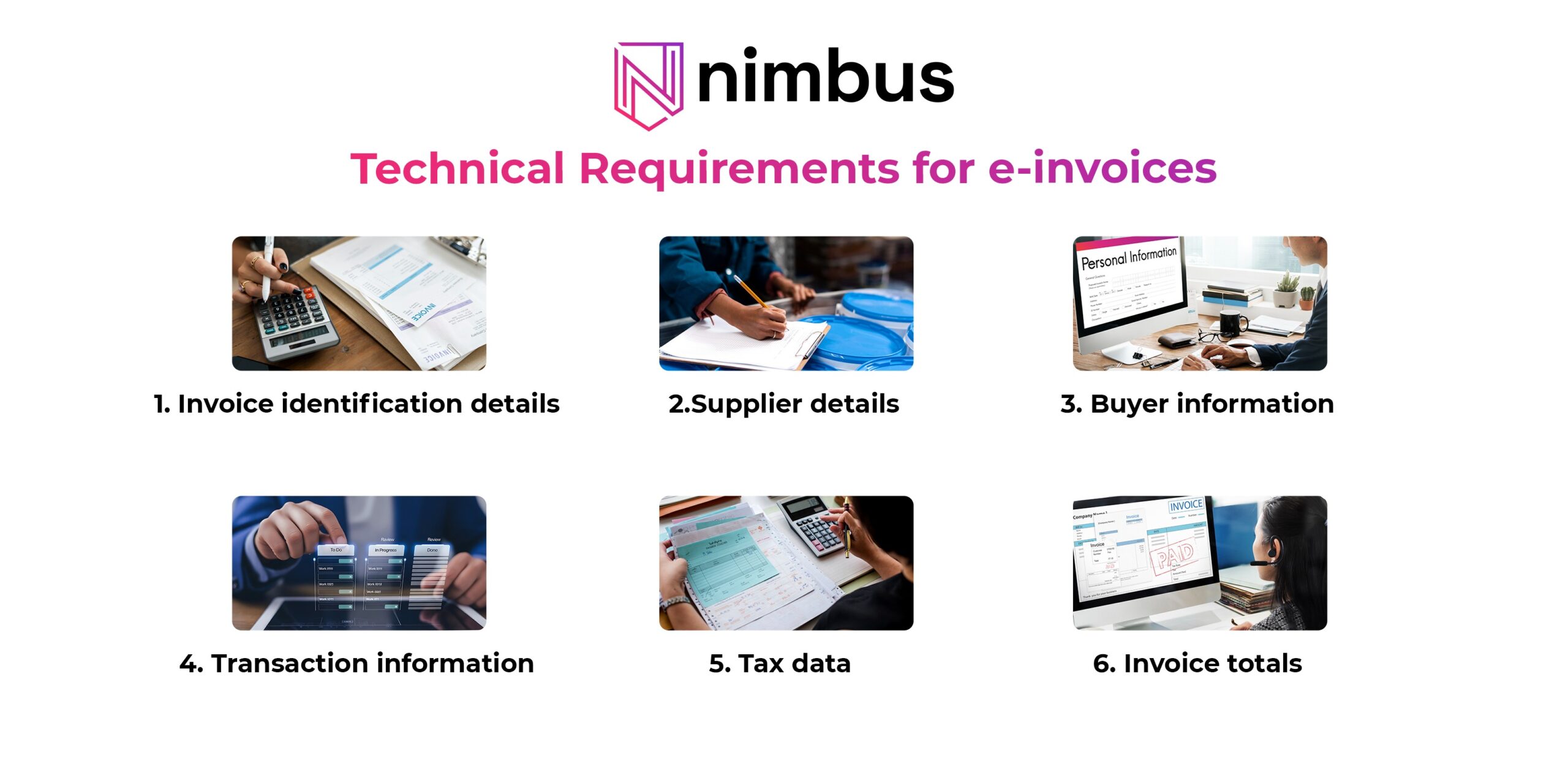
Technical Requirements for E-Invoices
Electronic invoices in the UAE must comply with the Peppol PINT-AE technical specification. This framework defines the mandatory data fields required for each invoice.
1. Invoice Identification Details
- Invoice number
- Invoice issue date
- Document type code
- Currency code
2. Supplier Details
- Legal entity name
- Tax Registration Number
- Registered address
3. Buyer Information
- Legal entity name
- Tax registration number where applicable
- Address details
4. Transaction Information
- Description of goods or services
- Quantity and unit price
- Taxable amount
5. Tax Data
- Applicable VAT rate
- Tax category code
- VAT amount for each invoice line
6. Invoice Totals
- Net value
- Total VAT
- Gross amount payable
Penalties for Non-Compliance
The UAE has introduced specific penalties to ensure compliance with the new framework. According to Cabinet Decision No. 106 of 2025, potential violations may include:
- AED 5,000 per month for failing to appoint an accredited service provider
- AED 100 per invoice issued outside the electronic invoicing system after the compliance deadline
- Penalties for failing to report system failures within two business days
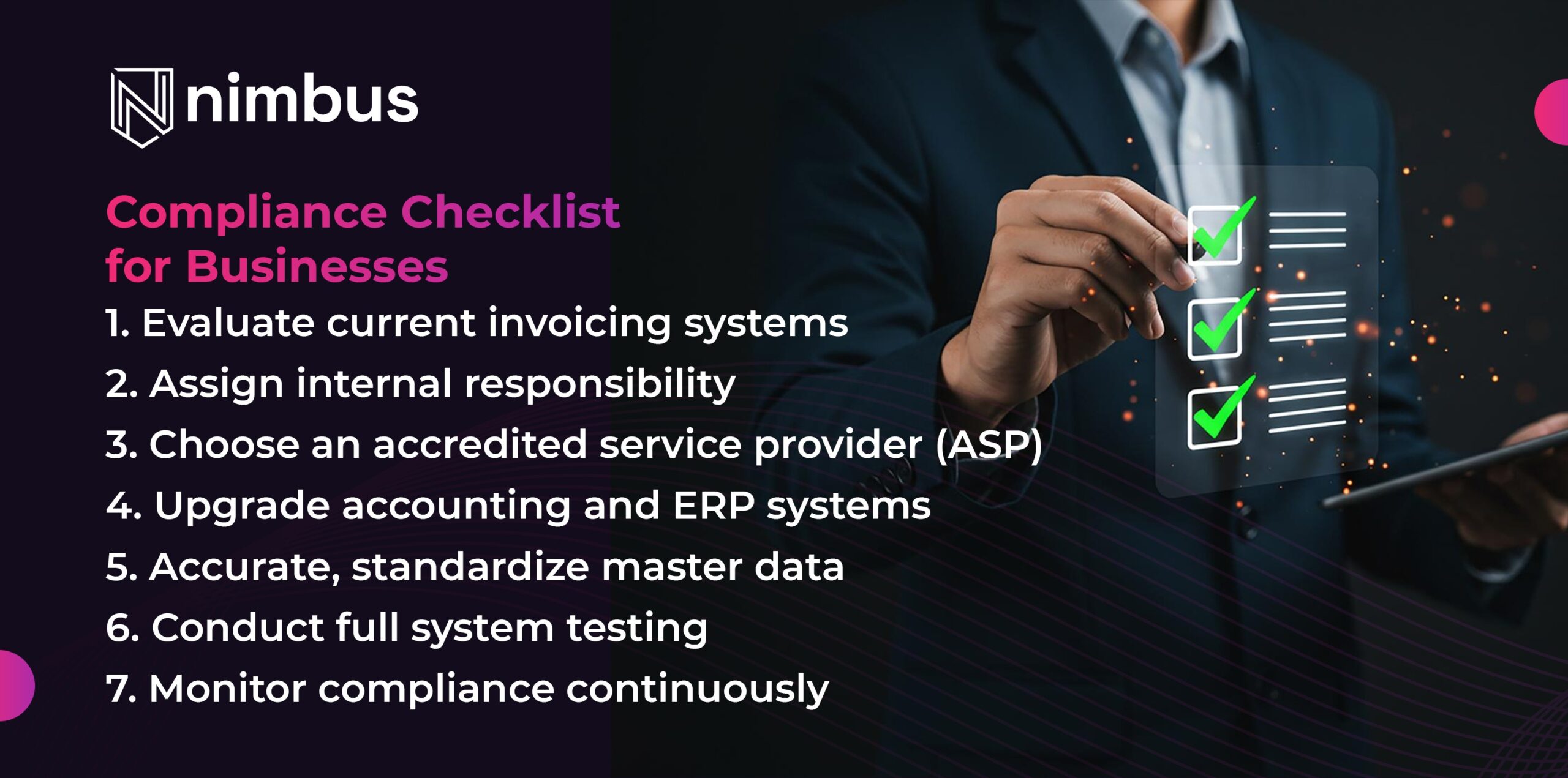
Compliance Checklist for Businesses
Preparing for the e-invoicing mandate requires coordination across finance, tax, technology, and operations teams. The following steps provide a structured roadmap for businesses preparing for the reform.
1. Evaluate Current Invoicing Systems
Businesses should begin by reviewing existing invoicing processes. This includes identifying:
- ERP systems used for invoicing
- Accounting software platforms
- Manual invoicing procedures
- Billing applications
Companies must compare their existing invoice data structures with the mandatory fields required by the Peppol PINT-AE specification.
2. Assign Internal Responsibility
E-invoicing implementation often involves multiple departments. A project team may include representatives from:
- Finance and accounting
- Tax compliance
- IT and system integration
- Legal or regulatory teams
Large organizations may create formal project committees, while smaller firms may assign responsibility to finance leadership.
3. Choose an Accredited Service Provider (ASP)
Businesses must appoint a service provider approved by the UAE Ministry of Finance to connect to the Peppol network. Important factors to consider when selecting a provider include:
- Compatibility with ERP platforms such as SAP or Oracle
- API integration capabilities
- Data security and certification standards
- Cost and pricing models
- Support for both Arabic and English documentation
Early provider selection allows sufficient time for system integration and testing.
4. Upgrade Accounting and ERP Systems
Internal systems must be updated to generate structured XML invoices. Integration tasks typically include:
- Configuring ERP output formats
- Establishing API connections with the service provider
- Validating mandatory invoice data fields
- Enabling automated invoice transmission
Companies going for UAE business setup should ensure their accounting infrastructure is ready for these changes.
5. Review and Standardize Master Data
Inaccurate data is one of the most common causes of invoice rejection during system testing. That’s why businesses should review and verify:
- Customer and supplier tax registration numbers
- Address formats
- Tax codes and classifications
- Product and service data
6. Conduct Full System Testing
Before going live, businesses should run comprehensive tests through their service provider’s sandbox environment. Testing scenarios should include:
- Standard invoices
- Credit notes
- Zero-rated transactions
- Exempt supplies
- Rejected invoice scenarios
Successful testing confirms that invoices can pass validation and move through the Peppol network without errors.
7. Monitor Compliance Continuously
After implementation, businesses should maintain ongoing monitoring systems. Key actions include:
- Tracking rejected invoice rates
- Reconciling VAT returns with invoice data
- Maintaining proper digital record retention
- Monitoring regulatory updates from authorities
Preparing Early for the Transition
Although mandatory deadlines begin in 2027 for many businesses, preparation should start well before that date. ERP integration, provider selection, system testing, and employee training can take several months, particularly for organizations managing high transaction volumes.
Companies that begin preparation in 2026 will be better positioned to meet the new requirements smoothly and avoid financial penalties.

Comments are closed