


For many UK entrepreneurs and companies, international expansion has become a strategic necessity. As global markets evolve and businesses look for new growth opportunities, the UAE has emerged as one of the most attractive destinations for international companies.
With its pro-business regulations, strategic geographic position, modern infrastructure, and beneficial tax environment, the UAE, particularly Dubai, has become a global hub for trade, investment, and innovation.
For UK businesses exploring business setup in the UAE, the country offers an environment designed to support both startups and multinational corporations. Whether it is company formation, opening a regional branch, or relocating headquarters, understanding the process and opportunities is essential.
This post explains the key advantages, structures, and practical steps involved in moving or expanding a UK business into the UAE.
Why UK Businesses Are Expanding to the UAE?
Over the past decade, thousands of British companies have established operations in the UAE. Today, more than 5,000 UK businesses operate across the Emirates, reflecting the strong economic ties between the two countries. Several factors explain this growing trend.
Strategic Global Location
Dubai sits at the crossroads of Europe, Asia, and Africa, making it one of the most strategically positioned commercial centers in the world and this geographic advantage makes the UAE an ideal base for businesses looking to expand beyond the UK and European markets.
Favorable Tax Environment
One of the most compelling advantages for businesses considering company formation in the UAE is its tax structure, including 0% personal income tax and no withholding tax on outbound payments. Compared to the UK’s higher corporate and personal tax burdens, this environment significantly improves profitability and reinvestment potential.
World-Class Infrastructure
The UAE has invested heavily in infrastructure to support global business. Its infrastructure makes it one of the easiest cities in the world to conduct international business operations. Companies benefit from:
- International airports and seaports
- Advanced logistics networks
- Digital government services
- Modern commercial real estate
Repatriating Profits to the UK
The UAE offers a highly flexible financial environment for international businesses. UK companies benefit from:
- No currency controls
- Full profit repatriation
- International banking connectivity
However, businesses must still consider tax implications under the double taxation agreement.
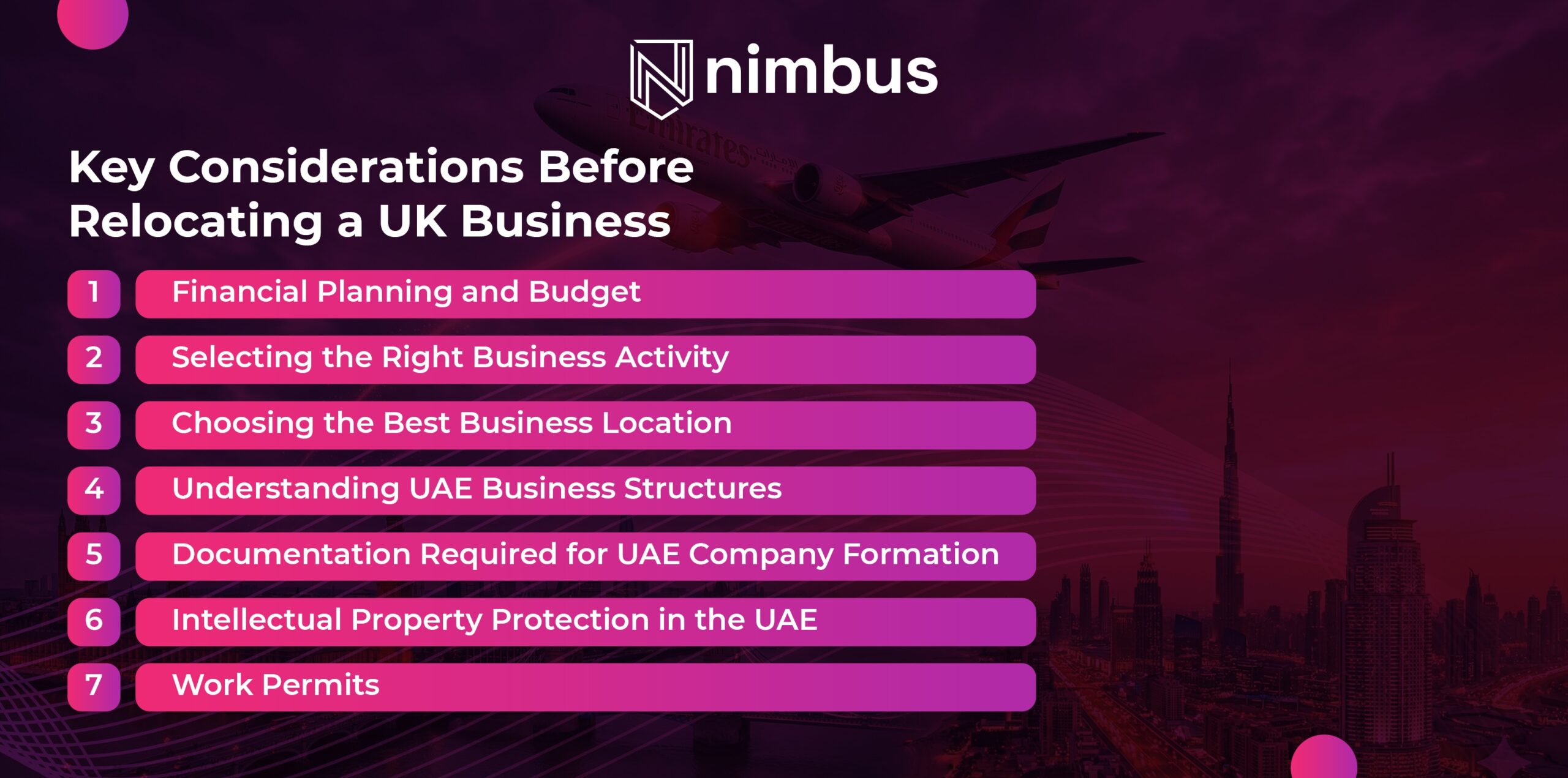
Key Considerations Before Relocating a UK Business
Relocating or expanding a company internationally requires careful planning. Businesses must consider several factors before initiating UAE company formation.
Financial Planning and Budget
Companies must evaluate whether relocation or expansion aligns with their financial strategy. Considerations include:
- Licensing and registration fees
- Office or warehouse space costs
- Employee visa expenses
- Banking requirements
- Ongoing regulatory compliance costs
Working with experienced consultants can help ensure that the business setup in the UAE remains financially sustainable.
Selecting the Right Business Activity
Choosing the correct activity is essential for expansion in the UAE and companies must register for specific licensed business activities. These activities determine the type of licence issued and the approvals required. Some regulated industries may require:
- Professional certifications
- Industry approvals
- Additional documentation
Choosing the Best Business Location
Companies must also determine where their operations will be based. Key questions include:
- Do you need office space or a warehouse?
- Will you require access to airports or ports?
- Do you plan to trade locally within the UAE?
Understanding UAE Business Structures
When expanding into the UAE, UK companies typically choose between two primary structures.
Free Zone Companies
Free zones are designated economic areas designed to attract international investment. There are more than 50 free zones across the UAE, many tailored to specific industries such as technology, finance, media, and logistics. It offers benefits like potential corporate tax exemptions and industry-focused infrastructure.
Mainland Companies
A UAE mainland setup allows companies to operate freely throughout the UAE market. Mainland companies can trade directly with local businesses and bid for government contracts. Recent regulatory reforms now enable 100% foreign ownership in many sectors for mainland setup.
Documentation Required for UAE Company Formation
Establishing a company in the UAE involves several regulatory steps and documentation requirement, including:
- A detailed business plan
- Company registration applications
- Passport copies of shareholders and directors
- Proof of address for shareholders
- Ultimate Beneficial Owner (UBO) declarations
- Existing UK company documents (if applicable)
Intellectual Property Protection in the UAE
UK businesses should also protect their intellectual property. Federal law in the UAE provides strong protection for intellectual property rights across sectors including technology, media, architecture, and literature. The UAE Ministry of Economy oversees the registration of trademarks, patents, and copyrights.
Work Permits
Companies relocating employees from the UK must follow UAE immigration procedures. Key steps include:
- Issuing an employment offer
- Obtaining a work permit
- Completing medical examinations
- Applying for an Emirates ID
- Issuing a residency visa
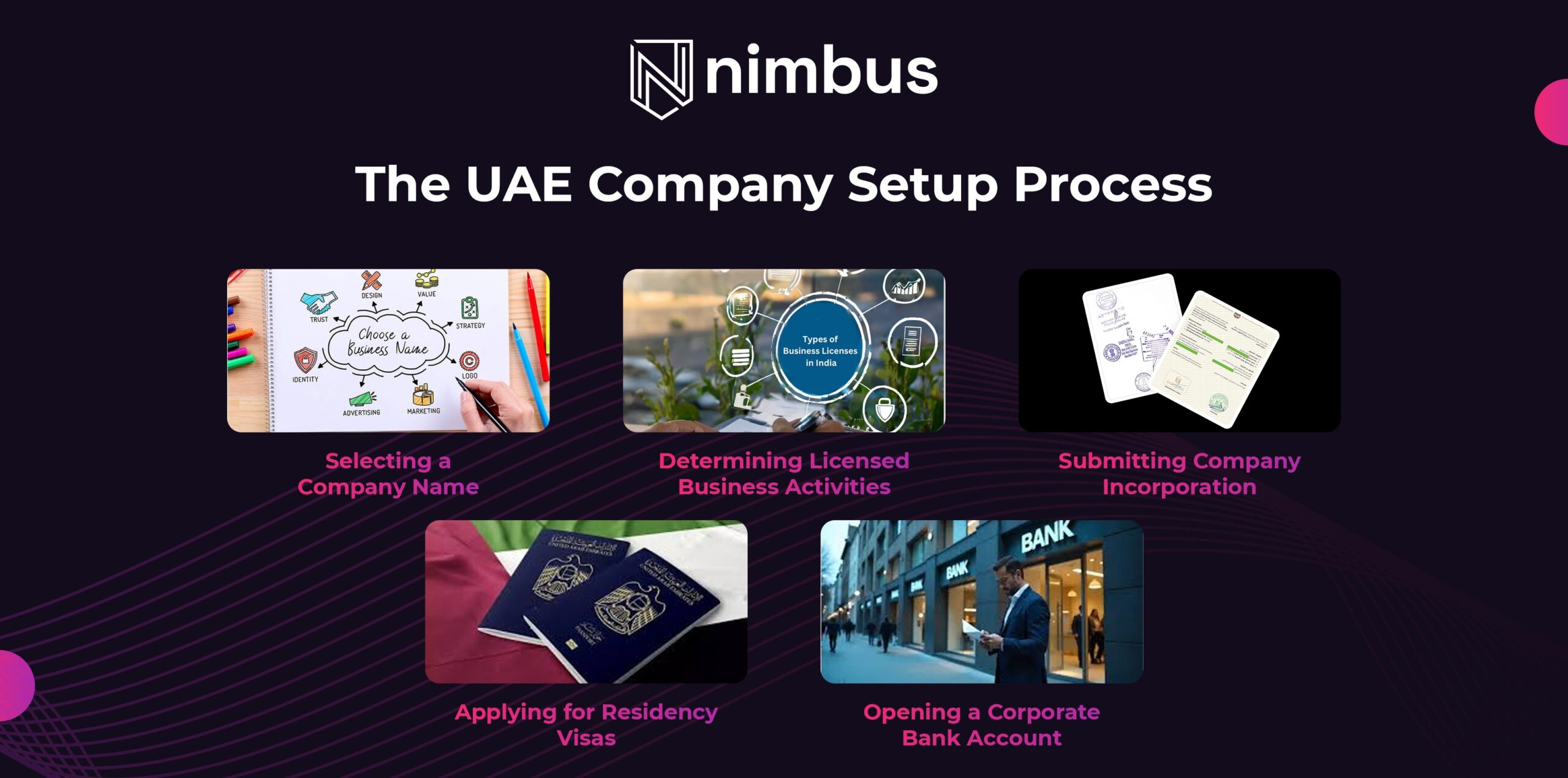
The UAE Company Setup Process
While the process varies slightly depending on the chosen jurisdiction, the typical steps involved in business setup in the UAE include:
Selecting a Company Name
The proposed trade name must comply with UAE naming regulations. Names cannot include religious terms, government references, or inappropriate language. Names must also be registered in both English and Arabic.
Determining Licensed Business Activities
Authorities will review and approve the proposed business activities before issuing a license. Certain sectors may require additional approvals from government regulators.
Submitting Company Incorporation Documents
All required documentation is prepared and submitted to the relevant licensing authority. Once approved, the company receives its trade licence, which allows it to begin operating.
Applying for Residency Visas
After the company is established, owners can apply for UAE residency visas. These visas also allow entrepreneurs to sponsor family members or hire employees.
Opening a Corporate Bank Account
Opening a UAE business bank account is a critical step after company registration. Banks need proper documentation, including company incorporation and shareholder identification documents. Most banks also require shareholders to be physically present in the UAE during onboarding.

Final Thoughts
The UAE has established itself as a growing business hub for UK companies, thanks to its favorable tax policies, pro-business regulations, and modern infrastructure. With the right strategy and professional support, business setup in the UAE can become a powerful step toward global expansion for UK investors and businesses.