


The UAE has long been recognized as an investment magnet for international investors. Although the region continues to attract entrepreneurs pursuing business setup in the UAE, the deal environment has evolved.
The introduction of UAE Corporate Tax (UAECT) has fundamentally shifted expectations in mergers and acquisitions. The perception of the UAE as a purely “tax-free” jurisdiction is now a thing of the past.
Today’s buyers, especially foreign acquirers, demand transparency, structured compliance, and tax-ready financials before committing capital. This means one thing for business owners: preparation must begin well before a transaction is on the table.
Enter reverse due diligence.
What Is Reverse Due Diligence?
Reverse due diligence flips the traditional transaction model on its head. In a typical deal, the buyer conducts due diligence, scrutinizing financial statements, tax filings, contracts, and operational risks. Any issues uncovered at this stage can weaken negotiation power, reduce valuation, or even derail the deal entirely.
Reverse due diligence, on the other hand, puts the seller in control. It is a proactive internal review where the business assesses itself through a buyer’s lens, identifying risks, fixing weaknesses, and preparing documentation before entering negotiations.
Think of it as a strategic rehearsal before stepping onto the M&A stage. Instead of:
- Reacting to buyer concerns
- Explaining historical gaps
- Justifying compliance weaknesses
You:
- Identify risks early
- Resolve issues within your timeline
- Present a structured, investor-ready business
How Corporate Tax Has Changed the Game?
The implementation of UAE Corporate Tax has elevated tax governance to a core deal consideration. Buyers are now closely reviewing:
- Corporate tax registration and compliance status
- Free Zone eligibility and tax incentives
- Transfer pricing documentation
- Related-party transactions and group structuring
This is particularly relevant for companies operating under UAE freezone setup structures and a UAE mainland setup must demonstrate proper structuring, licensing compliance, and tax alignment.
For multinational buyers, scrutiny goes even further. Under the OECD’s BEPS Pillar Two framework and Global Minimum Tax (15%), foreign acquirers must ensure that any UAE entity within their group meets international compliance standards.
Reverse Due Diligence Checklist for UAE Companies
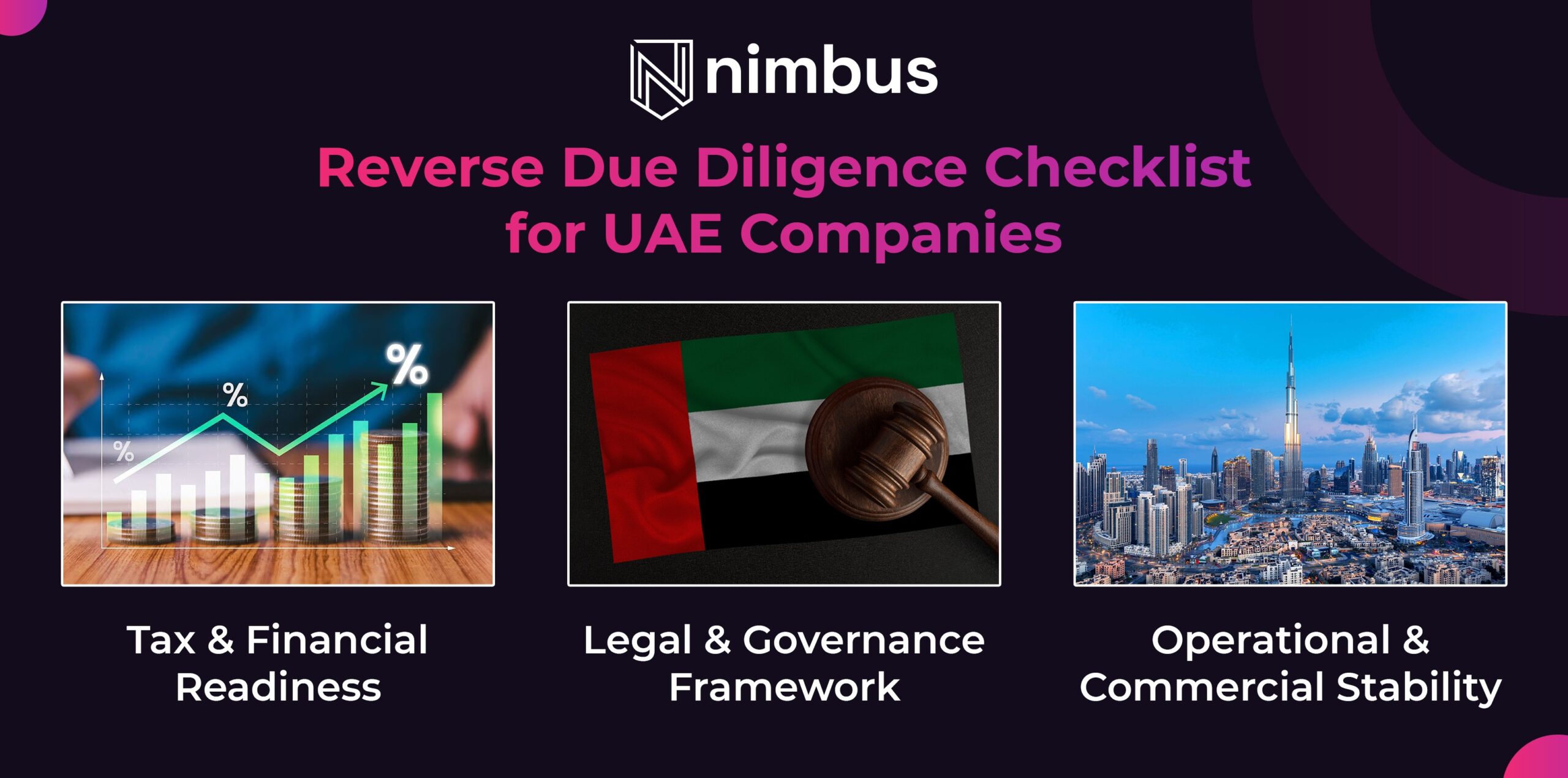
Whether your company was established through company formation in the UAE or expanded via cross-border structuring, a structured reverse due diligence review should cover three critical pillars:
1. Tax & Financial Readiness
- Corporate tax and VAT compliance review
- IFRS-aligned financial statements
- Reconciliation of related-party transactions
- Transfer pricing documentation
- Proper expense classifications
- Historical audit reports
Strong, transparent financial records signal operational maturity and reduce negotiation friction.
2. Legal & Governance Framework
- Clear ownership structures
- Valid trade licenses and approvals
- Memorandum & Articles alignment
- Board resolutions and shareholder documentation
- IP ownership properly documented
- Contracts free from restrictive clauses or hidden liabilities
Businesses in the UAE processes should ensure that corporate documentation aligns with current regulations.
3. Operational & Commercial Stability
- HR and visa compliance
- Employment contract reviews
- IT system resilience and cybersecurity standards
- Key supplier and customer dependency analysis
- Business continuity planning
A 4-Step Framework to Execute Reverse Due Diligence
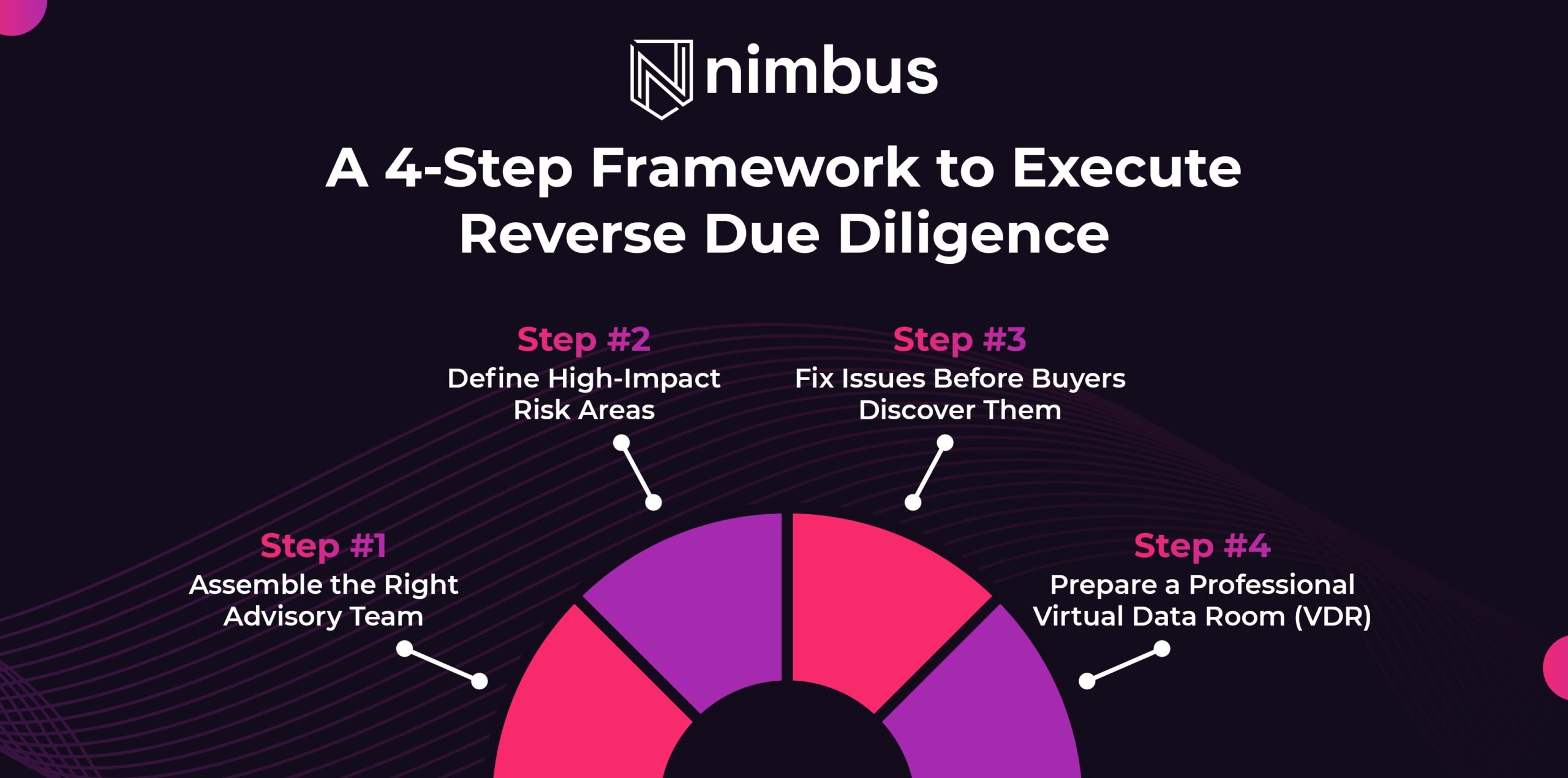
Preparation must be structured, not rushed. Here is a practical roadmap.
Step #1: Assemble the Right Advisory Team
Reverse due diligence requires expertise across tax, legal, financial, and operational domains. Experienced advisors bring an objective perspective and help identify blind spots. Whether internal or external, your team must have deep knowledge of:
- Corporate tax
- UAE regulatory frameworks
- Free Zone vs mainland structuring
- Cross-border compliance
Step #2: Define High-Impact Risk Areas
Not all issues carry equal weight. Prioritize areas that directly impact:
- Valuation
- Regulatory compliance
- Cash flow
- Tax exposure
For example, businesses that recently completed business setup in the UAE may need to validate that initial structuring aligns with new corporate tax requirements.
Step #3: Fix Issues Before Buyers Discover Them
Once risks are identified, resolve them proactively. Taking corrective action early prevents deal-stage panic and protects valuation. This may involve:
- Correcting tax filings
- Updating governance documentation
- Formalizing transfer pricing policies
- Restructuring related-party agreements
Step #4: Prepare a Professional Virtual Data Room (VDR)
A structured data room accelerates buyer due diligence and reinforces trust. A well-organized VDR demonstrates credibility. Do include:
- Financial statements (3–5 years)
- Tax filings and compliance certificates
- Corporate documents
- Contracts and agreements
- HR and operational records
Reverse Due Diligence as a Competitive Advantage
In the evolving UAE M&A landscape, preparedness is not optional; it is strategic leverage. Businesses that invest in reverse due diligence benefit from:
- Faster deal timelines
- Stronger negotiation positions
- Reduced price adjustments
- Increased buyer confidence
- Higher perceived governance standards
From Deal-Ready to Deal-Optimal
Reverse due diligence is not just a compliance exercise; it is about owning your transaction narrative. In today’s regulated, globally scrutinized landscape, buyers reward businesses that demonstrate:
- Structured governance
- Transparent tax compliance
- Operational resilience
- Strategic foresight
Summing Up

The UAE remains one of the most dynamic markets for growth, acquisition, and expansion. But in a post-corporate-tax era, opportunity belongs to the prepared. Reverse due diligence transforms uncertainty into confidence. It protects value, strengthens credibility, and positions your business as an investment-ready asset.
Ibtasam Aziz, Business Setup Consultant info@nimbusconsultancy.com