


Over the past few years, a noticeable shift has been taking place in the global business landscape. Businesses and investors from the UK are increasingly relocating their businesses and personal tax residency to the UAE.
While the UK has long been considered a global financial hub, recent economic, regulatory, and taxation changes have prompted many business leaders to reconsider where they operate and grow their companies.
As a result, business setup in the UAE has become one of the most attractive options for internationally minded entrepreneurs. From tax efficiency and regulatory clarity to global connectivity and economic growth, the UAE has emerged as a strategic base for companies seeking long-term stability and expansion.
This post explores why UK business owners are leaving, what makes the UAE appealing, and how UAE company formation is becoming a key part of global wealth and business migration.
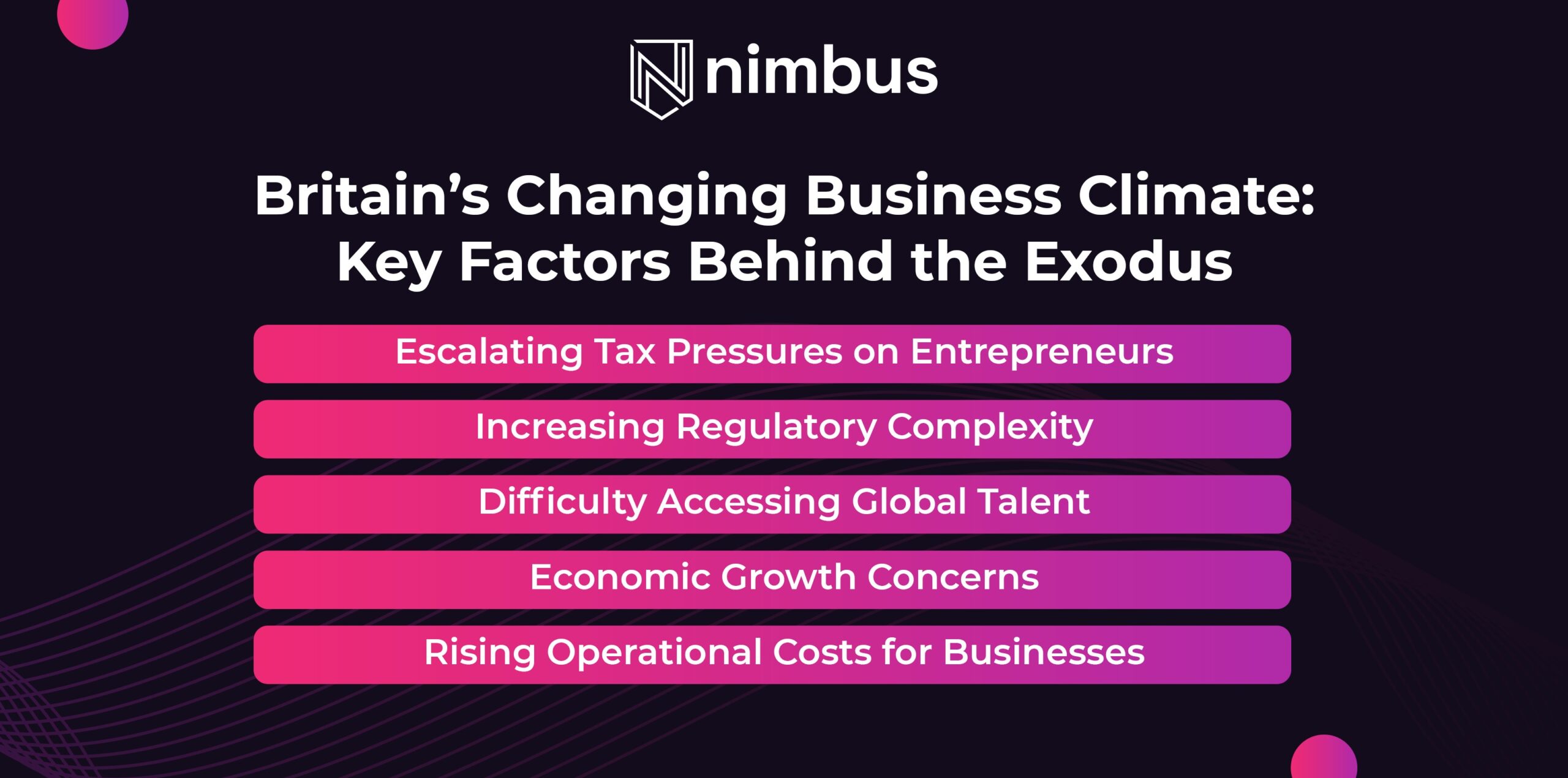
Britain’s Changing Business Climate: Key Factors Behind the Exodus
For many entrepreneurs, relocation decisions are not driven by one single factor. Instead, they reflect a combination of rising taxes, regulatory complexity, and rising operational costs. In the UK, several structural changes have created an environment where founders are reassessing their long-term base of operations.
Escalating Tax Pressures on Entrepreneurs
One of the most frequently cited reasons behind the migration of entrepreneurs is the significant increase in the UK’s tax burden. Today, UK taxes have reached their highest levels, affecting both personal wealth and corporate profitability. Key recent tax changes include:
- Abolition of the non-dom tax regime beginning in April 2025
- Capital gains tax increasing from 10% to 18% (lower band) and 20% to 24% (higher band)
- Corporation tax rising from 19% to 25%
- Higher dividend tax rates across all income brackets
Increasing Regulatory Complexity
Beyond taxation, businesses in the UK are facing growing regulatory hurdles that make expansion slower and more costly. Many entrepreneurs now view bureaucracy as a major operational barrier rather than a supportive regulatory framework.
Financial Services and Licensing Delays
Regulatory approvals in the UK have become increasingly slow and complex. Examples include:
- Banking licence approvals taking 12 to 18 months
- Constant policy changes creating uncertainty
- Additional compliance requirements following Brexit
Difficulty Accessing Global Talent
Hiring international talent has also become more difficult in the UK due to stricter immigration rules. Businesses now face:
- Tougher sponsor licence requirements
- Rising minimum salary thresholds for visa eligibility
- More restrictive skilled worker visa routes
For companies that depend on global expertise, these barriers make scaling operations more difficult.
Economic Growth Concerns
Another factor driving relocation decisions is the UK’s relatively slow economic growth. Current projections estimate UK GDP growth at around 1% in 2025, reflecting a decade of weak productivity growth and reduced investment momentum.
By contrast, the UAE economy is expected to grow approximately 4.1% in 2025, creating a far more dynamic environment for business expansion. For entrepreneurs deciding where to build global companies, the difference in growth trajectories is difficult to ignore.
Rising Operational Costs for Businesses
UK businesses are also facing a growing financial burden due to rising operational expenses. Entrepreneurs now contend with:
- Higher corporation tax rates
- Increasing business rates in commercial districts
- Rising employer National Insurance contributions
- Wage inflation pressures
Combined with increased regulatory costs, these factors have made it harder for companies to remain globally competitive while operating in the UK.
The Scale of the UK Wealth Migration
Recent data shows that the movement of entrepreneurs and wealthy individuals away from the UK is accelerating. In 2024 alone:
- 10,800 millionaires left the UK
- The UK became the second-largest global wealth loser after China
- Around 3,790 company directors relocated abroad
At the same time, the UAE has become one of the world’s most attractive destinations for global wealth migration as it has been actively building an environment designed to attract global entrepreneurs and investors. In 2024
- 6,700 millionaires moved to the UAE
- Nearly 9,800 are projected to relocate in 2025
- Over 120 family offices now manage £970 billion from the UAE
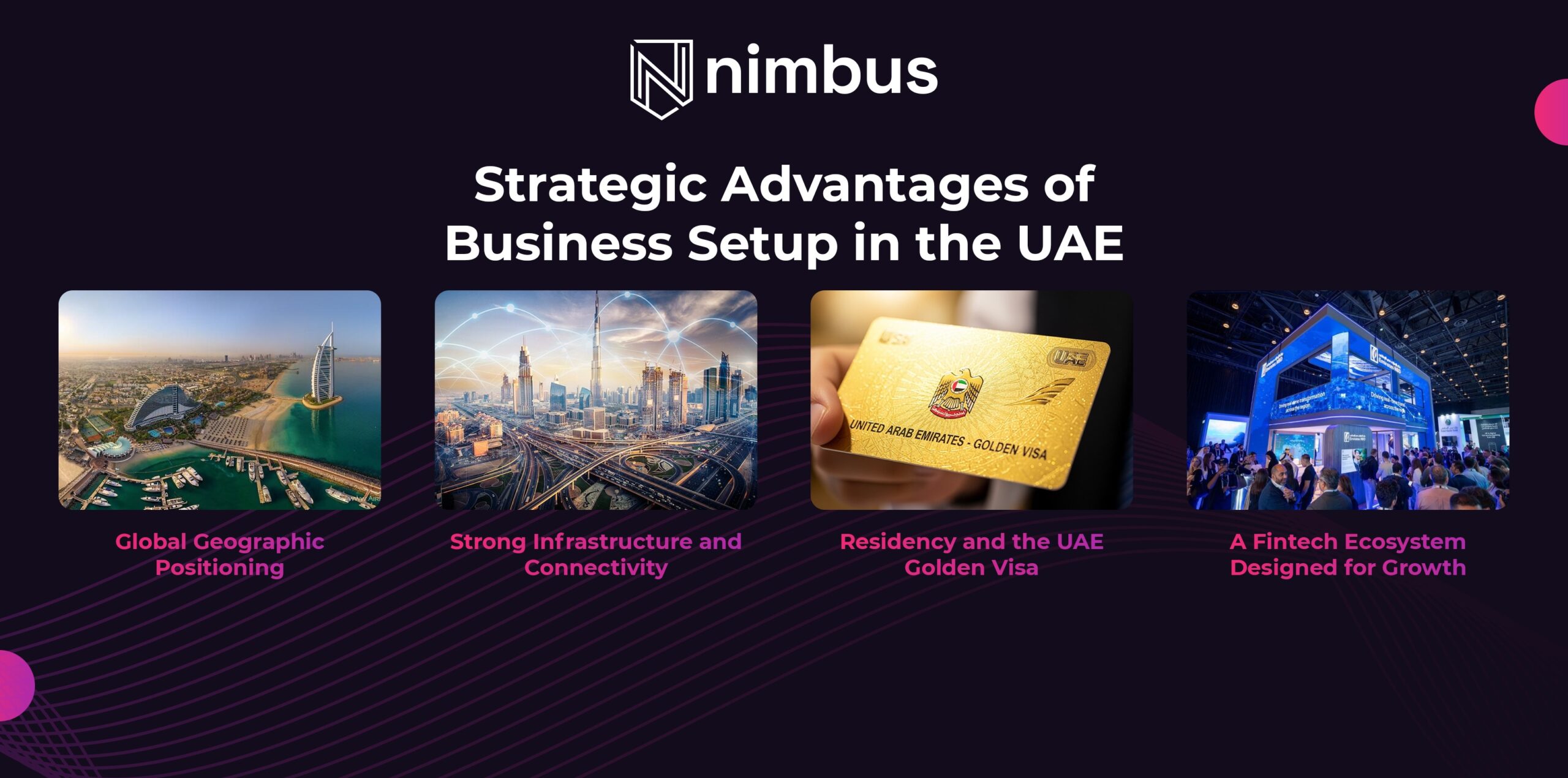
Strategic Advantages of Business Setup in the UAE
The UAE offers a business environment built around efficiency, transparency, and growth. Here are the key reasons why most UK investors are going for business setup in the UAE Beyond tax efficiency, it offers structural advantages that support international growth.
Global Geographic Positioning
Dubai sits strategically between Europe, Asia, and Africa, allowing businesses to operate across three continents within a single workday. The time-zone advantage enables companies to manage global operations efficiently.
Strong Infrastructure and Connectivity
The UAE has invested heavily in infrastructure that supports international businesses and allows companies to operate seamlessly across global markets.
Highlights include
- Port Jebel Ali, the 12th-largest port globally
- World-class aviation hubs in Dubai and Abu Dhabi
- Modern transport and logistics networks
Residency and the UAE Golden Visa
Another major attraction is the UAE’s residency framework. The Golden Visa program provides long-term residency options through investment.
Eligibility routes include:
- Property investment of approximately £410,000
- Business investment of £2 million
- Specialized talent categories
Key benefits include:
- 5–10 year renewable residency
- No local sponsor required
- Ability to remain outside the UAE for extended periods
- Family sponsorship eligibility
This flexibility makes the UAE particularly attractive for internationally mobile entrepreneurs.
A Fintech Ecosystem Designed for Growth
The UAE is rapidly becoming a global fintech hub. Recent data shows
- Fintech companies growing 12.5% annually
- Active fintech firms increasing 128.5% since 2011
- 89% of UAE consumers using digital banking
Dubai alone hosts more than 61% of fintech companies in the UAE, making it one of the region’s leading innovation centres.
The Future of Global Business Migration
The movement of entrepreneurs from the UK to the UAE reflects a broader global trend. Capital, talent, and innovation increasingly follow environments that offer:
- Regulatory clarity
- Competitive taxation
- Economic growth
- Efficient infrastructure
With its strong economic outlook and streamlined process for company formation in the UAE, the Emirates has positioned itself as one of the world’s most attractive destinations for entrepreneurs.

For UK business owners evaluating where to build the next chapter of their companies, the UAE offers a compelling combination of opportunity, stability, and global connectivity.