

Saudi Arabia entered 2026 with decisive momentum. Across workforce policy, tourism growth, transport infrastructure, and artificial intelligence, Saudi signaled that its transformation agenda is deepening.
New Saudization mandates are reshaping hiring models. Tourism has reached historic highs in both visitor numbers and spending. Major infrastructure tenders are reinforcing long-term mobility and urban development goals.
Meanwhile, large-scale AI investments are positioning the KSA as a regional digital powerhouse. Here is a closer look at the most significant developments shaping the region’s business landscape and encouraging business setup in Saudi Arabia in 2026.
SAUDI ARABIA IN 2026 – KEY DEVELOPMENT AREAS
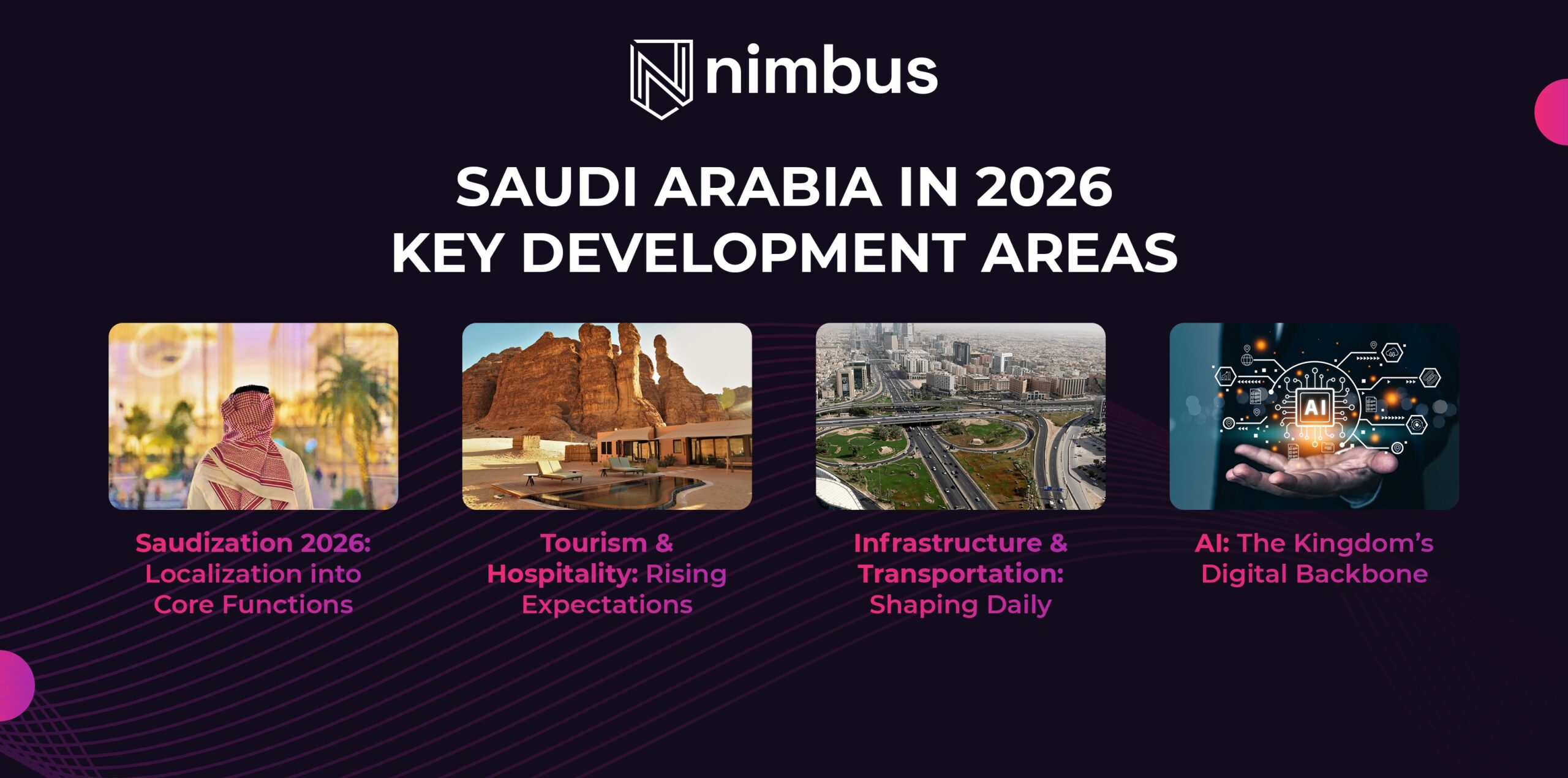
1. Saudization 2026: Localization into Core Functions
Workforce localization continues to evolve from broad quota systems into targeted, profession-specific mandates. Recent announcements include:
- 60% localization across 18 marketing and sales professions
- 70% localization in procurement roles
- 30% localization of engineering jobs in the private sector
These changes reflect a shift toward embedding Saudi nationals into strategic corporate functions rather than entry-level roles.
What This Means for Businesses?
Saudization is no longer a post-registration compliance exercise. It directly influences:
- Organizational design
- Hiring timelines
- Payroll planning
- Visa allocations
- Iqama renewals
Investors going for company formation in Saudi Arabia must now incorporate localization strategy at the earliest planning stage. Workforce structure, job descriptions, and recruitment pipelines should align with Nitaqat requirements before operations begin.
Enforcement is increasingly digital, with platforms like Qiwa and Mudad providing real-time compliance monitoring. Businesses that proactively invest in training and structured workforce planning will maintain operational flexibility.
2. Tourism & Hospitality: Rising Expectations
Saudi Arabia’s tourism ecosystem delivered landmark results in 2025, setting the tone for 2026.
Key Milestones
- 122 million tourists visited the Kingdom in 2025
- Visitor spending reached SR 300 billion
- Hospitality establishments increased by 40.6%
- Sector employment surpassed 1 million workers
Major Developments
- Diriyah announced a $1 billion hotel project with an Italian developer
- The Tourism Development Fund (TDF) unlocked $1 billion in partnerships to support MSMEs
- Investment pipelines continue to expand across hotels and experiential tourism
Big Picture
Saudi Arabia’s tourism market is maturing. The early focus on flagship megaprojects is now complemented by ecosystem-wide growth across:
- Boutique hospitality
- Cultural tourism
- Event infrastructure
- Sports and entertainment venues
For investors looking for business setup in Saudi Arabia, opportunities exist not only in hotel development but also in supply chains, technology platforms, facility management, and destination-level service ecosystems.
3. Infrastructure & Transportation: Mega-Projects to Everyday Mobility
Saudi Arabia’s infrastructure strategy in 2026 reflects both ambition and practicality. While high-profile projects remain central, attention is increasingly shifting toward everyday mobility systems and long-term urban integration.
Notable Announcements
- Revival of the Jeddah Metro Blue Line tender
- Saudi Arabia Railways issuing tenders for 10 new passenger trains for the Northern Network
- Riyadh announcing a $2 billion Ring Road Development Program
Strategic Direction
Infrastructure development now focuses on:
- Urban congestion relief
- Intercity rail efficiency
- Transit-oriented development
- Public-private partnership tenders
The sustained pipeline of transport and mobility tenders suggests consistent demand for engineering firms, project management consultants, and materials suppliers. For international investors, 2026 signals a stable medium-term opportunity cycle rather than short-term project spikes.
4. AI: The Kingdom’s Digital Backbone
Artificial intelligence is emerging as a cross-sector enabler rather than a standalone initiative.
Key Announcements
- PIF-backed HUMAIN secured up to $1.2 billion to expand AI infrastructure
- Saudi Arabia plans to launch the SUSTAIN platform, designed to enable AI-powered collaboration across industries
Why This Matters?
Saudi Arabia is not only investing in AI applications but also in foundational infrastructure:
- Data center expansion
- Cloud ecosystem scaling
- Institutional frameworks for AI integration
- Cross-sector digital collaboration
Long-Term Implications
AI is being positioned as connective tissue across:
- Healthcare
- Transport systems
- Energy management
- Tourism analytics
- Government services
For technology firms and investors, the opportunity lies not just in AI deployment but in infrastructure partnerships and data ecosystem participation.
Strategic Takeaways for 2026
1. Compliance and Localization Are Structural
Saudization requirements are expanding into high-value roles. Workforce planning must align with regulatory expectations from day one.
2. Tourism Is Scaling Beyond Megaprojects
The sector is transitioning from visionary launches to ecosystem-wide operational growth.
3. Infrastructure Investment Is Systemic
Mobility, rail, and mixed-use developments reflect a long-term integration strategy.
4. AI Is Institutionalized
The Kingdom is investing in both digital capacity and governance frameworks to embed AI across industries.
Final Outlook: 2026 as an Execution Year

If 2025 was a year of momentum, 2026 appears to be a year of execution.
Saudization mandates are becoming more precise. Tourism growth is translating into measurable economic impact.
Infrastructure pipelines remain active and diversified. AI investments are moving from concept to capacity-building. For investors and operators, Saudi Arabia continues to present significant opportunity, but with increasing regulatory sophistication.
But a successful business incorporation in the KSA in 2026 will depend on early workforce planning, strong compliance integration, and strategic participation in public tenders.
Comments are closed