


Saudi Arabia’s business environment continues to evolve rapidly in line with Vision 2030, and with it, the country’s tax landscape is undergoing a fundamental transformation. Among the most significant developments is the expansion of transfer pricing regulations under the Zakat, Tax and Customs Authority (ZATCA).
Previously limited to entities subject to income tax, the regime now extends to zakat payers, bringing most Saudi-owned businesses and mixed-ownership entities under its scope from fiscal years beginning January 1, 2024.
For companies exploring business setup in Saudi Arabia, this shift highlights the importance of adopting transparent, documentation-driven tax practices. Transfer pricing is no longer a compliance formality; it’s a cornerstone of corporate governance and international tax integrity in the KSA.
1. What Transfer Pricing Means in the Saudi Context?
At its core, transfer pricing governs how transactions between related entities, such as parent companies and subsidiaries, are priced. The arm’s length principle is the foundation of these rules, ensuring that prices between related parties are equivalent to those that would apply in an open market between independent entities.
In practical terms, this means that if your Saudi subsidiary pays a service fee, interest, or royalty to a parent company or affiliate, that price must be defensible as “market-based.”
ZATCA’s framework follows the OECD’s Transfer Pricing Guidelines, adapted for local realities through the Transfer Pricing Bylaws and updated 2024 Guidelines.
The June 2024 update introduced clarity on Advance Pricing Agreements (APAs), documentation for zakat payers, and transaction-level accounting adjustments, making compliance expectations more explicit than ever.
2. Who Must Comply with Saudi Arabia’s ZATCA Transfer Pricing Rules?
Transfer pricing obligations now apply to both:
- Taxpayers under the Income Tax Law, typically foreign-owned entities; and
- Zakat payers under the Zakat Regulations, which include Saudi-owned and mixed-ownership companies.
The rules cover both cross-border and domestic transactions between related parties, meaning even intercompany dealings within Saudi Arabia fall under ZATCA’s purview if there’s common ownership or control exceeding 50%.
For investors planning company formation in Saudi Arabia, this means all entities, whether operating onshore or within free zones, should assess their related-party transactions early to avoid non-compliance risks.
3. Phased Implementation for Zakat Payers
Recognizing that zakat payers are new to transfer pricing compliance, ZATCA has introduced a phased approach:
Phase 1 (2024–2026):
- Entities with related-party transactions below SAR 48 million are exempt from maintaining a Master File and Local File.
- Those with transactions above SAR 100 million must prepare both files and maintain full documentation.
Phase 2 (from 2027 onward):
The exemption threshold drops to SAR 48 million, bringing more entities into documentation requirements.
Regardless of transaction size, all zakat payers must file a Controlled Transaction Disclosure Form (CTDF) along with an auditor’s affidavit, confirming the consistent application of transfer pricing policies.
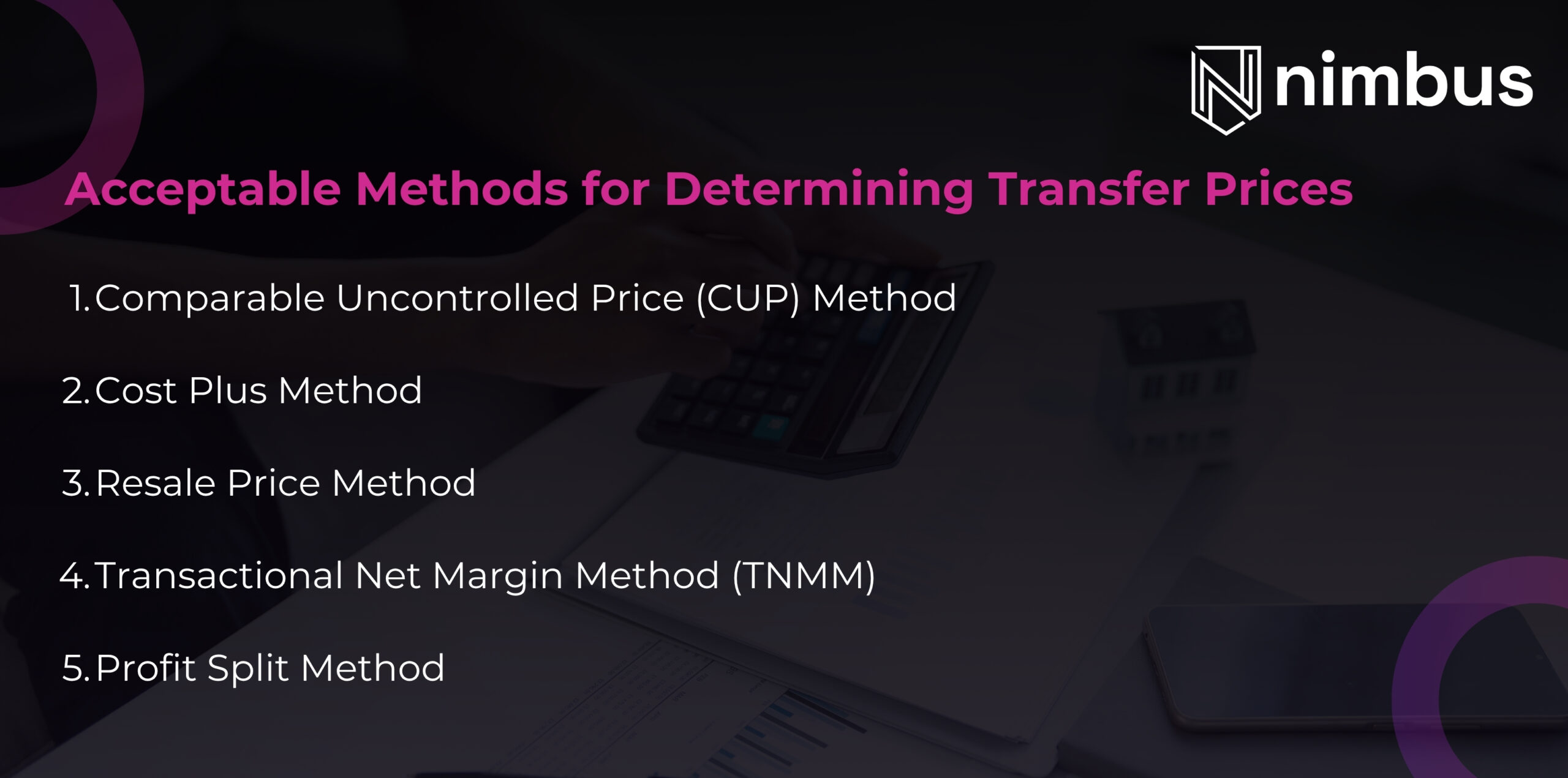
4. Acceptable Methods for Determining Transfer Prices
ZATCA recognizes five standard methods endorsed by the OECD:
- Comparable Uncontrolled Price (CUP) Method
- Cost Plus Method
- Resale Price Method
- Transactional Net Margin Method (TNMM)
- Profit Split Method
Taxpayers are free to select the method most appropriate for their transaction. There is no prescribed hierarchy. However, ZATCA expects companies to justify their choice using reliable and comparable data.
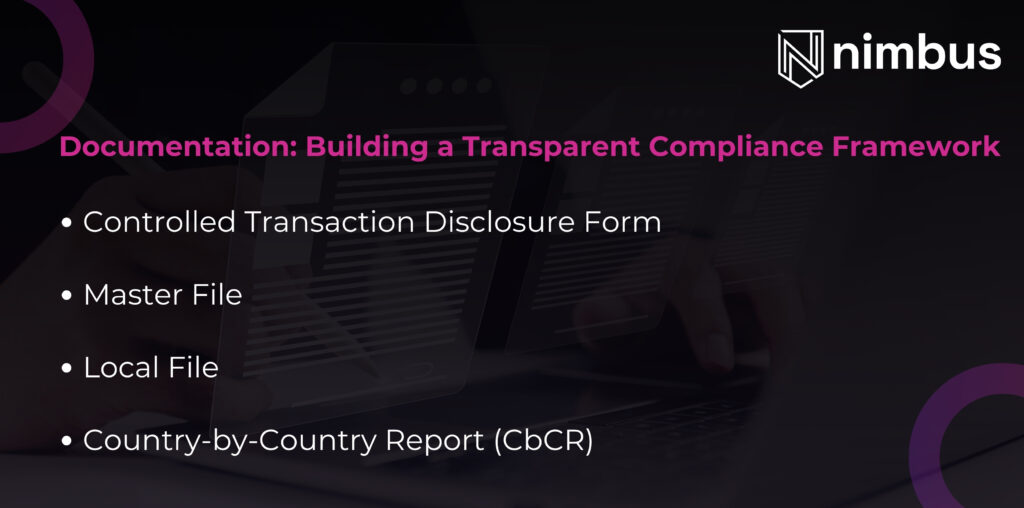
5. Documentation: Building a Transparent Compliance Framework
To align with Saudi transfer pricing rules, businesses must maintain comprehensive documentation that supports their pricing rationale and structure. The key documents include:
a) Controlled Transaction Disclosure Form:
Filed alongside annual tax or zakat returns within 120 days of the fiscal year-end. It summarizes all related-party transactions and must be accompanied by a licensed auditor’s affidavit.
b) Master File:
Required for entities with annual related-party transactions exceeding SAR 6 million. It provides an overview of the multinational group’s global operations, organizational structure, and transfer pricing policies.
c) Local File:
Contains detailed information about the Saudi entity’s specific transactions, functional and risk analysis, and economic rationale behind pricing.
d) Country-by-Country Report (CbCR):
Multinational enterprises with consolidated revenues above SAR 3.2 billion must submit this report within 12 months of the fiscal year-end, disclosing global income, taxes, and business activities.
ZATCA requires that these documents be contemporaneous, prepared before or at the time of the transactions, not retroactively after an audit notice.
6. Risk Management, Audit Exposure, and Penalties
ZATCA follows a risk-based audit approach, focusing on industries such as:
- Energy and petrochemicals
- Financial services
- Technology and IP-driven sectors
- Pharmaceuticals and life sciences
- Construction and manufacturing
If a taxpayer’s documentation or comparability analysis is insufficient, ZATCA can reallocate income or disregard non-arm’s length results, potentially increasing the entity’s tax or zakat liability.
Although Saudi Arabia does not have dedicated transfer pricing penalties, general tax penalties apply, including:
- Up to 25% of the tax sought to be evaded for misrepresentation;
- 1% monthly fines on delayed or underpaid amounts; and
- Audit-based adjustments carrying additional monthly surcharges.
ZATCA also conducts joint audits with Saudi Customs to verify that import prices declared for customs purposes align with transfer pricing documentation.
7. Advance Pricing Agreements (APAs): A Path to Certainty
In 2025, ZATCA launched its Advance Pricing Agreement (APA) program, providing a mechanism for companies to gain predictability in their intercompany pricing.
An APA is a binding agreement between the taxpayer and ZATCA that pre-approves the transfer pricing methodology for specific transactions, typically valid for three years. Eligibility requires:
- Annual related-party transactions of at least SAR 100 million (US$26.6 million); and
- Submission of a detailed application supported by financial and comparability data.
Companies entering into APAs benefit from reduced audit exposure and increased regulatory certainty, especially critical for multinationals and capital-intensive industries.
8. Integrating Transfer Pricing into Business Operations in Saudi Arabia
For companies undergoing business setup in Saudi Arabia, integrating transfer pricing into daily financial and operational systems is vital. Since the new regime demands governance-driven compliance, firms should:
- Establish cross-functional tax governance connecting finance, operations, and legal departments;
- Conduct annual reviews of transfer pricing methodologies;
- Align intercompany agreements, accounting records, and management reports for data consistency.
By embedding these practices early, companies can mitigate risks, enhance audit readiness, and demonstrate accountability.
Aligning Compliance with Growth Strategy
Saudi Arabia’s transfer pricing evolution signals its maturing business environment. For foreign investors and local conglomerates alike, aligning with ZATCA’s transfer pricing framework is now a critical element of doing business responsibly and transparently.
For businesses and investors, proactive compliance with transfer pricing rules can help you avoid costly disputes and strengthen stakeholder confidence.
Ibtasam Aziz, Business Setup Consultant info@nimbusconsultancy.com
Comments are closed